NASA's Swift observatory ends its 22-year mission
NASA has switched off the Neil Gehrels Swift Observatory after drag pulled it below 275 km. What Swift achieved, why the reboost failed and when it re-enters.
LandGadget Newsroom · · 3 min read
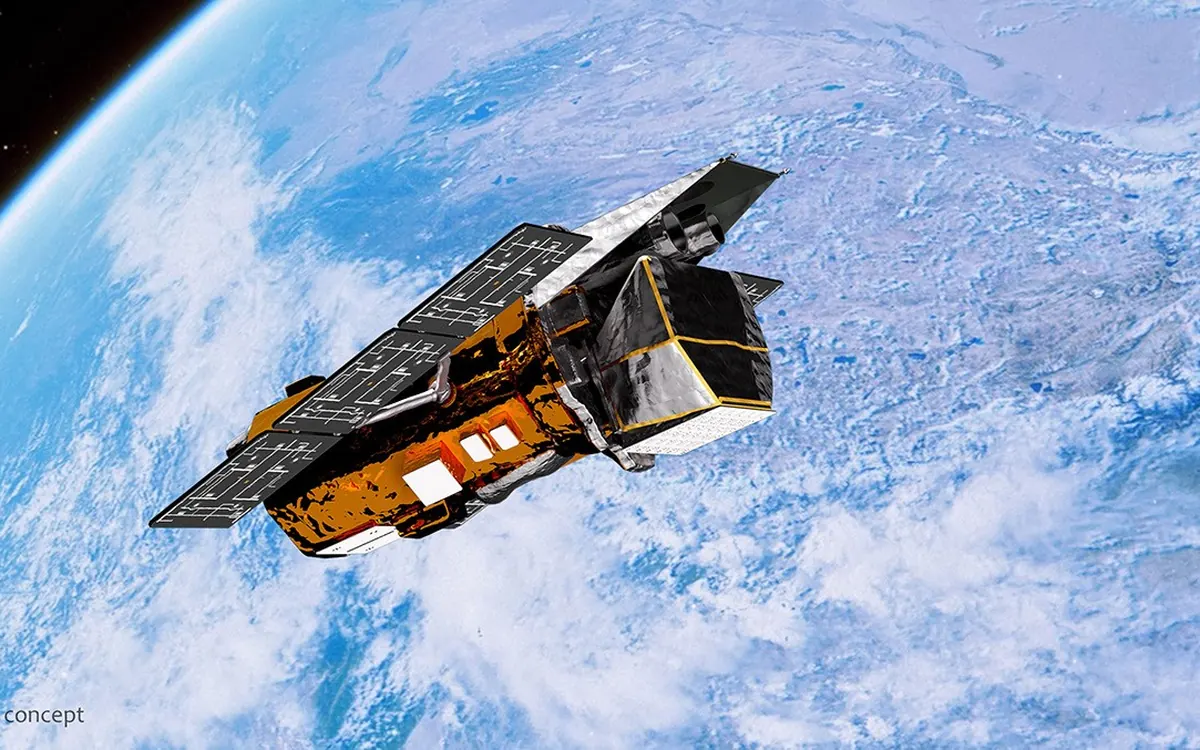
One of NASA's most productive space telescopes has gone quiet. The Neil Gehrels Swift Observatory made its final observation on 20 October 2026 and has been shut down ahead of its fall back to Earth, NASA announced. The agency expects it to re-enter the atmosphere in the next few weeks; SpaceNews reports that re-entry is likely in November.
Why Swift had to stop
Every satellite in low Earth orbit feels a little atmospheric drag. Recent solar activity puffed up the upper atmosphere and made Swift sink much faster than planned. By 20 October it was below 275 kilometres (171 miles), where the extra drag stops the spacecraft from pointing its telescopes steadily. Swift entered safe mode, and the operations team at Penn State then sent a command that effectively ended the mission.
NASA had tried to buy time. A high-risk, fast-turnaround commercial servicing mission was meant to boost Swift into a higher orbit, but it ended in August without attempting the boost. Swift then went back to science, observing hundreds of targets, which in turn increased drag and sped up its descent.
What Swift achieved
Swift launched on 20 November 2004 and was built for a two-year primary mission. It lasted more than ten times longer. Its specialty was speed: when a gamma-ray burst flashed somewhere in the sky, Swift could spot it, send its position to other observatories and swing its X-ray and ultraviolet/optical telescopes onto it in about a minute.
According to NASA, over its career Swift:
- observed more than 2,000 gamma-ray bursts, the most powerful explosions in the universe;
- studied more than 1,400 supernovae, stars torn apart by black holes, comets and asteroids;
- in 2005 caught the first afterglow of a short gamma-ray burst (GRB 050509B), supporting the idea that such bursts come from merging neutron stars;
- contributed to about 7,000 scientific papers.
The mission was renamed in 2018 to honour its first principal investigator, Neil Gehrels.
What's left behind
Swift's full archive of roughly 12 terabytes, including more than 1.5 million ultraviolet/optical images, stays publicly available. NASA says it will use its existing fleet of telescopes to cover fast-response observations for now while it studies commercial and new mission options.
For more on the invisible side of the universe that telescopes like Swift probe, read our dark matter explainer. And if Swift's story makes you want to look up yourself, our beginner telescope guide explains where to start.
More from Science & Space
View all →Read next

FreeSync vs G-Sync: which matters for your monitor?
FreeSync vs G-Sync explained: how variable refresh rate works, the tiers (Premium, Pro, Compatible, Ultimate), GPU and console support, and what to buy in 2026.
How to update your router firmware safely: 8 steps
How to update router firmware step by step: find your exact model, back up settings, update via app or web page without bricking it, then lock down the router.
How to check battery health on iPhone and Android
How to check your phone's battery health on iPhone, Samsung Galaxy, Pixel and other Android phones, what the numbers mean, and when a battery replacement is worth it.