‘Stupendously large’ black holes can’t be most of dark matter, study finds
Black holes heavier than whole galaxies would leave a grainy imprint on the cosmic microwave background. It isn't there, so they can't be a major part of dark matter.
LandGadget Newsroom · · 3 min read
Could dark matter be hiding inside a handful of colossal black holes? A new study says no, at least not for the biggest kind. Black holes heavier than entire galaxies cannot make up a significant share of dark matter, according to research reported by Space.com.
The idea being tested
Dark matter is the unseen material thought to hold galaxies together. It makes up about five-sixths of all matter, yet nobody knows what it is (our dark matter explainer covers the evidence and the main suspects). Black holes are natural candidates: they are massive and very hard to see.
The team looked at "stupendously large black holes", objects above 100 billion solar masses. The heaviest would weigh between a million billion and ten million billion suns, more than whole galaxies. None has ever been detected; the largest known black hole may weigh about 36 billion suns. That already ruled them out as all of dark matter, so the question was whether they could still be a large part of it.
Reading the universe's baby picture
Dark matter is usually imagined as "a fine dust spread everywhere," co-author Christopher Gerlach of the Mainz Institute for Theoretical Physics told Space.com. If it were instead packed into a few giant objects, "the universe becomes grainy on very large scales. And we can check that."
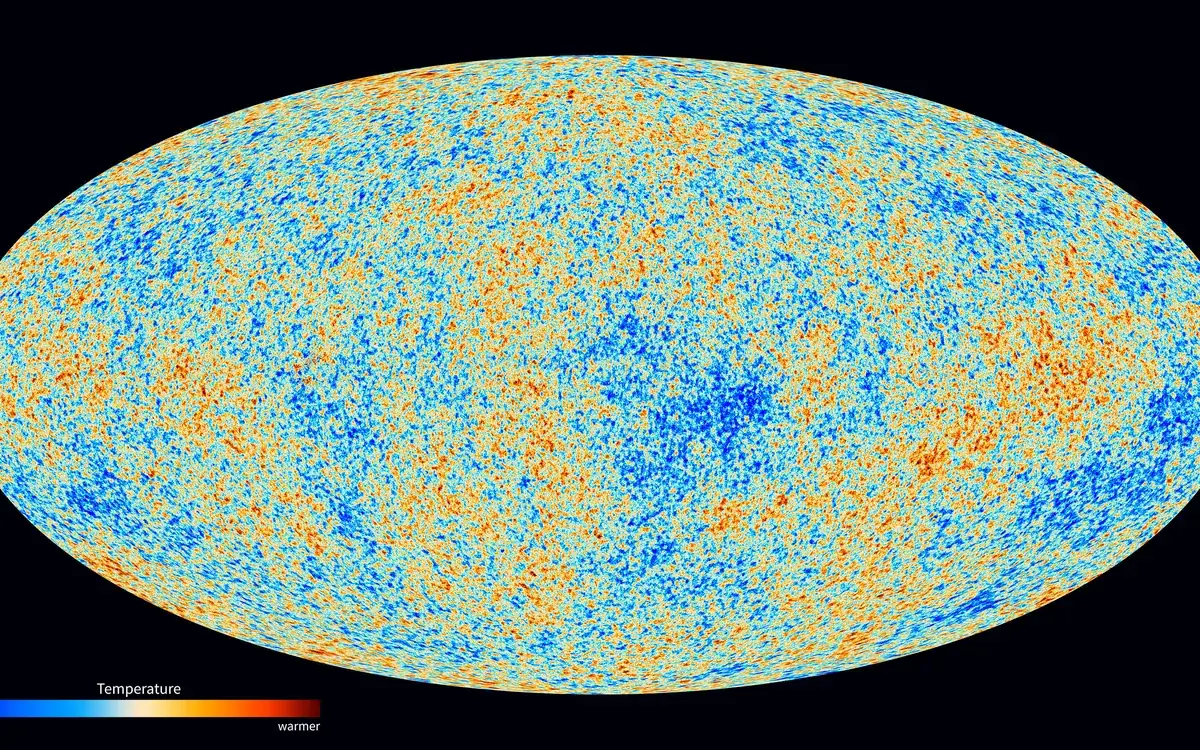
The check uses the cosmic microwave background, light released about 380,000 years after the Big Bang, when the cooling universe first let light travel freely. Its temperature varies by only about one part in 100,000 across the sky, and that pattern records how matter was spread out at the time.
The CMB does not show the graininess that a population of stupendously large black holes would cause. "So these black holes can't be a significant part of the dark matter," said co-author Nicholas Leister.
What it does and doesn't mean
- The result does not say such black holes can't exist, only that they can't be a major ingredient of dark matter.
- A very different candidate is still open: tiny black holes about the mass of an asteroid. The team is now working on whether those can be ruled out too.
- The paper, by researchers in Mainz and at New York University Abu Dhabi, is due to be published in Physical Review Letters on 26 October.
Searches for dark matter come at it from many angles. Earlier this month a radio survey turned up a starless hydrogen cloud that may be a dark galaxy, and astronomers are watching a pair of supermassive black holes on course to merge.
More from Science & Space
View all →Read next

Cyberpunk 2077 update 2.5: dual wielding, mods and an Edgerunners 2 gig
CD Projekt Red's free Edgerunners 2 Update (2.5) adds dual-wielded pistols, cross-platform mods via mod.io, cyberware styling and a prequel quest to the new anime.

How to buy a used graphics card safely: a 2026 checklist
How to buy a used graphics card without getting burned: where to buy, fair prices, seller questions, physical checks, stress tests, fake GPUs and warranty.

How to spot fake apps on Google Play before you install
Fake WhatsApp, Chrome and banking apps keep slipping onto Google Play. Learn the checks that expose a clone: developer, downloads, reviews, ads, permissions, Play Protect.