Smart ring vs smartwatch: which health wearable should you buy?
Smart ring or smartwatch? Compare sleep and heart-rate tracking, battery life, workouts, GPS, subscriptions, sizing and phone compatibility to pick the right wearable.
LandGadget Newsroom · · 8 min read
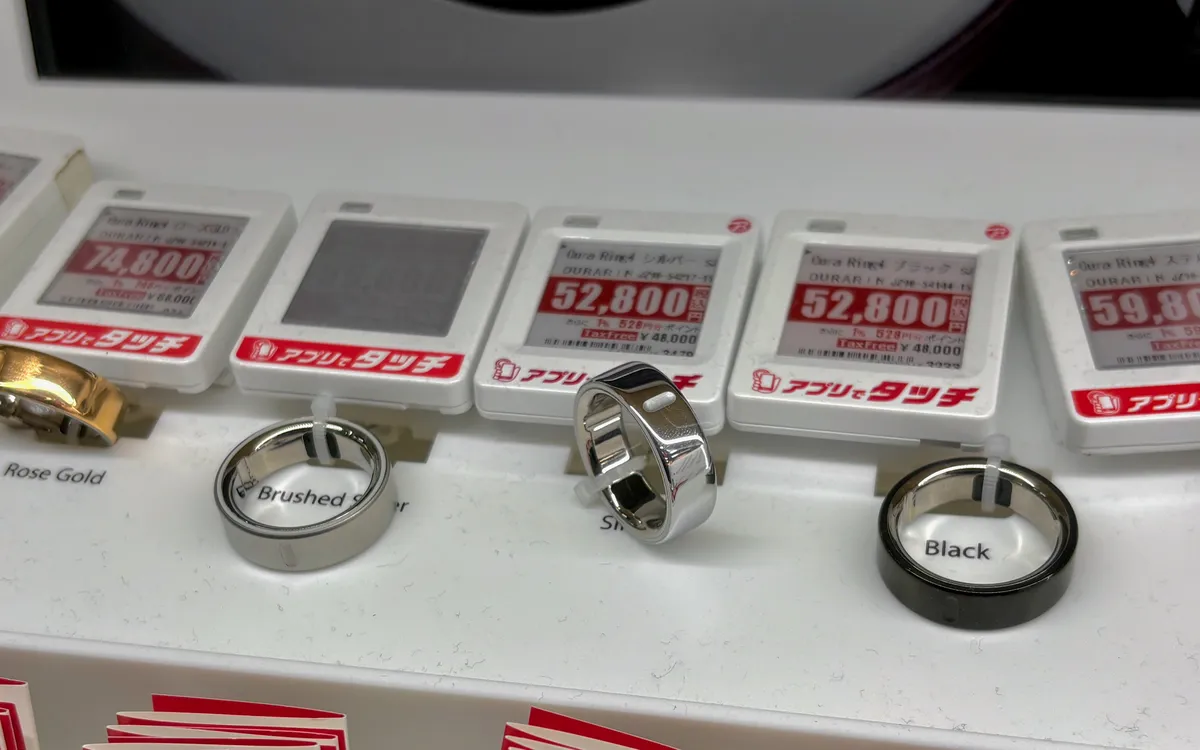
Quick verdictChoose a smart ring for comfortable sleep and recovery tracking with about a week of battery; choose a smartwatch if you want a screen, GPS workouts, notifications and payments.
Jump to the verdict ↓On this page
Smart rings such as the Oura Ring, Samsung Galaxy Ring, Ultrahuman and RingConn promise most of a smartwatch's health tracking in something you barely notice wearing. That's mostly true, but a ring leaves out a lot as well: there's no screen, no built-in GPS and, in most cases, no payments or notifications. This guide explains what each type does well, where rings fall short and how to decide.
If you're also weighing a cheaper fitness band, see our fitness tracker vs smartwatch guide. We don't publish lab tests of our own; battery and price figures below are manufacturers' claims.
The core difference
A smart ring is a passive sensor. It measures heart rate, heart rate variability (HRV), skin temperature, blood oxygen and movement from your finger, then shows the results as scores and trends in a phone app. You interact with it only through the app.
A smartwatch is a small computer with a screen. It tracks the same basic signals from your wrist and adds GPS, notifications, apps, contactless payments, music control and, on cellular models, calls without your phone.
Side-by-side comparison
| Smart ring | Smartwatch | |
|---|---|---|
| Battery life | About 5–15 days, depending on model | About 1–3 days for full smartwatches; longer for sports watches |
| Screen | None | Yes: time, notifications, live workout stats |
| Sleep tracking comfort | Excellent: light and unobtrusive | Good, but bulkier in bed |
| Heart rate, HRV, skin temperature | Yes | Yes |
| ECG and irregular rhythm alerts | Generally no | On many models (Apple Watch, Galaxy Watch, Pixel Watch) |
| Built-in GPS | No: uses your phone's GPS | Yes on most models |
| Notifications, apps, payments | No (payment-only rings are a separate product) | Yes |
| Sizing | Needs a sizing kit; can't be resized | Adjustable strap |
| Typical subscription | Oura: yes; Samsung, RingConn: no | Usually optional |
Where smart rings are better
Sleep tracking you'll actually keep doing. The biggest reason people buy a ring is that they forget they're wearing it. A ring weighs a few grams. Samsung lists 2.3–3.3 g for the Galaxy Ring, depending on size, so it doesn't get in the way in bed the way a watch can. Consistent nightly data matters more than any single feature.
Battery life. Oura quotes 6–9 days for the Oura Ring 5 and 5–8 days for the Ring 4. Samsung says up to 7 days for the Galaxy Ring, and RingConn and Ultrahuman claim more than a week for their latest rings. Most smartwatches with bright screens need charging every day or two.
Discretion. No glowing screen, no buzzing at dinner and nothing that looks like a gadget. Rings also fit situations where a watch isn't allowed or practical.
Recovery and temperature trends. Finger readings are steady during sleep, and rings are good at overnight resting heart rate, HRV and skin-temperature trends. Those feed "readiness" scores and cycle predictions.
Where smartwatches are better
Workouts. A watch shows your pace, distance and heart rate while you run and records accurate routes with its own GPS. A ring has to borrow your phone's GPS, and it can't show anything mid-workout. Optical heart rate from a finger can also struggle during weight training, when gripping bars and dumbbells squeezes the finger. For serious training, a chest strap is still the most accurate option for any wearable.
Everything that needs a screen. Notifications, quick replies, timers, maps, music, smart-home controls and paying at a terminal. If you use any of these daily, a ring won't replace your watch.
Health alerts. Many smartwatches have an ECG app and irregular heart rhythm notifications that are cleared by regulators in some countries. Ring makers mostly position their devices as general wellness products, though some offer limited features in selected markets.
Safety features. Fall detection and emergency SOS are smartwatch features. Our guide to VO2 max on a smartwatch covers another fitness metric that rings handle less well because they don't record GPS runs on their own.
Costs: check for subscriptions
The price of the ring isn't always the whole cost:
- Oura requires a membership for most insights: $5.99 a month or $69.99 a year in the US (€5.99 / €69.99 in the EU), with the first month included. Without it, the app shows little more than three daily scores.
- Samsung Galaxy Ring and RingConn have no subscription.
- Ultrahuman has no required subscription, but sells optional paid add-ons.
Many smartwatch health features are free, although some platforms have premium tiers, such as Fitbit Premium.
Smart rings are a competitive and legally contested market. Oura has sued rivals over patents, including in its latest lawsuit against Ultrahuman, so availability of some models can differ by country.
Before you buy a ring
- Which finger: most makers recommend the index finger for the best sensor contact. Middle and ring fingers also work.
- Swelling: fingers are larger in the heat and after exercise. If you're between sizes, follow the maker's advice for that model.
- Scratches: titanium rings scratch, especially if you lift weights or wear them next to other rings.
- Water: current rings from the big brands are rated to 100 m, so showers and swimming are fine.
- Charging: some rings come with a charging case that holds several extra charges. Others use a small dock.
Can you wear both?
Yes, and many people do. A watch handles workouts, notifications and payments during the day, while the ring tracks sleep and recovery at night. Samsung's Health app combines data from the Galaxy Ring and Galaxy Watch. Oura shares data with Apple Health and Health Connect on Android. If you only want one device and do any real training, a smartwatch is the more versatile choice.
+ Pros
- Ring: comfortable 24/7 wear and the best experience for sleep tracking
- Ring: about a week or more per charge
- Watch: GPS workouts with live stats on your wrist
- Watch: notifications, payments, apps and safety features
− Cons
- Ring: no screen, no GPS and usually no payments
- Ring: sizing kit needed, and some brands charge a subscription
- Watch: needs charging every day or two on most models
- Watch: bulkier to sleep in
Our verdict
Ring for sleep and recovery, watch for workouts and convenience
Buy a smart ring if your main goals are better sleep, recovery and long-term health trends, and you're happy to check your data in an app. Buy a smartwatch if you train with GPS, want live workout stats, or rely on notifications and contactless payments. Want both sets of strengths? Wear a ring at night and a watch during the day.
Frequently asked questions
Is a smart ring as accurate as a smartwatch?
For overnight resting heart rate, HRV and skin-temperature trends, rings perform well because the finger gives a strong signal when you're still. During intense workouts, wrist and finger optical sensors both lose accuracy, and a chest strap remains the most reliable option.
Can a smart ring replace a smartwatch?
Only if you mainly want health and sleep tracking. A ring has no screen, no built-in GPS and usually no notifications or payments, so it can't replace a watch for workouts with live stats or for everyday convenience.
Do smart rings need a subscription?
It depends on the brand. Oura needs a paid membership for most insights, while Samsung's Galaxy Ring and RingConn have no subscription, and Ultrahuman sells only optional add-ons.
Does the Samsung Galaxy Ring work with iPhone?
No. The Galaxy Ring requires an Android phone running Android 11 or later. iPhone users should look at rings from Oura, RingConn or Ultrahuman.
Which finger should I wear a smart ring on?
Most manufacturers recommend the index finger for the best sensor fit, with the middle or ring finger as alternatives. Use the sizing kit on the finger you plan to wear it on.
More from Smartphones
View all →Read next
CPU vs GPU bottleneck explained: how to tell what's slowing your games
What a CPU or GPU bottleneck really is, how to spot one with a performance overlay, why resolution changes everything, and the fixes worth trying before you buy parts.
HDMI vs DisplayPort: which cable should you use in 2026?
HDMI vs DisplayPort explained: HDMI 2.1 and 2.2 vs DisplayPort 1.4 and 2.1 bandwidth, which to use for gaming monitors, TVs, consoles and laptops, plus cables.

Best robot vacuum features for pet hair: what actually matters
Choosing a robot vacuum for pet hair: rubber vs bristle brushes, tangle-free rollers, suction, filters, self-emptying docks and obstacle avoidance for pet mess.