How to choose a power bank in 2026: 8 things to check
mAh vs Wh, USB PD and PPS, Qi2 magnetic packs, recharge speed, airline limits and safety: what really matters when you buy a power bank for a phone or laptop.
LandGadget Newsroom · · 6 min read
On this page
- Work out the capacity you really need
- Compare in watt-hours, not just mAh
- Match the charging standard to your phone
- Check output per port, especially for laptops
- Decide on wireless or magnetic charging
- Look at how fast the power bank itself recharges
- Think about size, cables and extras
- Know the rules for flying
A good power bank is one of the most useful gadgets you can own, but the spec sheets are full of numbers that are easy to misread. This guide goes through what actually matters, in the order we'd check it.
Work out the capacity you really need
Capacity is usually printed in milliamp-hours (mAh), but that figure is measured at the battery cells' internal voltage, about 3.6–3.85 V. Your phone is charged at 5 V or more, and converting between the two costs energy, as does heat. In practice you get noticeably less than the headline number. Many packs also print a lower rated capacity on the label, which is closer to what reaches your device.
As a rough guide, phone batteries today are typically around 4,000–5,500 mAh:
| Capacity | Typical use | Trade-off |
|---|---|---|
| 5,000 mAh | Top-up for a day out | Light, pocketable |
| 10,000 mAh | Around one to two phone charges | The sweet spot for most people |
| 20,000 mAh | Several phone charges, or a tablet | Heavier, slower to refill |
| 25,000 mAh+ | Laptops and multi-device trips | Bulky; check flight limits |
Compare in watt-hours, not just mAh
Watt-hours (Wh) describe energy honestly across different voltages, and airlines use them too. To convert: Wh = mAh × cell voltage ÷ 1,000. With a typical 3.7 V cell, a 10,000 mAh pack is about 37 Wh and a 20,000 mAh pack about 74 Wh. Good brands print the Wh figure on the case; if a pack doesn't, that's a small warning sign.
Match the charging standard to your phone
Speed depends on the protocol your phone and the power bank agree on. USB Power Delivery (USB PD) is the universal standard for USB-C phones, tablets and laptops. Many Samsung phones only reach their fastest "Super Fast Charging" with PPS (Programmable Power Supply), an optional part of USB PD, so look for it on the spec sheet if you use a Galaxy. Older proprietary standards matter less than they used to. Our USB-C charger guide explains these terms in more detail; the same rules apply to power banks.
Check output per port, especially for laptops
The big wattage on the box is often the total across all ports. Plug in two devices and each may get far less. A phone is happy with roughly 20–45 W, but a laptop usually needs 45–100 W from a single USB-C port to charge properly while in use. Look for the per-port table in the manual, and use a cable rated for the wattage: anything above 60 W needs a 5 A cable.
Decide on wireless or magnetic charging
Qi2 magnetic power banks snap onto the back of recent iPhones and a growing number of Android phones, so you can keep using the phone while it charges. Original Qi2 tops out at 15 W, and the newer Qi2 25W version allows up to 25 W on supported phones. Wireless is convenient but less efficient than a cable and makes both devices warmer, which is why some new models add better cooling. If you mostly charge in a bag, a wired pack gives you more energy for the same size.
Look at how fast the power bank itself recharges
A large pack with a slow input can take a whole night to refill. Check the input wattage on the USB-C port: 20,000 mAh at a low input is far slower than the same pack at 30 W or more. Pass-through charging, which charges the pack and a plugged-in device at the same time, is handy at a hotel desk, but not every model supports it.
Think about size, cables and extras
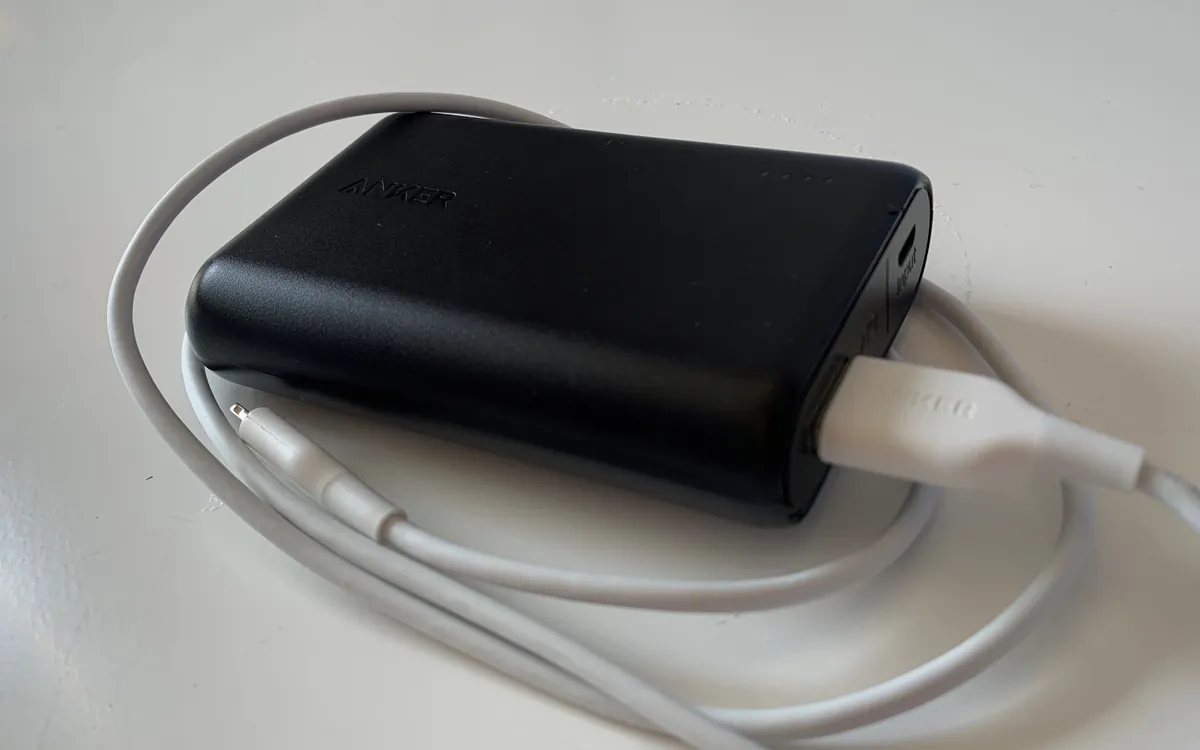
Roughly speaking, doubling capacity doubles weight. A built-in USB-C cable means one less thing to forget, a small display showing the exact percentage beats four LEDs, and a USB-A port helps if you still own older accessories. A pack that suits your bag or pocket is the one you'll actually carry. For earbuds and watches, even a small pack will do; our wireless earbuds guide covers how much battery life to expect.
Know the rules for flying
Under the widely used IATA and FAA rules, power banks go in carry-on luggage only, never in checked bags. Packs up to 100 Wh, about 27,000 mAh at 3.7 V, are allowed without approval. Packs of 100–160 Wh need airline approval, usually a maximum of two, and anything above 160 Wh is not allowed. Rules have also tightened lately. Some airlines no longer allow using power banks during the flight, and Chinese domestic flights require the 3C certification mark. Check your airline before you travel.
Bottom line: for most people, a 10,000 mAh USB PD pack with a USB-C port of at least 20–30 W, plus PPS if you use a Samsung, is the best all-round choice. Go bigger only if you need to charge a laptop or several devices, and keep the 100 Wh flight limit in mind. Planning a night outdoors? Our night sky phone photography guide explains why cold drains phones so fast.
Frequently asked questions
How many times will a 10,000 mAh power bank charge my phone?
Usually around one and a half to two full charges for a typical phone, because conversion losses mean you get noticeably less than the printed capacity. Larger phone batteries get fewer charges.
Can I take a 20,000 mAh power bank on a plane?
Usually yes. At a typical 3.7 V that is about 74 Wh, under the 100 Wh limit. It must go in your carry-on, not checked luggage, and some airlines restrict using it during the flight.
Is it bad to leave a power bank plugged in?
Quality power banks stop charging when full, so it is generally fine, but unplugging once charged and avoiding heat is gentler on the battery over time.
Will a fast power bank damage my phone?
No. With USB PD the phone and pack negotiate the power, and the phone only draws what it can safely take.
More from Smartphones
View all →Read next

Switch Sports Resort lands Oct 22: what's in all 12 sports
The Switch 2 exclusive Switch Sports Resort arrives on 22 October with 12 motion-control sports on Wuhu Island, including Skateboarding and Thumb Wrestling.

ALMA's 'cosmic hamburger' shows how giant planets may form
ALMA slices the edge-on disk known as Gomez's Hamburger into layers of gas and dust and spots a clump that may be a giant planet in the making. What it shows.
UGREEN ID500 Pro is a Matter camera that records locally
UGREEN's 4K pan-tilt ID500 Pro streams and moves over Matter 1.5.1 and records to its new HomeAgent hub. Early-bird prices, what it needs and when it ships.