Binoculars for stargazing: how to choose the right pair
What 7x50, 10x50 and 15x70 mean, why exit pupil and weight matter more than zoom, Porro vs roof prisms, and what you can actually see with astronomy binoculars.
LandGadget Newsroom · · 7 min read
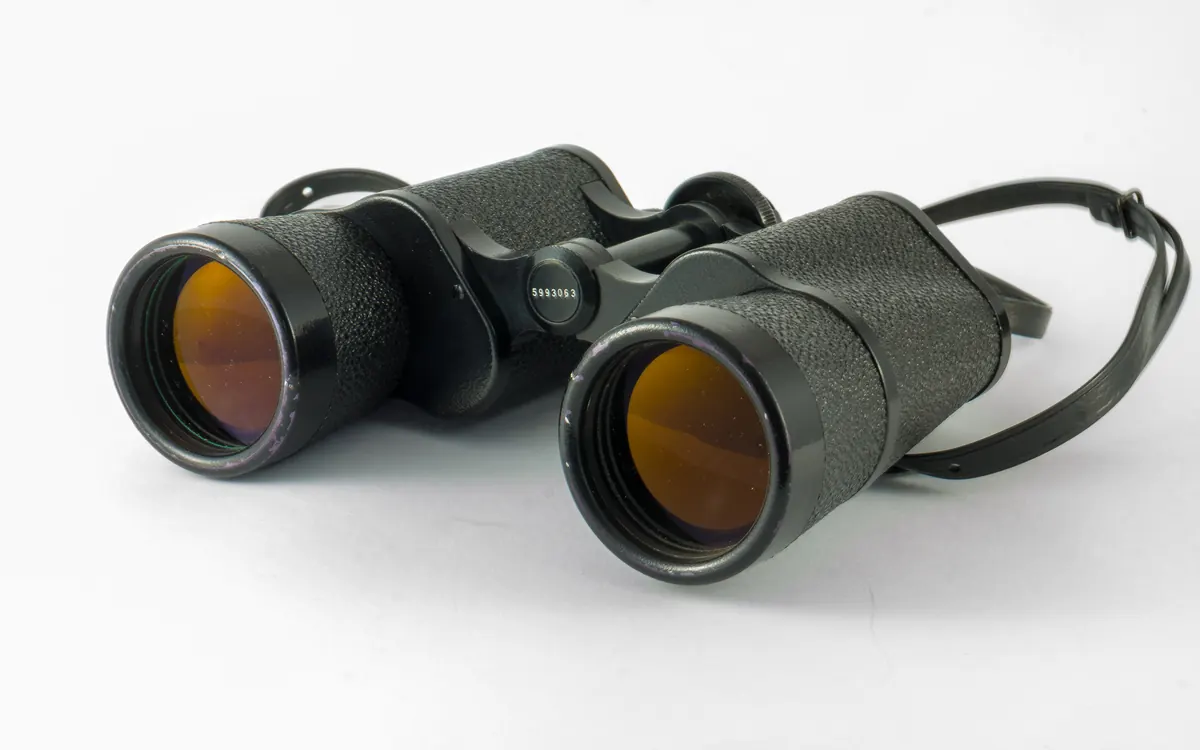
Quick verdictFor most people a 10x50 (or 7x50 if you're younger or want a steadier view) Porro-prism pair is the best first astronomy instrument; go bigger only if you'll use a tripod.
Jump to the verdict ↓On this page
Many experienced observers will tell you that the best first "telescope" is a pair of binoculars. They're cheap compared with a good telescope, need no setting up, show the sky the right way round and give you a wide view that makes it easy to find your way around. They're also useful in daylight, for birds, sport and travel. Here's how to pick a pair that works under the stars.
What the numbers mean
Every pair of binoculars carries two numbers, such as 10x50:
- The first is the magnification: objects look 10 times closer.
- The second is the diameter of each front (objective) lens in millimetres. Bigger lenses collect more light, which matters most at night.
Divide the second number by the first and you get the exit pupil, the width of the beam of light that reaches your eye: 50 ÷ 10 = 5 mm. In the dark, a young person's pupil can open to about 7 mm, but it opens less as we get older. An exit pupil wider than your own pupil simply wastes light, so a 7x50 (7 mm) makes most sense for younger observers, while a 10x50 (5 mm) suits almost everyone.
The common astronomy sizes compared
| 7x50 | 10x50 | 15x70 | |
|---|---|---|---|
| Exit pupil | ≈7 mm | 5 mm | ≈4.7 mm |
| Field of view | Widest | Wide | Narrower |
| Hand-held use | Easy | Fine for most | Needs a tripod |
| Best for | Milky Way sweeping, young eyes | All-round first pair | Fainter clusters, galaxies |
Smaller sizes such as 8x42 or 10x42 are lighter and great for daytime and travel. They still work on the Moon and bright clusters, just with a bit less light than a 50 mm pair. If you want one pair for everything, an 8x42 is a sensible compromise.
Magnification: more isn't better
It's tempting to buy the highest number on the box. Resist it. Every bit of hand shake is magnified too, and beyond about 10x most people can't hold binoculars steady enough to see fine detail. Higher magnification also narrows the field of view, which makes it harder to find things.
Big 15x70 or 20x80 "giant binoculars" do show more, but they're heavy and really need a tripod or a parallelogram mount. Many Porro-prism models have a threaded socket at the front of the central hinge for a cheap tripod adapter, worth checking before you buy. Image-stabilised binoculars cancel the shake electronically and give a remarkably steady view, but they cost several times more than a regular pair.
Porro or roof prisms
Binoculars use prisms to flip the image upright. There are two main designs:
- Porro prisms (the classic zig-zag shape) often give better optical value for the money at astronomy sizes, and many accept a tripod adapter. They are bulkier and a little more fragile if dropped.
- Roof prisms (straight tubes) are slimmer, lighter and usually tougher, often waterproof. They need high-quality coatings to match a Porro of the same price, so good ones cost more.
For a first stargazing pair, a Porro-prism 10x50 is the traditional value pick. If you also want a compact pair for hiking, a good roof-prism 8x42 is easier to carry.
Glass and coatings: what to look for on the spec sheet
- Fully multi-coated optics have anti-reflection coatings on every air-to-glass surface, so more light reaches your eye and the background sky looks darker. "Coated" alone is the weakest level.
- BaK-4 prisms are made of higher-quality glass than BK-7. A quick check: hold the binoculars at arm's length towards a bright wall and look at the small circles of light in the eyepieces. Perfectly round circles are good. Squared-off edges mean light is being lost.
- Eye relief is how far from the eyepiece your eye can be while still seeing the full view. If you wear glasses, look for about 15 mm or more and fold-down or twist-up eyecups.
- Waterproof, gas-filled bodies resist dew and internal fogging, which helps on cold, damp nights.
Check the alignment and the weight
Cheap binoculars are sometimes out of collimation, meaning the two halves point in slightly different directions. Look at a distant streetlight or star: if you see two images, or your eyes feel strained after a minute, return them. Buying from a shop with a good return policy helps.
Weight matters more than you'd think. A 50 mm pair is noticeably heavier than a 42 mm pair, and you'll be holding it above your head. A reclining garden chair or a monopod makes long sessions much more comfortable.
Binoculars as your first astronomy instrument
+ Pros
- Cheaper than a decent telescope and ready in seconds, with no set-up or alignment
- Wide, upright view makes it easy to learn the sky and find targets
- Useful in daylight too, for nature, sport and travel
− Cons
- Low magnification: no detail on planets, no Saturn rings
- Hand shake limits what you can see above about 10x
- Heavy pairs tire your arms in long sessions
What you can see
Start with the Moon and the brightest objects, and give your eyes 15–20 minutes to adapt to the dark without looking at your phone screen.
With a steady 10x50 under a reasonably dark sky:
- The Moon: craters, mountain ranges and the dark "seas", especially near the line between light and shadow.
- Jupiter's four big moons as tiny points beside the planet. Planetary detail like Saturn's rings needs a telescope.
- Star clusters such as the Pleiades and the Double Cluster in Perseus, which fit nicely in a binocular field.
- The Andromeda Galaxy and the Orion Nebula as soft glows.
- The Milky Way, which breaks up into countless stars when you sweep along it.
Binoculars aren't the tool for meteor showers: during the Orionid peak your naked eyes see far more sky. But they are perfect for exploring the sky on the clear nights in between. If you get hooked, our beginner telescope guide explains the next step, and our night-sky phone photography guide shows how to capture what you see.
Frequently asked questions
Are binoculars better than a telescope for beginners?
For many people they are the better first step: they are cheaper, need no set-up, show a wide upright view and teach you the sky. A telescope shows more detail on planets and faint objects once you know where to look.
What does 10x50 mean?
It means 10 times magnification and 50 mm objective lenses. Dividing 50 by 10 gives a 5 mm exit pupil, which works well at night for most adults.
Can I see planets with binoculars?
You can see planets as bright dots and Jupiter's four largest moons. Details such as Saturn's rings or Jupiter's cloud bands need a telescope.
Do I need a tripod?
Not for 7x to 10x binoculars, although resting your elbows or using a chair helps. For 15x and larger, a tripod or mount makes a big difference.
Our verdict
A Porro-prism 10x50 for most people
Choose binoculars by exit pupil, weight and optical quality, not by magnification. A fully multi-coated 10x50 with BaK-4 prisms is the classic first pair; a 7x50 suits younger eyes and wide Milky Way views, and an 8x42 is the best compromise if you also want it for daytime. Move up to 15x70 only if you're ready to use a tripod.
More from Science & Space
View all →Read next
OnePlus Ace 7's fan blows two ways to keep your hands cool
OnePlus says the Ace 7 series' built-in fan splits its airflow between the chip and the back panel and keeps hot air off your fingers. Why that detail matters.

Switch Sports Resort lands Oct 22: what's in all 12 sports
The Switch 2 exclusive Switch Sports Resort arrives on 22 October with 12 motion-control sports on Wuhu Island, including Skateboarding and Thumb Wrestling.
UGREEN ID500 Pro is a Matter camera that records locally
UGREEN's 4K pan-tilt ID500 Pro streams and moves over Matter 1.5.1 and records to its new HomeAgent hub. Early-bird prices, what it needs and when it ships.