China wants turquoise lights on self-driving cars from 2028
A draft MIIT standard would let Level 3+ cars carry turquoise marker lights that switch on only when the system drives, and ban text and faces on car lamps.
LandGadget Newsroom · · 4 min read
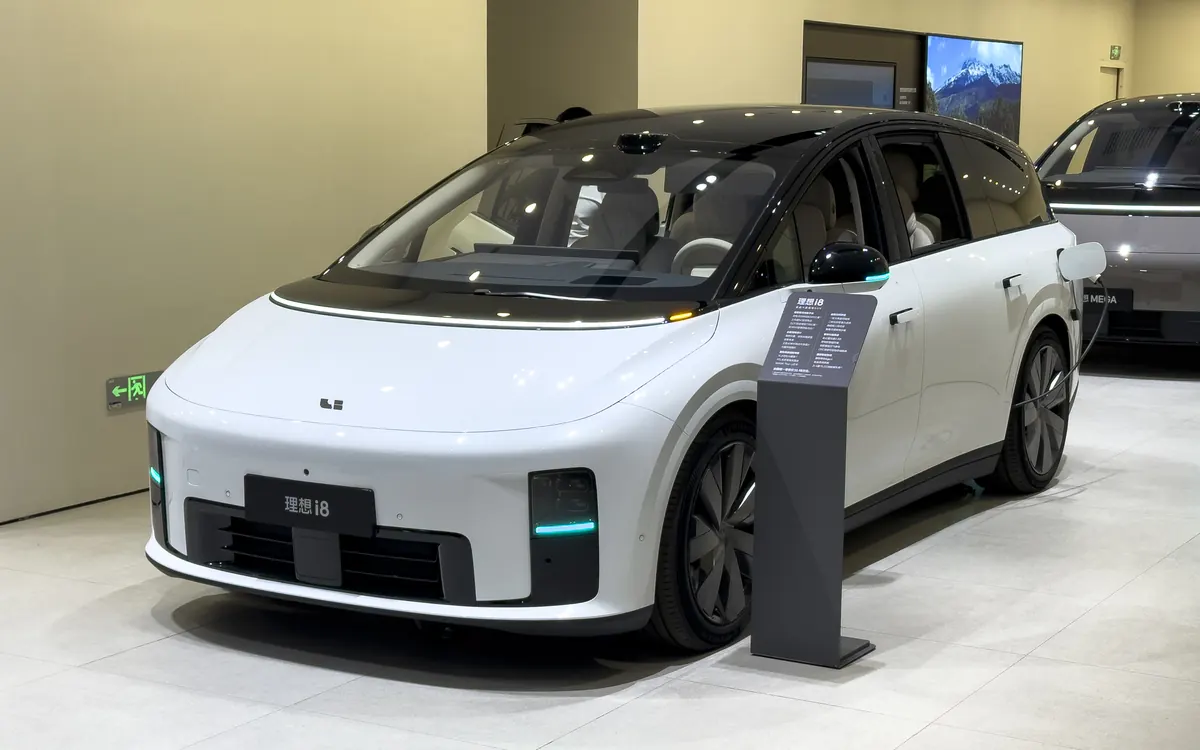
China is drawing up rules for the "little blue lights" some cars use to show that they are driving themselves. On Tuesday the Ministry of Industry and Information Technology (MIIT) opened public consultation on five mandatory national standards, CnEVPost reports. One of them covers how exterior lights and light-signalling devices are installed on cars and trailers. It gives automated driving lights their own colour, turquoise, and sets strict rules for when they can be on.
What the draft says about turquoise lights
- Who can fit them: only vehicles with an automated driving system of Level 3 or higher. Fitting them is optional, not mandatory.
- Where: marker lights may be installed at the front, rear and sides of the car.
- When they glow: they switch on automatically when Level 3+ driving is engaged and switch off when the system disengages. Manual on/off is not allowed.
That last point matters. Several Chinese carmakers already fit exterior lights that glow while their driver-assistance systems are working, but the colour, brightness and placement have varied from brand to brand. In July there were reports that the MIIT had told manufacturers to stop fitting these lights because they didn't comply with the existing GB 4785 lighting standard. Business outlet Yicai quoted an industry insider as saying newly certified models had been barred from using them since 27 July, though the ministry published no document. The new draft would tie the lights to the system's actual state, so other road users can trust what they see.
Turquoise isn't a random pick. SAE's J3134 recommended practice also suggests it for automated driving marker lamps, and Mercedes-Benz already uses turquoise lights for its Level 3 Drive Pilot system in some US states.
No more smiley headlights
The draft goes further than automated driving lights:
- Apart from illuminated logos, exterior lights could not show text or form human faces, animal faces or other "anthropomorphic" patterns.
- Gesture control would be banned for specified lights, and you couldn't use a voice command to switch lights off. If lights are switched on by voice, the car must show where the manual switch is.
- Turn signals and reversing lights could not be combined with brake lights or rear fog lights. Signals with variable brightness would have to dim or brighten the whole lamp, not switch individual LEDs on and off.
When it would apply
The explanatory notes recommend an effective date of 1 January 2028. Transition periods would depend on the provision and on whether a model already has type approval, with up to 48 months for some requirements. Nothing is final yet: consultation runs until 19 December.
For drivers, the change is mostly about clarity. Most cars sold today, including those with hands-free systems like Rivian's new Point to Point test, offer Level 2 assistance, so they would not get the new lights at all. Even affordable lidar-equipped cars such as the Leapmotor A10s still need a watchful driver. If you want your own record of what happens on the road, our dash cam buying guide is a good start.
Frequently asked questions
What does Level 3 mean?
On the SAE scale, Level 3 means the car drives itself in defined conditions and the driver may take their eyes off the road, but must take over when the system asks. Level 2 systems, which most cars have, need constant supervision.
Can drivers turn the turquoise lights on themselves?
No. Under the draft they switch on only when a Level 3 or higher system is engaged and switch off as soon as it disengages. Manual control is not allowed.
Does this affect cars sold in Europe or Ukraine?
Not directly. It is a Chinese national standard for vehicles approved for sale in China, although exporters may choose to align their lighting designs.
When could the rules take effect?
The MIIT recommends 1 January 2028, with transition periods of up to 48 months for some requirements. Public comments close on 19 December 2026 and the final text may change.
More from Cars & EVs
View all →Read next
OnePlus Ace 7's fan blows two ways to keep your hands cool
OnePlus says the Ace 7 series' built-in fan splits its airflow between the chip and the back panel and keeps hot air off your fingers. Why that detail matters.

Switch Sports Resort lands Oct 22: what's in all 12 sports
The Switch 2 exclusive Switch Sports Resort arrives on 22 October with 12 motion-control sports on Wuhu Island, including Skateboarding and Thumb Wrestling.

ALMA's 'cosmic hamburger' shows how giant planets may form
ALMA slices the edge-on disk known as Gomez's Hamburger into layers of gas and dust and spots a clump that may be a giant planet in the making. What it shows.