SK hynix posts record quarter, sees memory shortage until 2030
SK hynix topped 100 trillion won in quarterly revenue and says DRAM and HBM demand will outrun supply through 2030. What that means for RAM and SSD prices.
LandGadget Newsroom · · 3 min read
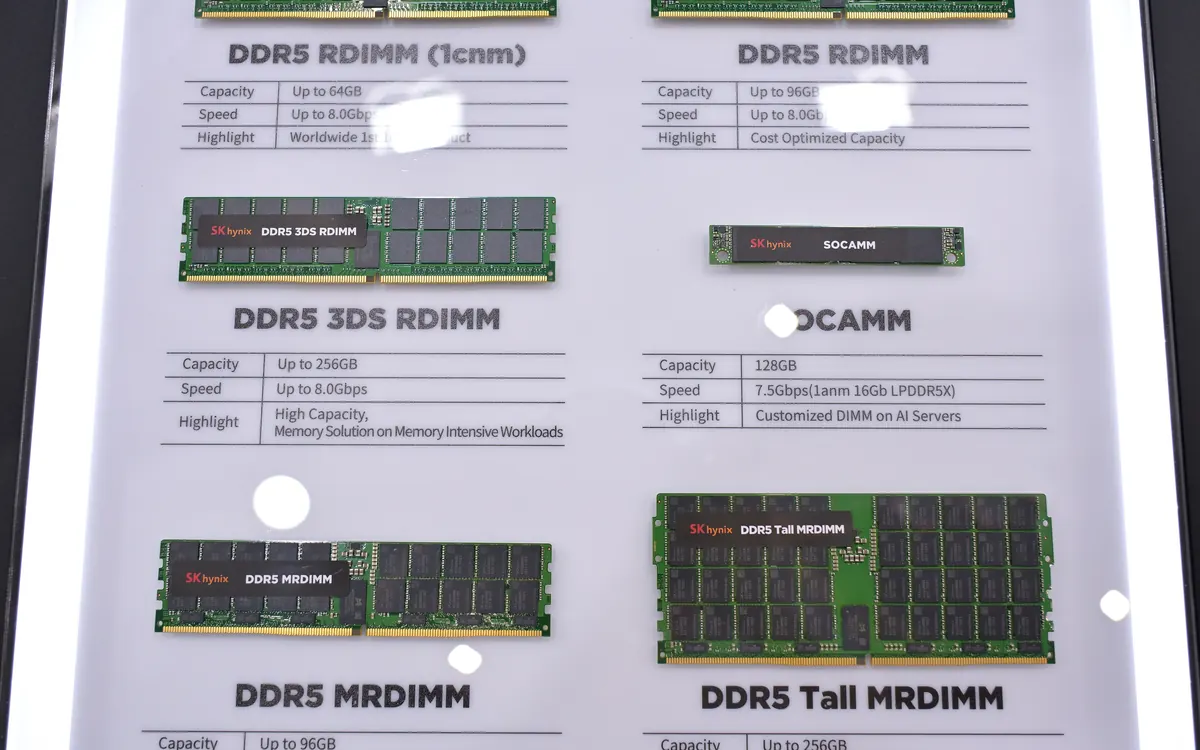
The AI boom just produced another record quarter for the world's biggest supplier of AI memory. SK hynix reported third-quarter 2026 revenue of 104.6 trillion won and operating profit of 83.3 trillion won on 28 October, according to its official results release. It is the first time the company's quarterly revenue has passed 100 trillion won (about $79 billion, according to CNBC), and the operating margin reached 80%.
The numbers
- Revenue: 104.6 trillion won, up 32% from the second quarter (79.3 trillion won).
- Operating profit: 83.3 trillion won, up 38% quarter on quarter.
- Net profit: 39.8 trillion won (38% margin). Currency losses and investment valuation losses held net profit well below operating profit.
- What sold: much more server DDR5, the first big shipments of HBM4 for AI accelerators, and more 321-layer TLC enterprise SSDs.
On its earnings call, the company said average DRAM prices rose by a high-20s percentage and NAND prices by a mid-20s percentage compared with the previous quarter.
"Demand exceeds supply through 2030"
The headline for anyone who buys a PC or phone is the outlook. SK hynix says supply is not keeping up with AI demand. Leading-edge chip processes are getting harder, and new fabs take years to build, so it expects demand to stay ahead of supply through 2030. It has signed long-term agreements with 14 major customers, mostly large cloud providers. These cover more than 50% of its production capacity for 2027 and 2028. Korean outlet The Asia Business Daily quotes the company as saying its DRAM and HBM capacity through 2029 is "effectively sold out".
To add supply, SK hynix will push its M15X fab to full capacity by the end of the year for HBM4. It also plans to raise the share of its newest 1c DRAM process and bring its Yongin Phase 1 site into full operation next year. It also cancelled plans for a US IPO of its SSD subsidiary Solidigm, citing market conditions. Shareholders will get about 100 trillion won in dividends and buybacks for 2026.
What it means for you
These are a supplier's forecasts, not price lists, but the direction is clear. When the biggest memory makers send their best capacity to AI data centres, consumer RAM and SSDs compete for what is left. Expect upgrade prices to stay firm rather than fall back to 2023–2024 levels any time soon.
If you're planning a purchase, buy the capacity you really need and no more. Our guide to how much RAM you need explains when 16 GB is enough and when 32 GB pays off. The SSD buying guide shows where a cheaper drive is fine. Running AI models at home? Memory on the graphics card matters most; see how much VRAM you need for local AI.
More from Computers & AI
View all →Read next
Robot vacuums for carpets vs hard floors: what to look for
Carpet, rugs or hard floors? Which robot vacuum features matter for each: brushes, carpet boost, threshold height, mop lifting, edge cleaning and setup per room.
ESA's Hera sees Didymos and Dimorphos apart for the first time
ESA's Hera probe has resolved the Didymos–Dimorphos pair from 1,280 km away. First detailed Dimorphos images since DART's 2022 impact are due 25 November.
DLSS vs FSR vs XeSS: which upscaler should you use?
DLSS vs FSR vs XeSS explained: how each upscaler works, which GPUs support it, frame generation and lag, and which setting to pick on Nvidia, AMD or Intel.