Euclid finds its first new comet: what C/2026 S1 is
ESA's Euclid telescope, built to map distant galaxies, has found its first unknown comet, C/2026 S1 (Euclid). How it was found, where it is and why it matters.
LandGadget Newsroom · · 3 min read
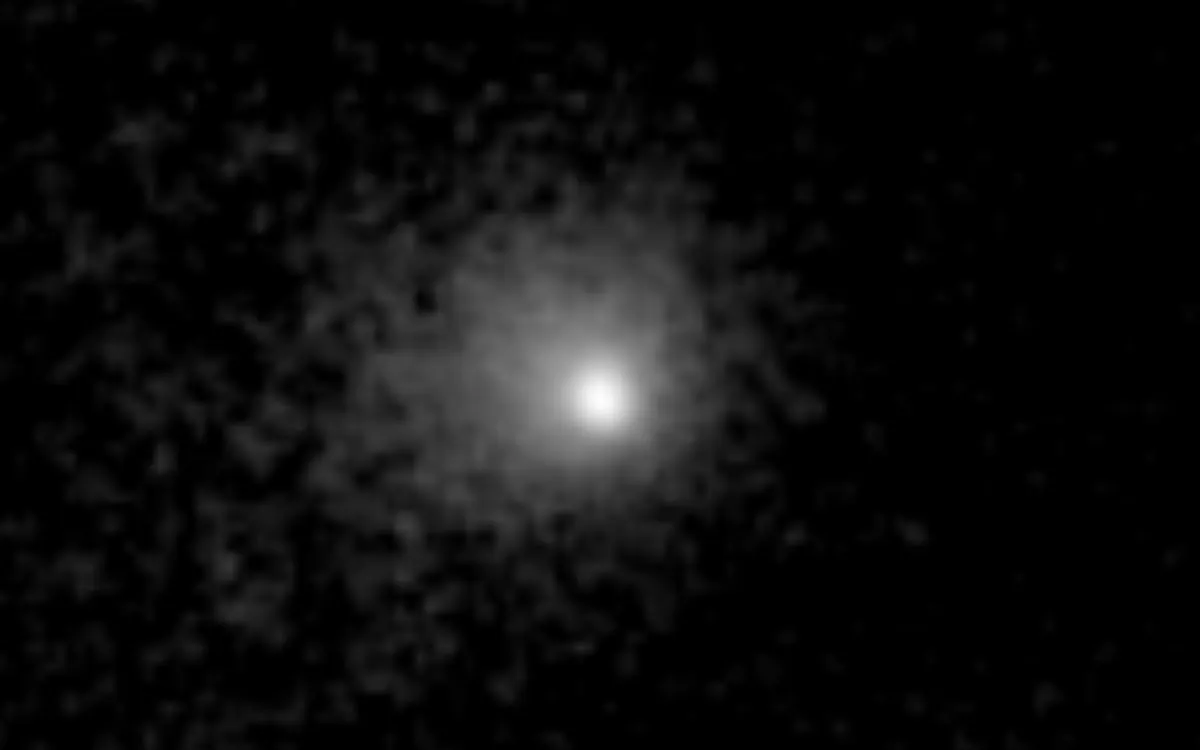
ESA's Euclid space telescope was built to map billions of faraway galaxies, not to chase objects in our own Solar System. Yet it has just found something new close to home. On 19 October, ESA announced that Euclid has discovered its first previously unknown comet, now officially called C/2026 S1 (Euclid).
How did a galaxy telescope find a comet?
Euclid takes long, steady exposures of the deep sky. Anything that moves during an exposure leaves a smear. Mikko Pöntinen of the University of Helsinki, working with the Euclid Consortium's Solar System team, wrote software that looks for these moving objects. It flagged a streak across several images. By predicting where the object would be next, he found it in five sets of images in total. A closer look showed a fuzzy cloud around it, a sign of an active comet shedding dust and gas.
How was it confirmed?
The object did not match any known comet or asteroid, so it was reported to the International Astronomical Union's Minor Planet Center (MPC). That alerted astronomers on the ground, who added their own observations. The MPC confirmed it as a comet on 8 October. Euclid had seen known comets before. This is the first one it has discovered.
Where is the comet now?
ESA puts it about 1.3 billion kilometres from Earth, roughly the distance from the Sun to somewhere between the orbits of Jupiter and Saturn. It is not in the flat plane of the planets, though. Seen from the Sun, it is almost "straight up", arching over the Solar System on an orbit that takes thousands of years to complete. It is far too faint for backyard observing.
Why was this discovery unlikely?
Two reasons. Euclid deliberately avoids the band of sky along the plane of the Solar System, where most comets and asteroids are, because dust there adds glare. And its step-and-stare survey usually visits each patch of sky only once, so it cannot simply go back for another look. "Very few comets are expected to be discovered by Euclid," said Bruno Altieri, Euclid Archive Scientist. The comet's orbit and Euclid's scanning just happened to line up.
Why does it matter?
Tracking moving objects also helps Euclid clean its galaxy maps of trails and stray light. The bigger prize is ESA's future Comet Interceptor mission, which needs a fresh comet spotted while it is still far from the Sun. This one is not a suitable target, but the quick discovery-and-alert process was a real test of how the two teams could work together.
Frequently asked questions
Can I see comet C/2026 S1 (Euclid)?
No. It is about 1.3 billion km away and far too faint for the naked eye or small telescopes. ESA has not suggested it will become bright.
Why is it called C/2026 S1?
C means a non-periodic comet (one with an orbital period of more than 200 years), 2026 is the year, and S1 means it was the first comet designated for the second half of September. The name in brackets credits the discoverer, in this case the telescope.
Will Comet Interceptor visit it?
No. ESA says this comet is not a suitable target, but finding it was a useful test of the alert process for future targets.
Want something you can actually see? The Orionid meteor shower, made of debris from Halley's Comet, peaks on the night of 21–22 October, and our guides to stargazing binoculars and a first telescope explain what to use.
More from Science & Space
View all →Read next

OnePlus Ace 7's fan blows two ways to keep your hands cool
OnePlus says the Ace 7 series' built-in fan splits its airflow between the chip and the back panel and keeps hot air off your fingers. Why that detail matters.

Switch Sports Resort lands Oct 22: what's in all 12 sports
The Switch 2 exclusive Switch Sports Resort arrives on 22 October with 12 motion-control sports on Wuhu Island, including Skateboarding and Thumb Wrestling.
UGREEN ID500 Pro is a Matter camera that records locally
UGREEN's 4K pan-tilt ID500 Pro streams and moves over Matter 1.5.1 and records to its new HomeAgent hub. Early-bird prices, what it needs and when it ships.