Salt crystals could preserve Enceladus ocean water
A lab study finds natron crystals trap tiny pockets of fluid as they freeze, making them a promising target for future missions hunting for life on Enceladus.
LandGadget Newsroom · · 3 min read
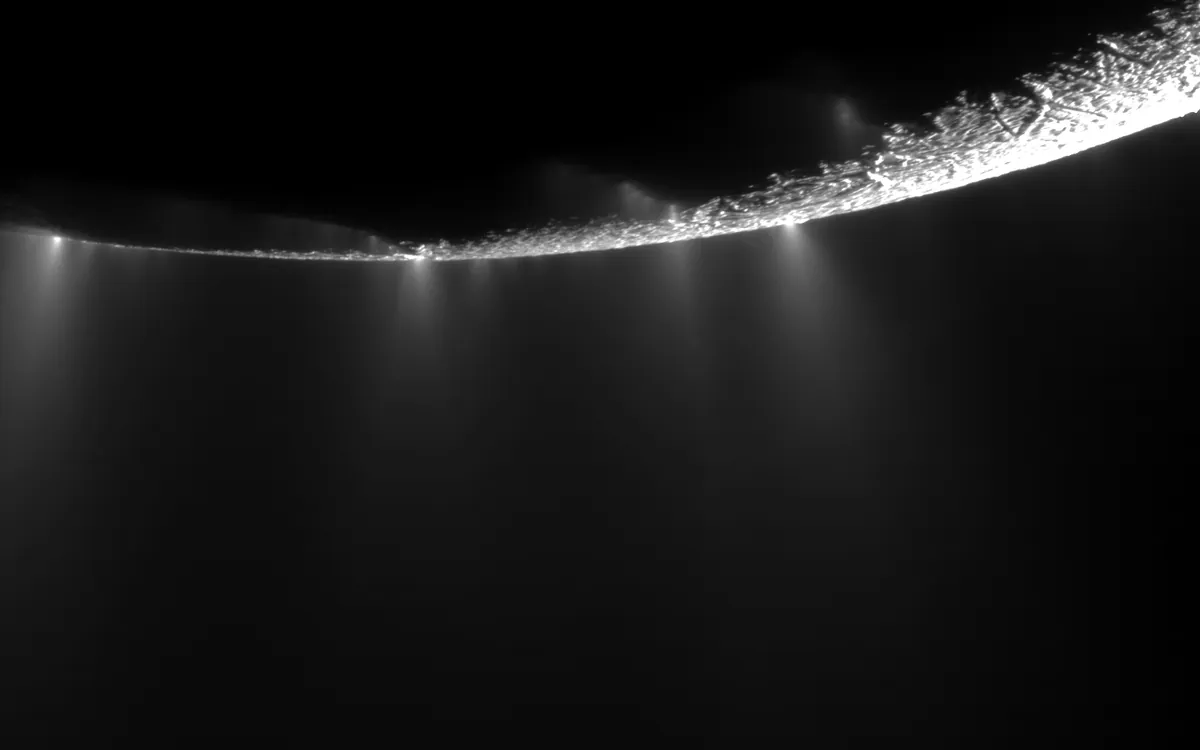
Saturn's moon Enceladus hides a salty ocean under kilometres of ice, but it does not keep everything to itself. Jets near its south pole fire water vapour and ice grains into space, which NASA's Cassini spacecraft flew through and sampled. A new laboratory study suggests where a future mission should look on the surface for the best-preserved traces of that ocean: inside salt crystals.
The work, led by Liam Perera of Diamond Light Source in the UK and published in Communications Earth & Environment, is summarised by Phys.org.
Watching salt freeze
The team cooled a solution of sodium chloride and sodium carbonate while scanning it with powerful X-rays. 3D images showed crystals forming in real time, and X-ray scattering identified which minerals grew. The key one was natron, a sodium carbonate mineral expected to form on Enceladus.
As natron crystals grew, they wrapped around tiny pockets of the surrounding liquid, known as fluid inclusions. Only about 3% of nearly 3,800 separated grains contained them, but bigger crystals were much more likely to: all 29 grains in the largest size class did. Each pocket is effectively a sealed sample of the water present at the moment it closed.
Why it matters for finding life
On Earth, studies of ancient salt deposits have reported possible microbial cells preserved in fluid pockets inside crystals. The new experiment shows that natron can trap fluid as it freezes, but it has not tested whether biological material would be captured or survive. The authors suggest the surrounding mineral could help shield anything inside from radiation.
There is a caveat about what the pockets would hold. The lab solution was about five times more concentrated than estimates from Cassini data, to grow crystals big enough to study. In a more dilute, ocean-like mix, ice would probably form first and concentrate the remaining brine, so natron would trap a saltier liquid. Either case could still tell scientists about the ocean and how freezing changed it.
If you want to see Saturn for yourself, our beginner telescope guide explains what kind of scope shows its rings, and this week's Orionid meteor shower is a good excuse to get outside.
Frequently asked questions
Has natron been found on Enceladus?
Not yet. It is a leading candidate mineral, but its presence on the surface has not been confirmed. The researchers recommend sensitive near-infrared instruments on future spacecraft to detect it.
Where should a mission look for these crystals?
The team points to fresh deposits near the plume vents. Larger, salt-rich droplets cool more slowly and tend to fall back close to the vents, giving crystals time to grow, while recent deposits are less likely to have lost water from their structure.
Did the study find signs of life?
No. It shows that natron can trap and keep pockets of fluid during freezing. Whether it can capture and preserve biological material remains untested.
More from Science & Space
View all →Read next
OnePlus Ace 7's fan blows two ways to keep your hands cool
OnePlus says the Ace 7 series' built-in fan splits its airflow between the chip and the back panel and keeps hot air off your fingers. Why that detail matters.

Switch Sports Resort lands Oct 22: what's in all 12 sports
The Switch 2 exclusive Switch Sports Resort arrives on 22 October with 12 motion-control sports on Wuhu Island, including Skateboarding and Thumb Wrestling.

UGREEN ID500 Pro is a Matter camera that records locally
UGREEN's 4K pan-tilt ID500 Pro streams and moves over Matter 1.5.1 and records to its new HomeAgent hub. Early-bird prices, what it needs and when it ships.