CATL solid-state batteries reach 20 Ah cells, small output in 2027
CATL says its sulfide all-solid-state EV cells are in 20 Ah trial production, aiming at 500 Wh/kg, with small-scale output from 2027 and mass production around 2030.
LandGadget Newsroom · · 2 min read
On this page
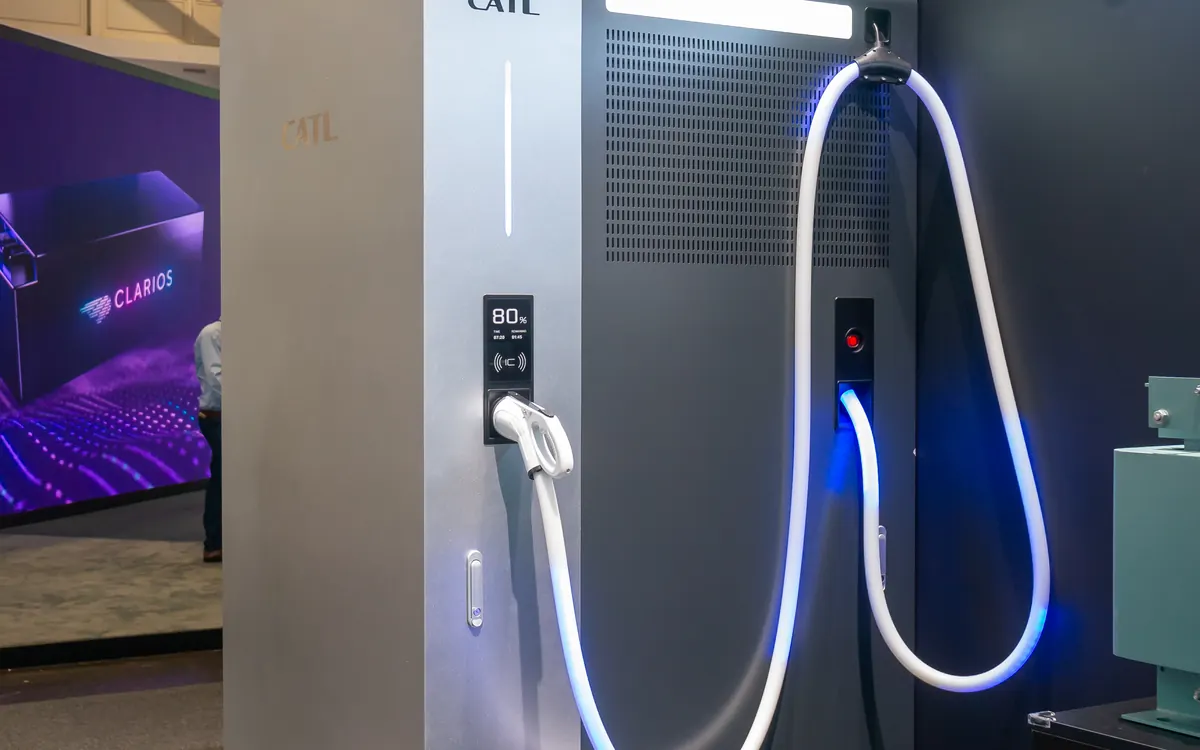
The world's biggest EV battery maker says its all-solid-state cells have taken another step towards production. Answering investor questions on Tuesday, CATL said its sulfide-based solid-state batteries have entered 20 Ah trial production and that it still plans small-scale production in 2027, Electrek reports.
What CATL actually said
- The cells use a sulfide solid electrolyte, which conducts lithium ions well and is easy to deform, but keeping solid parts in stable contact is still a challenge.
- The development target is an energy density of 500 Wh/kg. That's a goal, not a figure for cells you can buy.
- Output will be limited at first, with mass production expected around 2030.
CATL has been cautious in public before. In June its chairman Robin Zeng said that, on a scale of one to nine, all-solid-state batteries had only reached level four. A 20 Ah cell is still a lab-to-pilot-line format; a car pack needs hundreds of much larger cells that have to survive years of fast charging and cold winters.
Solid-state vs today's batteries
Today's EV cells, whether LFP or NMC, use a liquid electrolyte. Solid-state batteries replace it with a solid one. The promise is more energy in the same weight, better resistance to fire and potentially faster charging. "Semi-solid" batteries, already sold in some Chinese cars, still contain some liquid, so they are not the same thing.
Everyone is aiming at 2027
CATL isn't alone. Electrek points out that Toyota aims to launch its first all-solid-state EV in 2027 or 2028, Samsung SDI plans mass production of its SolidStack cells in the second half of 2027, and BYD's FinDreams battery unit plans limited sulfide solid-state batches in 2027, scaling up by 2030.
What it means for drivers
Don't put off buying an EV for this. Even on the most optimistic schedules, the first solid-state cars will be low-volume and probably premium-priced, while LFP and sodium-ion packs keep getting cheaper and better. If you already own an EV, our battery care guide covers the habits that matter far more for range over the next decade.
More from Cars & EVs
View all →Read next
Robot vacuums for carpets vs hard floors: what to look for
Carpet, rugs or hard floors? Which robot vacuum features matter for each: brushes, carpet boost, threshold height, mop lifting, edge cleaning and setup per room.

ESA's Hera sees Didymos and Dimorphos apart for the first time
ESA's Hera probe has resolved the Didymos–Dimorphos pair from 1,280 km away. First detailed Dimorphos images since DART's 2022 impact are due 25 November.
DLSS vs FSR vs XeSS: which upscaler should you use?
DLSS vs FSR vs XeSS explained: how each upscaler works, which GPUs support it, frame generation and lag, and which setting to pick on Nvidia, AMD or Intel.