EV charging connector types explained: Type 2, CCS, NACS
Type 1, Type 2, CCS1, CCS2, CHAdeMO, NACS and GB/T: which EV plug your car uses, which chargers fit, where each is used and when an adapter is safe to use.
LandGadget Newsroom · · 9 min read
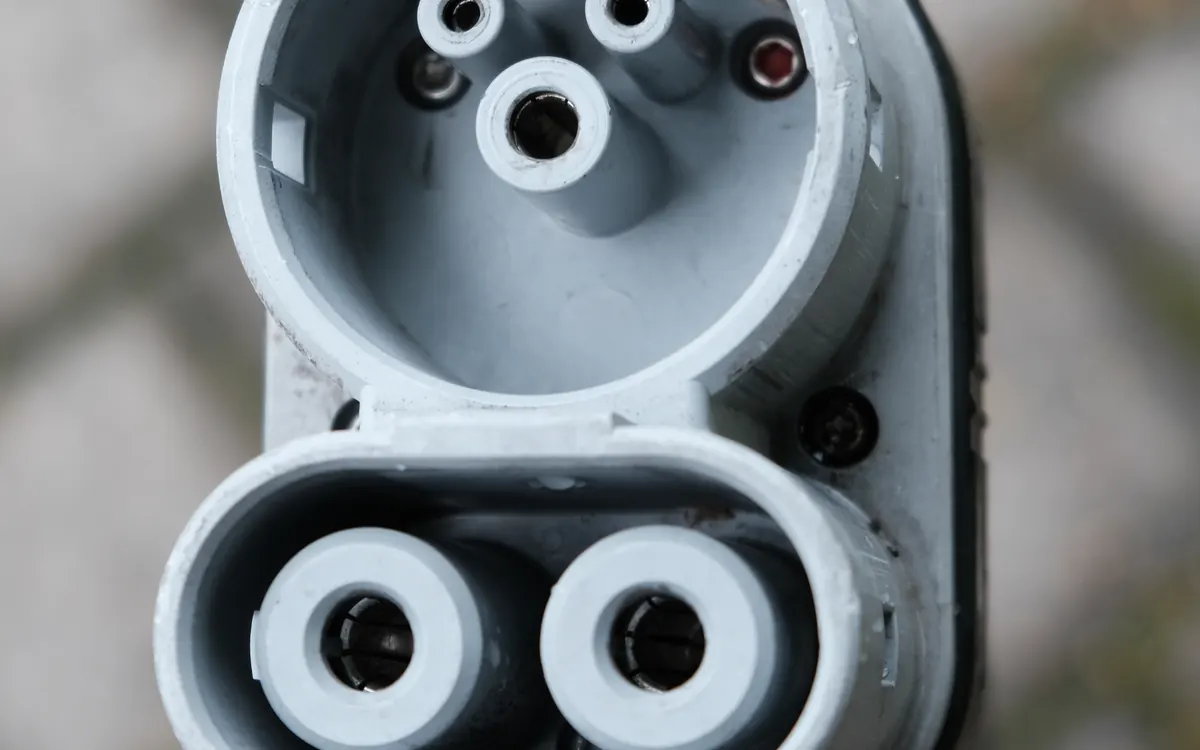
Pull into a charging station for the first time and you'll meet a confusing mix of plugs: Type 2, CCS, CHAdeMO, NACS. The good news is that your car only needs one or two of them, and once you know which, finding a compatible charger takes seconds. This guide explains every common EV connector, where it's used and how to work out what your car needs, without brand hype.
AC and DC: why there are two kinds of plug
Batteries store direct current (DC), but the grid supplies alternating current (AC). Something has to convert one to the other:
- AC charging (home wallboxes, most street and car-park posts): the charger passes AC to the car, and the car's onboard charger converts it. Speed is limited by that onboard charger, typically 7–11 kW, sometimes 22 kW.
- DC fast charging (motorway and rapid hubs): a big converter in the charging station feeds DC straight to the battery, bypassing the onboard charger. That is why it can be ten times faster or more.
Because the two jobs are different, connectors either have separate pins for AC and DC or, in Tesla's design, reuse the same pins for both. For real-world timings at each level, see our guide on how long it takes to charge an EV.
Every EV connector at a glance
| Connector | Current | Main regions | Where you'll see it |
|---|---|---|---|
| Type 1 (SAE J1772) | AC, single-phase | North America, Japan (older cars) | Home and public AC charging |
| Type 2 (IEC 62196-2) | AC, single- or three-phase | Europe, UK, Australia and many others | Home wallboxes and public AC posts |
| CCS1 (Combo 1) | AC + DC | North America, South Korea | DC fast chargers |
| CCS2 (Combo 2) | AC + DC | Europe, UK, Australia, India and more | DC fast chargers |
| CHAdeMO | DC only | Japan; legacy elsewhere | Older Nissan Leaf and Mitsubishi models |
| NACS (SAE J3400) | AC + DC, same pins | North America | Tesla Superchargers, new US and Canadian EVs |
| GB/T | Separate AC and DC plugs | China | Chinese-market cars and chargers |
Type 1 (J1772): the old North American AC plug
Type 1, standardised as SAE J1772, is a round five-pin plug for single-phase AC. It was the standard AC connector in North America for more than a decade and is also found on older Japanese cars. Because it can't use three-phase power, it is limited to slower AC charging. In North America it is gradually being replaced by NACS on new cars, but millions of public posts still use it, and simple adapters let NACS cars plug in.
Type 2: Europe's AC standard
Type 2 (IEC 62196-2, sometimes called the "Mennekes" plug after the German company that designed it) has seven pins and a flat top edge. Its big advantage is three-phase support, so public posts commonly deliver up to 22 kW AC if the car's onboard charger can accept it. The EU made Type 2 the common standard for public AC charging, and it is also used in the UK, Australia, New Zealand and many other countries.
Two practical details:
- Many public AC posts in Europe are "untethered": they have only a socket, so you need to bring your own Type 2 cable. Most EVs sold in Europe include one, but check before you rely on it.
- Home wallboxes come in tethered and socket versions. Our home EV charger guide explains which to choose.
CCS: one inlet for slow and fast charging
The Combined Charging System (CCS) takes an AC plug and adds two large DC pins underneath. The car has one combined inlet: the top part accepts a normal AC plug, and the full inlet accepts the DC fast-charging plug.
- CCS1 = Type 1 + two DC pins. Used in North America and South Korea.
- CCS2 = Type 2 + two DC pins (the plug in the photo above). The standard for DC fast charging in Europe and many other regions, and the plug used by Tesla cars sold in Europe.
DC fast-charging plugs are always attached to the charging station, so you never need your own CCS cable. Today's fastest public CCS chargers are rated at around 350–400 kW, but your car's own maximum and the battery's temperature decide what you actually get.
CHAdeMO: the Japanese DC plug that is fading out
CHAdeMO was one of the first DC fast-charging standards, developed in Japan. Cars that use it have two separate inlets: CHAdeMO for DC and Type 1 or Type 2 for AC. It is best known from the first- and second-generation Nissan Leaf and some Mitsubishi models.
CHAdeMO was an early pioneer of two-way charging, which is still how many Leaf owners in Japan power their homes. Our bidirectional charging explainer covers V2L, V2H and V2G in detail.
Outside Japan, however, new cars have largely moved to CCS or NACS, and many new charging hubs in Europe no longer include a CHAdeMO cable. If you drive a CHAdeMO car, filter your charging app by connector before a long trip.
NACS (SAE J3400): Tesla's plug becomes the North American standard
The North American Charging Standard (NACS) is Tesla's compact connector, which Tesla opened to other manufacturers in 2022. SAE International has since standardised it as SAE J3400. Unlike CCS, it uses the same two main pins for AC and DC, so the plug is much smaller.
Most major car makers selling in the US and Canada have announced a switch to NACS, and many non-Tesla EVs can now use Tesla Superchargers, either with a built-in NACS port or with an approved adapter. During the transition you'll see three situations:
- New car with a NACS port: plugs straight into Superchargers; uses an adapter for older CCS1 chargers.
- CCS1 car with Supercharger access: needs the adapter recommended by the car maker.
- Older CCS1 car without access: may not be enabled on the Supercharger network yet. Check the car maker's app.
In Europe, NACS is not used: Tesla adopted CCS2 there.
GB/T: China's own standard
China uses GB/T connectors, with separate plugs for AC and DC. They look similar to Type 2 and CHAdeMO at first glance but are not compatible. If you import a car built for the Chinese market, it may have GB/T inlets; check whether local chargers support them or whether a certified adapter exists. China is also developing a next-generation standard together with the CHAdeMO association, known as ChaoJi.
Which connector does my car use?
Three quick ways to find out:
- Look at the charging flap. A round seven-pin socket with a flat top is Type 2; if there are two big holes underneath, it's CCS2. A small, slim inlet with no separate DC section is NACS.
- Check the manual or spec sheet for "AC charging connector" and "DC charging connector".
- Use a charging app (the car maker's or a network's) and set your connector type, so the map only shows compatible chargers.
Are charging adapters safe?
Adapters are common and can be safe, but only within limits:
- Use certified adapters, ideally the one your car maker sells or recommends, especially for DC fast charging, where currents are very high.
- An adapter cannot add speed. It doesn't change the car's onboard charger or its maximum DC power.
- Some combinations don't exist or aren't allowed. A car without DC support on one standard can't fast charge through a passive adapter.
- Never chain adapters or use damaged ones. A hot plug or burning smell means stop charging.
Bottom line
For most drivers, the rule is simple: in Europe, look for Type 2 for everyday AC charging and CCS2 for fast charging; in North America, expect NACS to take over from J1772 and CCS1. Charging habits matter more than the plug itself for battery life, so read our EV battery care guide next. Paying at public chargers is changing too: see our report on the UK's 20% VAT on public EV charging.
Frequently asked questions
What is the most common EV charging connector in Europe?
Type 2 for AC charging and CCS2 for DC fast charging. Almost every new EV sold in Europe uses a CCS2 inlet, which also accepts a Type 2 AC plug.
What is the difference between CCS1 and CCS2?
Both add two DC pins below an AC plug. CCS1 is based on the Type 1 (J1772) plug and is used in North America and South Korea; CCS2 is based on Type 2 and is used in Europe and many other regions. They are not interchangeable.
Is NACS the same as a Tesla plug?
Yes. NACS is the connector Tesla developed, now standardised as SAE J3400. It is used in North America; Tesla cars in Europe use CCS2 instead.
Can I charge a CHAdeMO car at a CCS charger?
Not directly. Some CHAdeMO-to-CCS adapters exist, but support is limited and depends on the car. In practice, CHAdeMO drivers should look for chargers that still have a CHAdeMO cable.
Do I need my own charging cable?
For DC fast chargers, no: the cable is attached. For many public AC posts in Europe, yes: they only have a socket, so you need a Type 2 cable.
Does the connector affect how fast my car charges?
Not by itself. Charging speed depends on the charger's power, the car's onboard charger for AC, the car's maximum DC power and the battery's state of charge and temperature.
More from Cars & EVs
View all →Read next
How many case fans do I need? PC airflow setup guide
How many case fans a gaming PC really needs, which way to point them, intake vs exhaust, positive vs negative pressure, 120 vs 140 mm and how to set fan curves.

Best Monitor Size for Gaming: 24 vs 27 vs 32 Inch
What monitor size is best for gaming? Compare 24, 27, 32-inch and ultrawide screens by resolution, pixel density, desk distance, GPU power and the games you play.

Bluetooth Codecs Explained: SBC vs AAC vs aptX vs LDAC vs LC3
What Bluetooth audio codecs actually change: SBC, AAC, aptX, LDAC and LE Audio's LC3 compared — sound, latency, battery and which phones support which codec.