What is bidirectional charging? V2L, V2H and V2G explained
Bidirectional charging lets an EV power appliances, your home or the grid. How V2L, V2H and V2G differ, what hardware you need, costs, safety and battery wear.
LandGadget Newsroom · · 7 min read
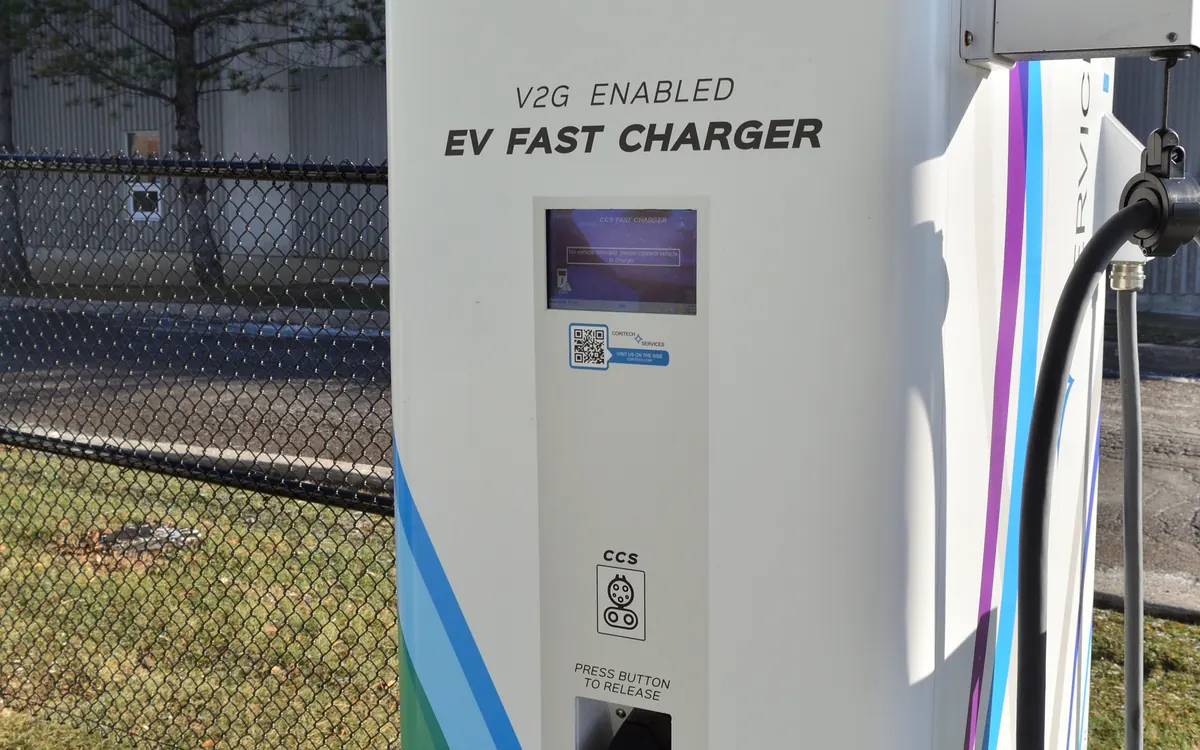
An electric car is a big battery on wheels. A typical EV carries 50 to 100 kWh, several days of electricity for an average home. Bidirectional charging lets that energy flow back out: to a kettle at a campsite, to your house in a blackout, or to the grid when power is expensive. Carmakers now advertise it widely, but the acronyms hide very different setups. This guide explains what each one does, what you need to buy, and the catches.
How bidirectional charging works
A battery stores direct current (DC). Your home and appliances use alternating current (AC). Normal charging converts AC from the grid into DC for the battery. Bidirectional charging reverses that, so something has to convert DC back into AC. The device that does this is an inverter, and where it sits is the main design difference:
- Inverter in the car (AC bidirectional). The car outputs ready-to-use AC. The home equipment can be simpler and cheaper. Ford's upcoming Fathom pickup uses this approach, with more than 10 kW of AC output.
- Inverter in the wall unit (DC bidirectional). The car sends DC through the charging cable, and a wall-mounted bidirectional charger converts it. This works with more cars, but the charger is larger and usually much more expensive.
The car and charger also need to talk to each other. Older Japanese systems used the CHAdeMO connector, which supported two-way power early on; that is how Nissan Leaf owners in Japan have powered their homes for years. For CCS and NACS cars, the communication standard ISO 15118-20 adds support for bidirectional power.
V2L, V2H and V2G: the three modes
| V2L (vehicle-to-load) | V2H (vehicle-to-home) | V2G (vehicle-to-grid) | |
|---|---|---|---|
| What it powers | Appliances and tools plugged into the car | Your house, via its wiring | The public electricity grid |
| Extra hardware | None or a plug adapter | Bidirectional charger plus a transfer switch or backup panel | Bidirectional charger and a utility agreement |
| Typical use | Camping, work sites, a fridge in an outage | Backup in blackouts, cheaper evening power | Earning credits for helping the grid |
| Main catch | Limited power, extension leads only | Installation cost and permits | Only available in some areas and programmes |
V2L: vehicle-to-load
The simplest version. The car has a built-in socket, in the cabin or bed, or an adapter that plugs into the charge port and gives you ordinary outlets. Hyundai quotes up to 3.6 kW for the Ioniq 5's V2L, enough for a kettle, power tools or a camping fridge. Pickups go further: the F-150 Lightning has outlets on board, and Tesla's Cybertruck offers up to 11.5 kW through its Powershare feature.
V2L needs no installation, but you can only run what you can reach with an extension lead. Never plug a V2L lead into a house socket to "back-feed" the home. That is dangerous for you and for line workers.
V2H: vehicle-to-home
Here the car feeds your house wiring, either to keep the lights on during a blackout or to run the home from the battery in the evening when electricity is pricier (time-of-use tariffs). Examples include Ford's Intelligent Backup Power for the F-150 Lightning, rated up to 9.6 kW, and Kia's EV9 with the Wallbox Quasar 2 charger.
V2H needs:
- A bidirectional home charger that the car maker supports.
- A transfer switch or backup panel, which disconnects the house from the grid during an outage so you don't send power down the line. This "anti-islanding" protection is a legal and safety requirement.
- A licensed electrician, and in many places a permit and approval from your network operator.
V2G: vehicle-to-grid
V2G lets the grid draw on your car's battery at peak times, usually through an energy supplier or aggregator that pays you or cuts your bill. It is the most complex mode and the least widely available. Offers exist in some markets, such as Renault and its Mobilize brand's V2G service in France, and utility pilots in the US and UK, but availability depends on where you live.
What it costs
- V2L: usually included in the car's price, or an adapter costing tens to a few hundred dollars or euros.
- V2H: the big variable. The charger and backup hardware can run to thousands, and installation can add as much again. Ford says its Fathom equipment will be much cheaper than its first generation; TechCrunch reports that installing existing V2H systems can cost up to $10,000 depending on the house.
- V2G: hardware costs similar to V2H, offset by payments or tariff discounts if a programme is available.
Before you buy, ask for a written installation quote. It is often larger than the price of the charger itself.
How long can an EV power a house?
Divide the usable battery energy by your average load. If a car has 60 kWh available and your essentials (fridge, lights, router, heating controls) average 1 kW, that is roughly 60 hours in theory. Most cars let you set a floor, for example 20–30%, so you still have range to drive. Big loads such as electric heating, cooking or air conditioning shorten the time sharply, and motors need extra power to start.
Does it wear out the battery?
Every charge cycle ages a battery slightly, so heavy daily V2G use adds some wear. Occasional backup or V2L use is a small fraction of normal driving. The bigger practical question is the warranty: some makers limit or exclude bidirectional use with unapproved equipment, so read the terms for your car. Our EV battery care guide covers the habits that matter more for long battery life, and our LFP vs NMC explainer explains why LFP packs tolerate frequent cycling well.
Checklist before you pay
- Car: does it support V2L, V2H or V2G, and in your country? Features differ by market and model year.
- Charger: is the bidirectional charger approved by the car maker, and does it support your connector?
- House: is there room in your panel for a transfer switch or backup panel? Get an electrician's quote.
- Utility: do you need approval to connect, and is there a V2G or time-of-use programme worth joining?
- Warranty: check the car's battery terms for bidirectional use.
If you are still choosing a charger for one-way charging, start with our home EV charger guide. Not sure an EV is right for you at all? See hybrid vs plug-in hybrid vs EV.
Frequently asked questions
What is bidirectional charging?
It is charging that works in both directions: the EV takes energy from the grid to charge and can also send energy out of its battery to appliances, a house or the grid.
What is the difference between V2L, V2H and V2G?
V2L powers devices plugged into the car, V2H supplies your home's wiring, for example in a blackout, and V2G feeds energy into the public grid, usually through a paid programme.
Can any EV power my house?
No. The car must support vehicle-to-home in your market, and you need a compatible bidirectional charger plus a transfer switch or backup panel installed by an electrician.
Does bidirectional charging damage the battery?
It adds some cycling wear, which matters most with frequent V2G use. Occasional backup use has a small effect. Check your car's warranty, as some makers limit bidirectional use.
Is V2L safe to use for home backup?
Only with extension leads to individual appliances. Never connect a V2L outlet to a house socket to back-feed the home, as that can energise grid lines and is dangerous.
More from Cars & EVs
View all →Read next

Half-Life: Alyx adds foveated rendering on PC: which GPUs work
Valve's new Half-Life: Alyx patch adds a foveated rendering option on PC. It needs Nvidia GTX 16 or RTX 20 series or newer, AMD via Vulkan, and works best with eye tracking.

Iceberg A-81 reaches South Georgia after a 3-year drift
NASA satellite images show Antarctic iceberg A-81, about 1,550 km² of ice from the Brunt Ice Shelf, slowing at South Georgia's undersea shelf. Its route and why it matters.
Samsung Community goes offline for 72 hours: back up first
Samsung Community shuts for 72 hours from October 30 for an overhaul. DMs, drafts, bookmarks and subscriptions won't migrate. What to save and what changes after.