How to choose a home EV charger: power, phases, smart features and safety
Granny cable or wallbox, 7.4 or 11 kW, tethered or socket, smart tariffs and RCD protection: what to check before you buy and install a home EV charger.
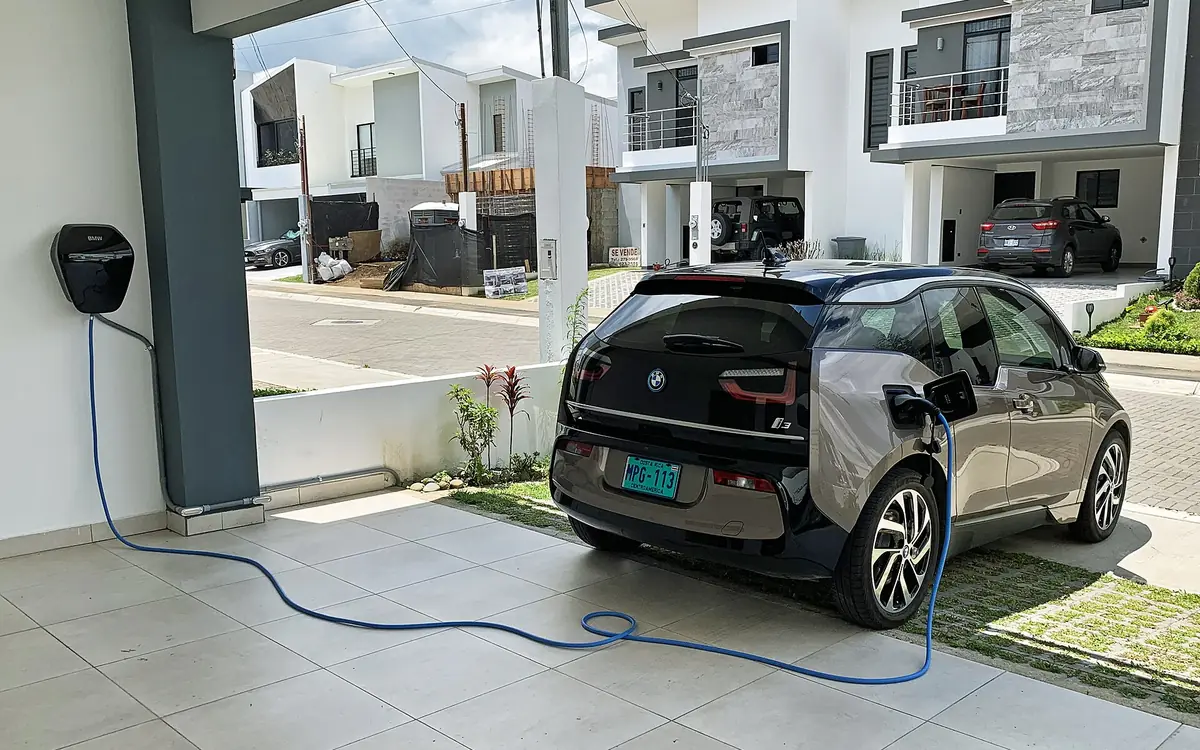
Quick verdictMatch the charger to your car's onboard charger and your home's supply, not to the biggest number. For most homes a smart 7.4 kW (or 11 kW three-phase) wallbox is the sweet spot.
Jump to the verdict ↓On this page
A home charger is the most useful thing you can buy for an electric car. Most EV owners do the bulk of their charging overnight, so a good setup means you wake up to a full battery and rarely need public chargers. Choosing one comes down to five questions: how much power you really need, what your home's supply can take, which plug, which smart features, and how it will be installed safely.
Step 1: work out how much power you actually need
A home charger delivers AC power, and the car's own onboard charger converts it to DC for the battery. That onboard charger sets the ceiling. If your car accepts 7.4 kW AC, an 11 or 22 kW wallbox won't charge it any faster.
A quick way to estimate charging time: energy you need (kWh) ÷ charger power (kW), plus about 10% for losses. Topping up from 20% to 80% on a 60 kWh battery needs about 36 kWh:
- at 2.3 kW (a portable cable in a household socket): about 17 hours;
- at 7.4 kW: about 5.5 hours;
- at 11 kW: about 3.5–4 hours.
If you drive 40–50 km a day, you need only 6–10 kWh a night, and even a slow setup refills that while you sleep.
Step 2: check what your home's supply can handle
The typical power levels differ by region:
| Setup | Typical power | Where | Good for |
|---|---|---|---|
| Portable cable, household socket | ≈1.4 kW (120 V US) / ≈2.3 kW (230 V EU) | Anywhere | Plug-in hybrids, low mileage, backup |
| Single-phase wallbox, 32 A | ≈7.4 kW (230 V) / 7.7–9.6 kW (240 V US, 32–40 A) | Most houses | Most EV owners |
| Three-phase wallbox, 16 A | 11 kW | Homes with three-phase supply (common in parts of Europe) | Larger batteries, high mileage |
| Three-phase wallbox, 32 A | 22 kW | Three-phase homes, often needs grid approval | Only cars with a 22 kW onboard charger |
Before you buy, look at your main fuse or service capacity and what else draws power at night: an electric oven, a heat pump, a boiler. In the US, a Level 2 charger usually needs a dedicated 240 V circuit rated at 125% of the charger's current, so a 40 A charger sits on a 50 A breaker. In Europe, check whether your home has single- or three-phase supply. Some cars charge on only one or two phases, which caps them at 3.7 or 7.4 kW on a three-phase wallbox.
If the supply is tight, choose a charger with dynamic load balancing. It measures the whole house and turns charging down when the kettle and oven are on, instead of tripping the main fuse.
Step 3: tethered or socket, and which plug
- Connector: Europe uses Type 2 for AC charging. In North America it's J1772 or Tesla's NACS (SAE J3400), which many brands are adopting. Adapters exist, but a matching plug is simpler.
- Tethered (cable attached): just grab and plug in, the most convenient for daily use.
- Untethered (socket): neater, works with any cable and car, but you carry or store a cable.
Cable length matters more than people expect. Measure from the wall to the car's charging port, which may be at the front, side or rear, and add some slack.
+ Pros
- Tethered: fastest to use every day
- Socket: tidy look, works with future cars and cable types
- Load balancing lets you charge faster on a limited supply without tripping the fuse
− Cons
- Tethered: the cable and plug type are fixed
- Socket: you keep a cable in the car or garage
- 22 kW units cost more and help only a few cars
Step 4: smart features worth paying for
- Scheduling for cheap night tariffs. The car app often does this too, but a charger that knows your tariff is more reliable.
- Solar surplus charging, if you have panels: the charger follows your spare solar output.
- OCPP support, an open protocol that lets you switch apps or energy suppliers without replacing the hardware.
- A certified energy meter (MID in Europe) if an employer reimburses home charging for a company car.
- Wi-Fi or Ethernet plus an access lock (app, RFID card or PIN) if the charger is outside.
In some countries smart functions are required. In the UK, for example, new home charge points must have them by law. Ask your energy supplier as well: some tariffs only give their cheapest rate to approved chargers.
Step 5: installation and safety
A wallbox should be installed by a qualified electrician. They check the supply, size the cable and breaker, and fit the right earth-leakage protection. EV charging needs residual-current protection that can also detect DC fault current: either a charger with built-in 6 mA DC detection plus a Type A RCD, or a Type B RCD. Many wallboxes already include the DC detection.
Check local paperwork too. In Germany, for instance, wallboxes up to 11 kW must be registered with the grid operator and more powerful units need its approval. Outdoor units should have a suitable IP rating and be mounted where the cable won't lie across a footpath.
To keep the battery healthy once you're charging at home, see our EV battery care guide.
Our verdict
Smart 7.4 kW single-phase or 11 kW three-phase wallbox
Start from your car's onboard charger limit and your home's supply, then add the features you'll actually use. For most people a 7.4 kW (or 11 kW three-phase) smart wallbox with scheduling and load balancing, installed by an electrician, is the sweet spot. A portable cable in a household socket is fine for plug-in hybrids and short commutes. 22 kW only makes sense if your car can use it.
Frequently asked questions
Can I charge an EV from a normal household socket?
Yes, with the portable cable many cars come with, but it is slow (about 2.3 kW in Europe or 1.4 kW on 120 V in the US) and puts a long continuous load on the socket. Have an electrician check the circuit if you plan to use it every day.
Will a 22 kW wallbox charge my car faster than an 11 kW one?
Only if the car's onboard charger accepts 22 kW AC. Most EVs are limited to 7.4 or 11 kW, so they charge at the same speed on either unit.
Do I need a smart charger?
It is not strictly necessary everywhere, but scheduling for cheap night rates, load balancing and solar charging usually pay off, and some countries and tariffs require smart functions.
Tethered or untethered?
Tethered is more convenient for daily use; untethered looks neater and works with any cable or future car. Choose based on whether convenience or flexibility matters more to you.
More from Cars & EVs
View all →Read next

GTA VI launch trailer is live — five weeks to November 19
Rockstar dropped the Grand Theft Auto VI Launch Trailer on 15 October, with new PS5-captured footage and a debut score track, ahead of the 19 November release.
How much RAM do you need in 2026? 8, 16, 32 or 64 GB explained
What RAM does, how to tell if you're running out, and how much memory to get for browsing, office work, gaming, video editing and local AI in 2026.

How to choose wireless earbuds in 2026
Fit, ANC, codecs, battery, multipoint and IP rating: a practical buying guide to true wireless earbuds without invented lab scores or brand rankings.