How long does it take to charge an electric car?
From 40+ hours on a wall socket to about 20–40 minutes on a fast charger: how long EV charging really takes, how to work it out for your car, and what slows it.
LandGadget Newsroom · · 8 min read
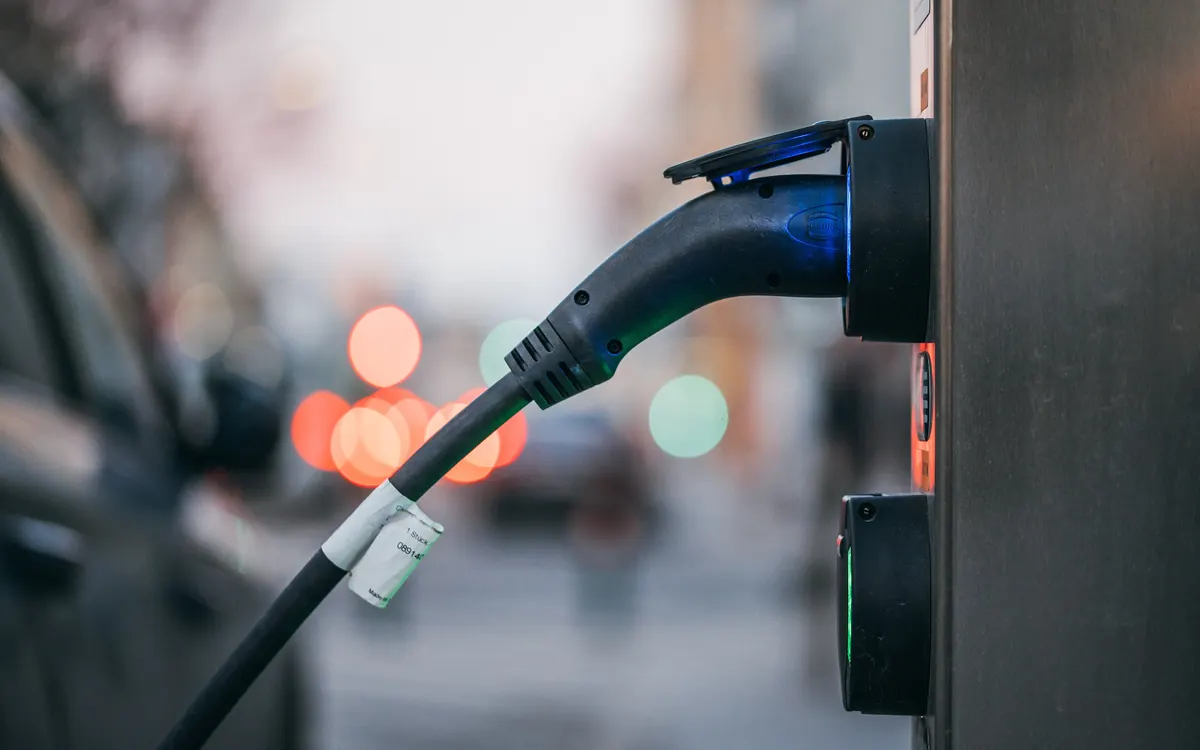
There is no single answer to "how long does it take to charge an electric car", because it depends on three things: how much energy you need, how much power the charger can supply and how much power your car will accept. The good news is that the maths is simple. Once you know it, you can estimate any charging stop in your head.
The simple formula
Charging time (hours) ≈ energy needed (kWh) ÷ charging power (kW)
- Energy needed is the part of the battery you are refilling, not the whole pack. Going from 20% to 80% on a 60 kWh battery means adding about 36 kWh.
- Charging power is the lowest of: what the charger delivers, what the car can accept, and what the battery allows at that moment.
- On AC (home and most street chargers), add about 10% for conversion losses.
Example: adding 36 kWh on a 7.4 kW wallbox takes 36 ÷ 7.4 ≈ 4.9 hours, plus losses, so about 5.5 hours. Our home EV charger guide uses the same method to size a wallbox.
The three charging levels
Chargers fall into three broad groups. In North America they are often called Level 1, Level 2 and DC fast charging; in Europe you will see the same split as socket, AC wallbox and DC rapid charging.
| Charger | Typical power | Range added per hour* | Typical use |
|---|---|---|---|
| Household socket (Level 1) | ≈1.4 kW (120 V US), ≈2.3 kW (230 V EU) | ≈8–14 km (5–8 mi) | Plug-in hybrids, low mileage, backup |
| AC wallbox / Level 2 | 3.7–11 kW (up to 22 kW three-phase, 19.2 kW in the US) | ≈20–65 km (12–40 mi) | Overnight at home, work, shopping |
| DC fast / rapid | 50–350 kW (and higher) | Hundreds of km per hour at first | Road trips, quick top-ups |
Household socket: slow but often enough
A portable cable in a normal socket delivers only about 1.4 kW on 120 V in the US or about 2.3 kW on 230 V in Europe and Ukraine. That adds very roughly 8–14 km of range per hour. Filling a large battery from nearly empty can take well over a day, but if you drive 30–40 km a day and plug in every night, it can be all you need. Have an electrician check the circuit if you use it daily, because it is a long continuous load.
AC wallbox (Level 2): the everyday option
Most home and workplace chargers are AC wallboxes. Here the bottleneck is usually the car's onboard charger, which converts AC to DC for the battery. Many EVs accept 7.4 kW on single phase or 11 kW on three-phase; some accept more, and many plug-in hybrids only 3.7–7.4 kW. A 22 kW post won't charge a car with an 11 kW onboard charger any faster.
At 7.4 kW you add roughly 40 km of range per hour; at 11 kW roughly 60 km. A typical overnight session of 8–10 hours refills most EVs from low to full.
DC fast charging: road-trip speed
Fast chargers bypass the onboard charger and feed DC straight into the battery, so they can deliver 50 kW to 350 kW or more. In practice, many recent EVs are quoted by their makers at roughly 20–40 minutes for 10% to 80% on a suitable charger, with some 800-volt cars quoted under 20 minutes. The number printed on the charger is a maximum. If your car peaks at 120 kW, a 350 kW unit won't push it beyond that.
Why the last 20% takes so long
DC charging is fastest when the battery is fairly empty. As it fills, the car's battery management system steadily reduces the power to protect the cells. This "charging curve" is why manufacturers quote 10–80% times: the stretch from 80% to 100% can take almost as long as the whole 10–80% session.
On AC at home the curve matters much less, because the power is low enough that the car can take it at almost any state of charge. Many cars only slow slightly in the last few percent.
Real-world examples
Here is how the formula plays out for a car with an 80 kWh usable battery charging from 10% to 80% (56 kWh), assuming the car can accept the charger's full power:
- Household socket, 2.3 kW: 56 ÷ 2.3 ≈ 24 hours, so about 27 hours with losses. On 1.4 kW (120 V) it is closer to 44 hours.
- Wallbox, 7.4 kW: 56 ÷ 7.4 ≈ 7.6 hours, so about 8.5 hours: comfortably overnight.
- Wallbox, 11 kW: about 5.5–6 hours.
- DC fast charger: the power changes along the curve, so use the average. If the car averages 100 kW across the session, 56 ÷ 100 ≈ 34 minutes; at a 50 kW charger, over an hour.
For a plug-in hybrid with a 15–20 kWh battery, a full charge usually takes a few hours on a wallbox or a long night on a socket. Many plug-in hybrids don't support DC fast charging at all. Our hybrid vs plug-in hybrid vs EV comparison covers why charging habits decide whether a plug-in hybrid makes sense.
What slows charging down
- Cold battery. Lithium-ion cells accept less power when cold, so a fast-charging stop in winter can take noticeably longer. Many EVs precondition (warm) the battery if you set the charger as your destination in the built-in navigation.
- Hot battery. After repeated fast charges on a hot day, the car may limit power to protect the cells.
- High state of charge. As explained above, DC power drops as the battery fills.
- Shared chargers. At some sites, two stalls share one power cabinet, so the car next to you can halve your speed. If a charger seems slow, try another unit.
- The car's limits. Peak DC rate, battery voltage (400 V or 800 V) and onboard AC charger rating all cap the speed, whatever the charger says.
- Battery chemistry and age. Different chemistries have different curves and recommended charge limits; our explainer on LFP vs NMC batteries covers why some makers suggest charging LFP packs to 100%.
Does fast charging damage the battery?
Occasional fast charging is normal and the car manages it. Studies and long-term fleet data suggest that frequent DC charging can speed up wear somewhat, especially in heat, but for most drivers the effect is modest. The simplest habits are to charge at home on AC when you can, keep daily charging around 80% unless the manufacturer says otherwise, and avoid leaving the car at 100% or near 0% for long. Our EV battery care guide goes through each habit in detail.
How to find out your own car's charging time
- Check the specs for usable battery capacity (kWh), maximum AC charging power (onboard charger, kW) and maximum DC power (kW). The manufacturer usually also quotes a 10–80% DC time.
- Look at the charger you plan to use: its rated power and, for AC, whether it is single- or three-phase.
- Use the lower number of the car and the charger, and apply the formula above.
- Use the car's own estimate. Most EVs show the time to your target charge level once plugged in, and it accounts for temperature and the charging curve.
Frequently asked questions
How long does it take to charge an electric car at home?
On a 7.4 kW wallbox, a typical EV adds roughly 40 km of range per hour and refills from low to full overnight in about 8 to 10 hours. On a standard household socket it can take more than a day from nearly empty.
How long does a fast charger take?
Many recent EVs go from about 10% to 80% in roughly 20 to 40 minutes on a suitable DC fast charger, according to their makers. Older or smaller cars with lower peak rates, cold batteries and 50 kW chargers can take an hour or more.
Why does charging slow down after 80%?
The battery management system reduces power as the cells fill to protect them from stress and heat. That is why the last 20% can take nearly as long as the first 70% on a fast charger.
Will a more powerful charger always charge my car faster?
No. The car's onboard charger limits AC speed and its peak DC rate limits fast-charging speed. Once you reach those limits, a more powerful charger makes no difference.
Is it OK to charge an EV every night?
Yes. Plugging in nightly at a moderate charge limit, often around 80% unless your manufacturer recommends otherwise, is a normal and battery-friendly routine.
Thinking about using the car's battery for more than driving? See our explainer on bidirectional charging, which covers powering devices or even your home from an EV.
More from Cars & EVs
View all →Read next

How to choose a baby monitor: Wi‑Fi vs non‑Wi‑Fi, security
Audio, local video or Wi‑Fi app monitor? How to choose a baby monitor by range, night vision, battery, privacy and security, plus the setup steps that matter.

CPU vs GPU bottleneck explained: how to tell what's slowing your games
What a CPU or GPU bottleneck really is, how to spot one with a performance overlay, why resolution changes everything, and the fixes worth trying before you buy parts.
HDMI vs DisplayPort: which cable should you use in 2026?
HDMI vs DisplayPort explained: HDMI 2.1 and 2.2 vs DisplayPort 1.4 and 2.1 bandwidth, which to use for gaming monitors, TVs, consoles and laptops, plus cables.