The leap second is being scrapped: what changes in 2027
Countries at the CGPM voted to make UTC continuous from 20 May 2027, ending leap seconds and letting clocks drift up to an hour from Earth’s rotation.
LandGadget Newsroom · · 3 min read
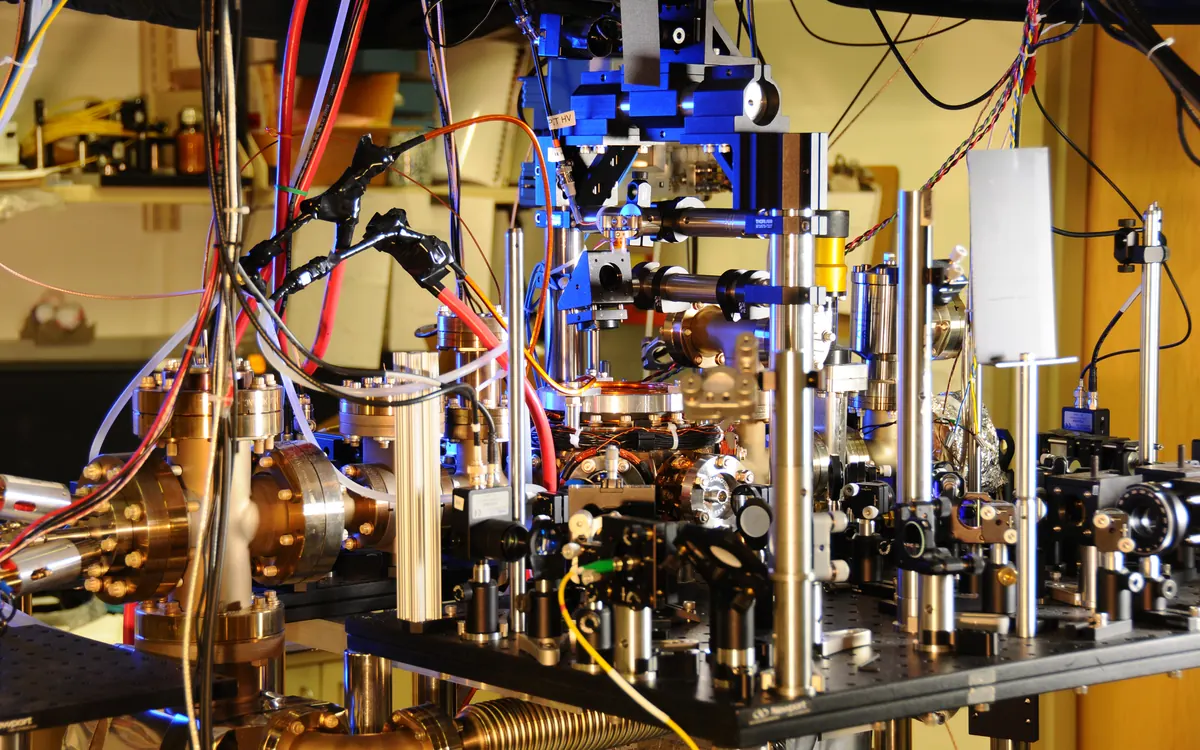
The leap second, the occasional extra second added to the world’s clocks, is on its way out. On 15 October, member states at the 28th General Conference on Weights and Measures (CGPM) in Versailles adopted Resolution 5, which makes Coordinated Universal Time (UTC) a continuous time scale from 20 May 2027, World Metrology Day. The International Bureau of Weights and Measures (BIPM), which organises the conference, is the official keeper of UTC.
What is a leap second?
UTC is kept by atomic clocks, which tick with extreme regularity. Earth’s spin does not: it speeds up and slows down slightly. To keep atomic time close to UT1, the time defined by Earth’s rotation, timekeepers have inserted a leap second every few years whenever the gap approached one second. The last one was added at the end of 2016.
What the vote changes
Resolution 5 decides two things:
- Continuous UTC takes effect on 20 May 2027. No more leap seconds will be inserted.
- The allowed gap between UT1 and UTC grows to 3,600 seconds (one hour). BIPM says this should keep UTC continuous for centuries.
Countries had already agreed in 2022 to stop using leap seconds by 2035. According to the CCTF president’s statement, the timekeeping committee proposed speeding that up after talks with scientists and users. Scientific American reports that the resolution passed by majority vote. It quotes Noël Dimarcq, president of BIPM’s time and frequency committee, saying before the vote: “After 30 years of debates, we are ready.”
Why now: the negative leap second
Earth’s rotation has recently been running slightly faster, which raises the prospect of the first-ever negative leap second, meaning a second removed from clocks rather than added. The resolution cites a 2025 expert workshop that estimated a 30% probability by 2035. It warns that a negative leap second has never been applied and poses a high risk of disruption to critical infrastructure, and that preparing for one could cost industry as much as preparing for the millennium bug.
Positive leap seconds have caused trouble too. The Verge notes past outages at sites including Reddit and LinkedIn when a second was added, and that Meta, Google, Microsoft and Amazon backed scrapping the system.
What it means for your devices
Day to day, nothing you will notice. Phones and computers sync time over the network or from satellite signals and will simply stop having to handle a 61-second minute. Over the coming decades UTC will slowly drift ahead of solar time by seconds and then minutes. Under the new rule, any eventual correction would be a much rarer adjustment, often described as a “leap hour”; Scientific American reports that scientists don’t expect one to be needed for more than 1,000 years.
Frequently asked questions
Will my phone clock change on 20 May 2027?
No. Nothing visible happens on that date; it is simply the point after which no new leap seconds will be inserted into UTC.
Does this affect astronomy?
Astronomers who need Earth-rotation time already use UT1 and published corrections. The gap between UTC and UT1 will now grow beyond one second, so precise pointing software must use those corrections.
The same conference also adopted a resolution on an international lunar reference time scale linked to UTC. If you’d rather look up than at clocks, see our guide to your first telescope and our tips on photographing the night sky with your phone.
More from Science & Space
View all →Read next
Withings now charges new users for Apple Health sync
New Withings accounts created from 13 October need Withings+ ($9.95/month or $99.50/year) to auto-sync to Apple Health and Health Connect; older ones stay free.
Resident Evil 2, 3 and 4 remakes hit Switch 2 today — 6 facts
Capcom’s RE2 Deluxe, RE3 and RE4 Gold are out digitally on Nintendo Switch 2 on Oct 16, 2026; physical discs Jan 29, 2027. Plus Monster Hunter Wilds dated for Dec 4.

How much RAM do you need in 2026? 8, 16, 32 or 64 GB explained
What RAM does, how to tell if you're running out, and how much memory to get for browsing, office work, gaming, video editing and local AI in 2026.