NASA: Artemis II heat shield lost char in 9 spots, versus 103 on Artemis I
NASA’s detailed post-flight analysis says Orion’s heat shield performed as predicted on Artemis II, with ten times less cracking and char loss than on Artemis I.
On this page
The heat shield that brought four astronauts home from the Moon in April did its job, and better than its predecessor. NASA published a detailed engineering analysis on 15 October confirming its early findings.
What NASA found
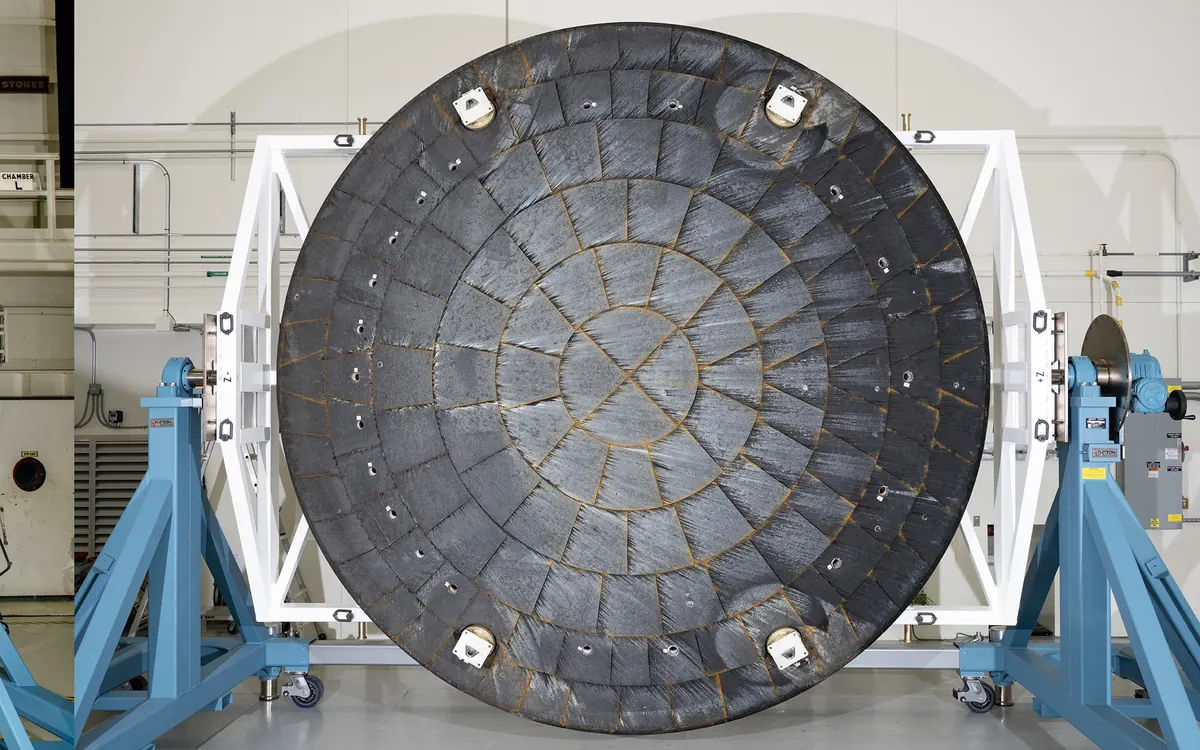
On the uncrewed Artemis I flight in 2022, Orion’s Avcoat heat shield lost chunks of charred material in unexpected ways. For Artemis II, NASA kept the shield design but changed the reentry trajectory, shortening the maximum downrange distance between atmospheric entry and splashdown. That limited the time the shield spent in the temperature range where the Artemis I problem appeared.
It worked. Engineers counted only nine spots of char loss on the Artemis II shield dish, compared with 103 on Artemis I — about a tenfold reduction in cracking and char loss. The seams between the 186 Avcoat blocks and the material around the separation bolts behaved consistently between the two flights.
A hot ride home
- Peak speed was about 39 times the speed of sound, with outside temperatures above 4,000 °F (about 2,200 °C).
- Inside, the crew cabin stayed in the mid-70s °F (around 24 °C).
- Orion hit its entry point within 192 feet (about 59 m) of the target and splashed down 0.59 miles (about 950 m) from the predicted spot off San Diego on 10 April 2026.
- The backshell’s 1,300 ceramic tiles, plus seals around windows, vents, thrusters and the hatch, showed no signs of overheating.
What happens next
Work is not finished: NASA is comparing post-flight laser scans with pre-flight measurements to calculate how much material burned away, and is extracting samples and X-raying the shield at Marshall Space Flight Center.
For Artemis III, now planned as a crewed mission in low Earth orbit next year to rehearse docking with lander test articles from Blue Origin and SpaceX, the heat shield has been upgraded for more uniform Avcoat blocks. It was attached to the crew module in early July.
More from Science & Space
View all →Read next

GTA VI launch trailer is live — five weeks to November 19
Rockstar dropped the Grand Theft Auto VI Launch Trailer on 15 October, with new PS5-captured footage and a debut score track, ahead of the 19 November release.
How much RAM do you need in 2026? 8, 16, 32 or 64 GB explained
What RAM does, how to tell if you're running out, and how much memory to get for browsing, office work, gaming, video editing and local AI in 2026.

How to choose wireless earbuds in 2026
Fit, ANC, codecs, battery, multipoint and IP rating: a practical buying guide to true wireless earbuds without invented lab scores or brand rankings.