Kia tests remote-driven PV5 vans for car sharing in Korea
Kia’s pilot in Pangyo sends a PV5 electric van to your door with no one inside, steered by a remote driver over 4G/5G, then takes it back when you’re done.
LandGadget Newsroom · · 2 min read
On this page
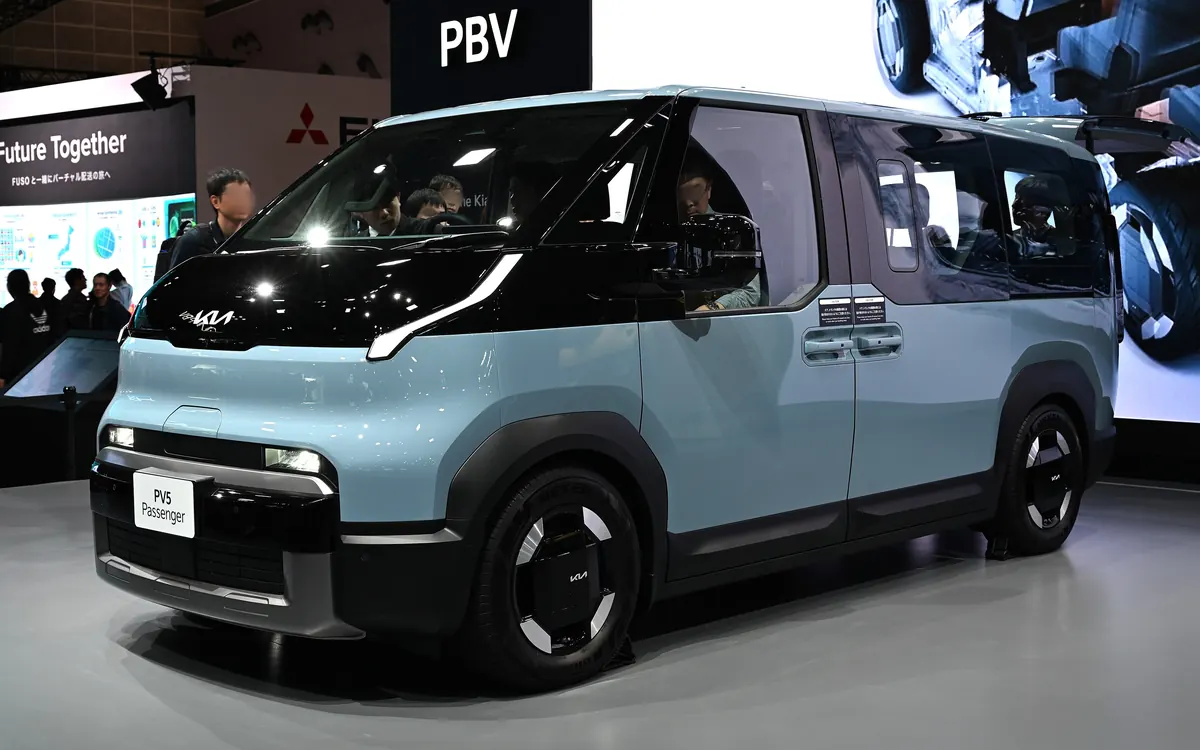
Kia has launched what it calls South Korea’s first car-sharing service built on remote driving. The pilot started on Thursday in Pangyo, Gyeonggi Province, using the PV5 electric van, and runs until the end of the year, Electrek reports.
How it works
The idea removes the walk to a parking spot:
- Book in an app. Customers reserve a PV5 through a dedicated app.
- The van comes to you. With no one on board, the PV5 is delivered to the requested location by a remote driver.
- Drive it yourself. You use the van as normal and park it where you finish.
- It goes home on its own. A remote driver then returns the vehicle to its garage over a 4G or 5G connection.
This is remote driving, not self-driving: a human operator controls the vehicle from a distance whenever nobody is behind the wheel. Kia says the model could help businesses run more efficiently without the burden of owning a fleet.
Who is involved
Kia supplies the PV5 vans and leads the project. Startup SUM develops the remote-driving system, Mobiops runs the service, and the Korea Road Traffic Authority helps with regulatory reviews. Gyeonggi Province, telecom operator KT and several local organisations support it as partners.
The pilot builds on earlier steps. According to Electrek, Kia received a special exemption under a remote-driving regulatory sandbox from Korea’s transport ministry in April. In November 2025 it formed a remote-driving consortium with Socar, KT and SUM for a public-road demonstration, and in July it signed an agreement with KT and SUM aimed at commercialising the technology within a year.
What comes next
During the trial, the partners will check how the technology and the service hold up in real conditions. Kia plans to use the data to improve the system and expand PV5-based remote-driving services in 2027.
For a different route to driverless mobility, see Waymo’s plans for Toronto and Volvo’s automated driving work with Nvidia.
More from Cars & EVs
View all →Read next
Sony cancels the promised Android 17 update for Xperia 10 VI
Sony says storage limits block an adequate Android 17 upgrade on the midrange Xperia 10 VI. Security patches should continue through June 2028.
The leap second is being scrapped: what changes in 2027
Countries at the CGPM voted to make UTC continuous from 20 May 2027, ending leap seconds and letting clocks drift up to an hour from Earth’s rotation.
Withings now charges new users for Apple Health sync
New Withings accounts created from 13 October need Withings+ ($9.95/month or $99.50/year) to auto-sync to Apple Health and Health Connect; older ones stay free.