ESA orders four more Galileo G2 satellites, fleet grows to 16
ESA has ordered four more Galileo Second Generation satellites from Thales Alenia Space and Airbus. Delivery in 2031; the first G2 launch is planned for 2028. What G2 changes.
LandGadget Newsroom · · 2 min read
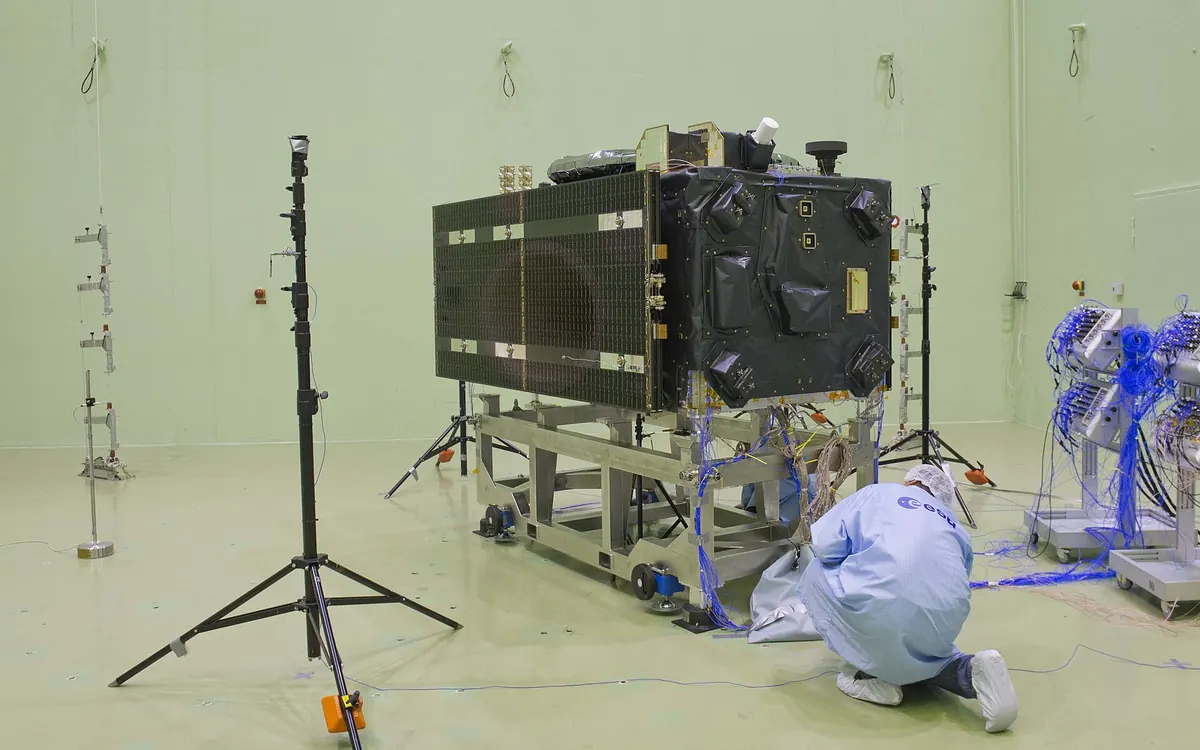
Europe's satellite navigation system just got a longer future. The European Space Agency has ordered four more Galileo Second Generation (G2) satellites, bringing the planned G2 fleet to 16, ESA announced.
Who builds them
The orders are extensions of contracts ESA already had with the two G2 prime contractors, Thales Alenia Space in Italy and Airbus Defence and Space in Germany. Each company has been building six G2 satellites since 2021, and each now adds two more. The contracts were signed on 23 October in Rome and 26 October in Ottobrunn.
ESA signed on behalf of the EU Agency for the Space Programme (EUSPA), which runs Galileo services; the system itself belongs to the European Union.
When they fly
- The four new satellites are scheduled for delivery in 2031, with launch soon after, and will be identical to the first twelve.
- Those first 12 G2 satellites are close to finishing development and qualification, and system integration and compatibility testing is under way.
- Integration and flight testing of the first satellites is planned for 2027, ahead of the first G2 launch in 2028.
What G2 changes
According to ESA, the second generation brings fully digital navigation payloads, a better-performing navigation antenna, links between satellites and an advanced atomic clock setup. The aim is more robust and reliable positioning, navigation and timing.
The new satellites will join the 38 first-generation satellites, all but four of which are already in orbit, and the two generations are designed to work together.
Why your phone cares
Galileo has run its Open Service since 2016, and every smartphone sold in the EU single market is guaranteed to support it. Your phone combines it with GPS and other systems to get a faster, more accurate fix. Galileo also serves rail, shipping, farming, financial timing and search-and-rescue. Europe is also working on satellite connectivity for phones, as in the European operators' direct-to-device bid; our satellite texting explainer covers how that differs from navigation.
More from Science & Space
View all →Read next

Half-Life: Alyx adds foveated rendering on PC: which GPUs work
Valve's new Half-Life: Alyx patch adds a foveated rendering option on PC. It needs Nvidia GTX 16 or RTX 20 series or newer, AMD via Vulkan, and works best with eye tracking.

Samsung Community goes offline for 72 hours: back up first
Samsung Community shuts for 72 hours from October 30 for an overhaul. DMs, drafts, bookmarks and subscriptions won't migrate. What to save and what changes after.

How much VRAM do you need to run AI models locally?
How much VRAM you need for local LLMs: a simple formula for model weights, quantisation and KV cache, worked examples, and which GPU memory tier fits which model.