Greek CubeSat ERMIS-3 sends first laser link to the ground
ESA-backed ERMIS-3, an 8U CubeSat from the University of Athens, made Greece's first optical link with a LEO satellite and now runs two laser links a day.
LandGadget Newsroom · · 2 min read
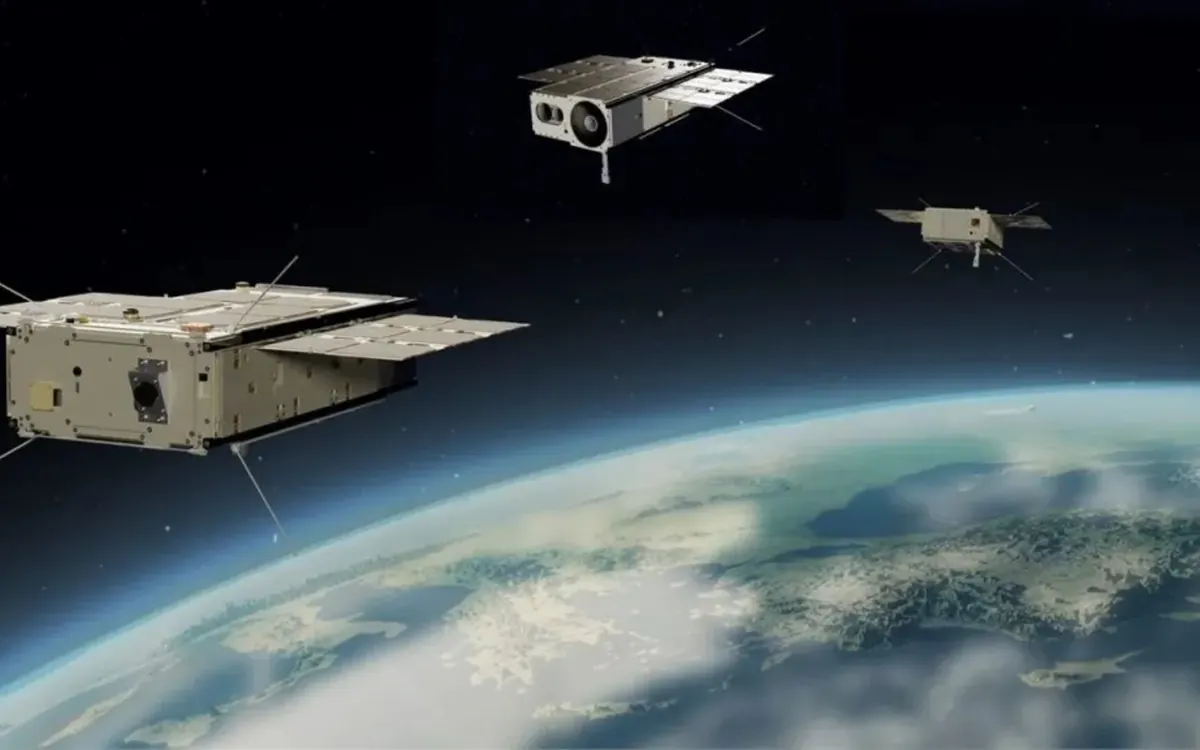
A shoebox-sized satellite has just shown that laser communications can work on very small spacecraft. ERMIS-3, an 8U CubeSat built by the National and Kapodistrian University of Athens, has established an optical link with a ground station in Greece, the European Space Agency announced on 2 November. ESA calls it Greece's first optical link with a satellite in low Earth orbit.
Why a laser link is hard
Most satellites talk to Earth by radio. Optical links use a narrow laser beam instead, which can carry far more data, but the beam has to be aimed precisely at a receiver while the satellite races across the sky at several kilometres per second. Both ends must find each other and keep tracking for the short window of each pass, and clouds can block the beam completely while turbulence degrades it.
ERMIS-3 carries the ATLAS-1 optical terminal from Lithuanian company Astrolight, which also supplied the receiving and beacon equipment at the Holomondas optical ground station (HolOGS-1), developed by the Aristotle University of Thessaloniki. The link proved the mission's key goal: precise pointing, acquisition and tracking.
Fast from first light to routine
According to ESA, the two terminals made first contact on the satellite's first active pass after commissioning, despite cloud cover, and reached routine operation within a week. The system now works autonomously, making two links a day, day and night, with margins for up to 10 Gbps. ESA notes the link was achieved earlier in the satellite's life than on previous CubeSat-class missions.
ERMIS-3 launched on 30 March 2026 together with ERMIS-1 and ERMIS-2 as part of Greece's National Space Programme, which ESA runs on behalf of the Greek government. ESA supported the project with environmental testing and optical alignment at its ESTEC centre in the Netherlands.
Why it matters
Earth-observation satellites produce ever larger volumes of high-resolution and hyperspectral images, and radio downlinks are becoming a bottleneck. Proving that a small, cheap satellite can use laser links opens the door to faster and harder-to-intercept connections for whole constellations. It's part of the same shift that is bringing space connectivity closer to everyday devices, from satellite texting on phones to navigation systems such as India's NavIC (our report on NVS-03).
More from Science & Space
View all →Read next
144Hz vs 240Hz: which refresh rate do you need?
60Hz vs 144Hz vs 240Hz explained: what refresh rate really changes, the frame rate your PC needs, which games benefit, and when 360Hz or 500Hz is worth it.
EV charging connector types explained: Type 2, CCS, NACS
Type 1, Type 2, CCS1, CCS2, CHAdeMO, NACS and GB/T: which EV plug your car uses, which chargers fit, where each is used and when an adapter is safe to use.
How many case fans do I need? PC airflow setup guide
How many case fans a gaming PC really needs, which way to point them, intake vs exhaust, positive vs negative pressure, 120 vs 140 mm and how to set fan curves.