ISRO launches NVS-03, bringing India's NavIC back to four satellites
ISRO's GSLV-F18 put the NVS-03 navigation satellite into orbit, restoring NavIC to its minimum four-satellite setup after clock failures and the NVS-02 setback.
LandGadget Newsroom · · 2 min read
On this page
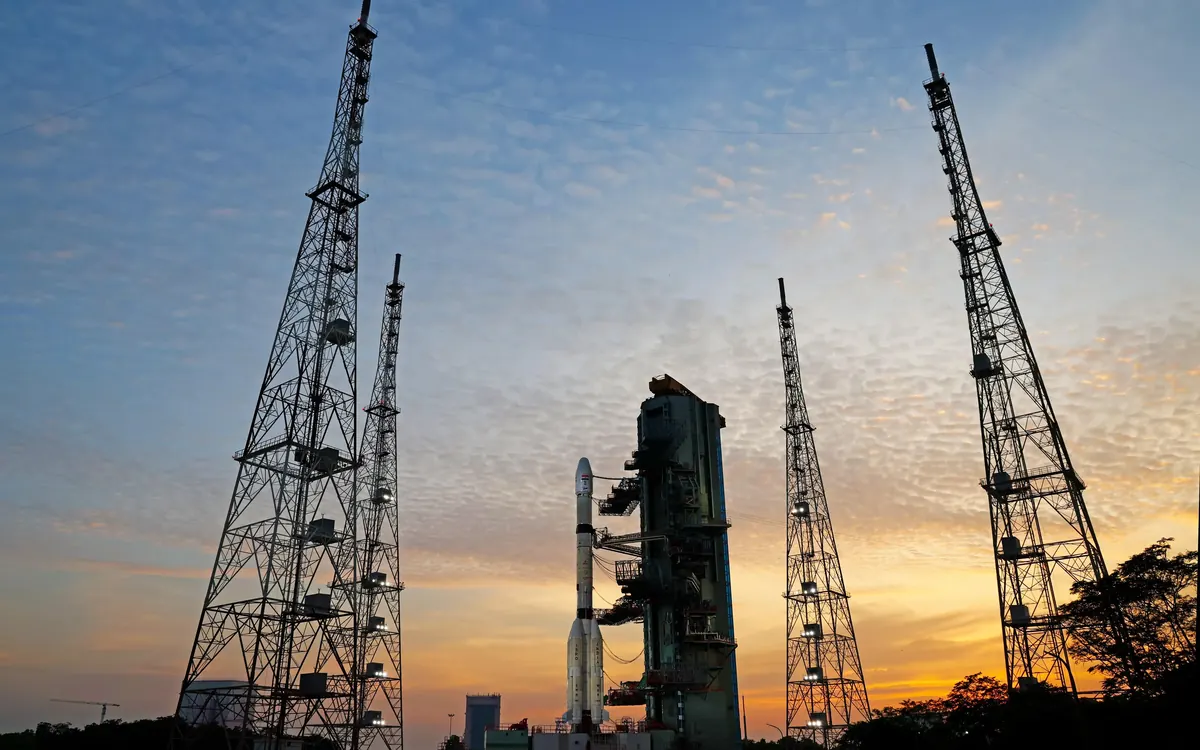
India's own satellite navigation system has had a rough few years. On 30 October, the Indian Space Research Organisation launched a satellite meant to put it back on its feet: NVS-03, lifted by the GSLV-F18 rocket from the second launch pad at the Satish Dhawan Space Centre in Sriharikota.
The launch
About 18 minutes after lift-off, the rocket released the 2,250 kg satellite into a geosynchronous transfer orbit, from which it will raise itself to its working position. It was the 20th flight of the GSLV. "The vehicle systems have performed as predicted," ISRO chairman V. Narayanan said, according to The Hindu.
Why NavIC needed it
NavIC (Navigation with Indian Constellation, formerly IRNSS) is India's regional alternative to GPS. It covers India and an area extending about 1,500 km beyond its borders, and is used for timing, vehicle and ship tracking and real-time train tracking.
The system has been weakened by atomic clock failures on older satellites; The Hindu notes that the last working clock on IRNSS-1F stopped in March. The previous replacement, NVS-02, failed to reach its intended orbit. Narayanan said three satellites were already working and NVS-03 brings NavIC back to the minimum operational configuration of four, restoring its positioning, navigation and timing services.
What's new on board
NVS-03 is the third of ISRO's next-generation navigation satellites, with a planned life of 12 years. According to ISRO, it carries an Indian-made atomic clock alongside procured clocks, and adds an L1 signal to the existing L5 and S-band signals. L1 is the band used by GPS and most phone chipsets, which should make NavIC easier for everyday devices to pick up.
For phone owners, the change won't be instant: a phone needs a chipset and software that support NavIC, and the satellite still has to reach its slot and enter service. It's a reminder that phones increasingly talk to satellites in more than one way; our satellite texting explainer covers the other big use. And for more space news from this week, see NASA's call for ideas to save the Hubble telescope.
More from Science & Space
View all →Read next
What is a normal CPU temperature? Safe ranges and fixes
Normal CPU temperatures at idle, in games and under full load, Intel and AMD limits explained, how to check your CPU temp and 8 ways to keep your processor cooler.
Best Monitor Size for Gaming: 24 vs 27 vs 32 Inch
What monitor size is best for gaming? Compare 24, 27, 32-inch and ultrawide screens by resolution, pixel density, desk distance, GPU power and the games you play.

Bluetooth Codecs Explained: SBC vs AAC vs aptX vs LDAC vs LC3
What Bluetooth audio codecs actually change: SBC, AAC, aptX, LDAC and LE Audio's LC3 compared — sound, latency, battery and which phones support which codec.