Silicon-carbon batteries explained: pros, cons, lifespan
What is a silicon-carbon battery? How Si/C anodes let phones fit 7,000–10,000 mAh, the swelling trade-off, lifespan, safety and why some regions get smaller cells.
LandGadget Newsroom · · 6 min read
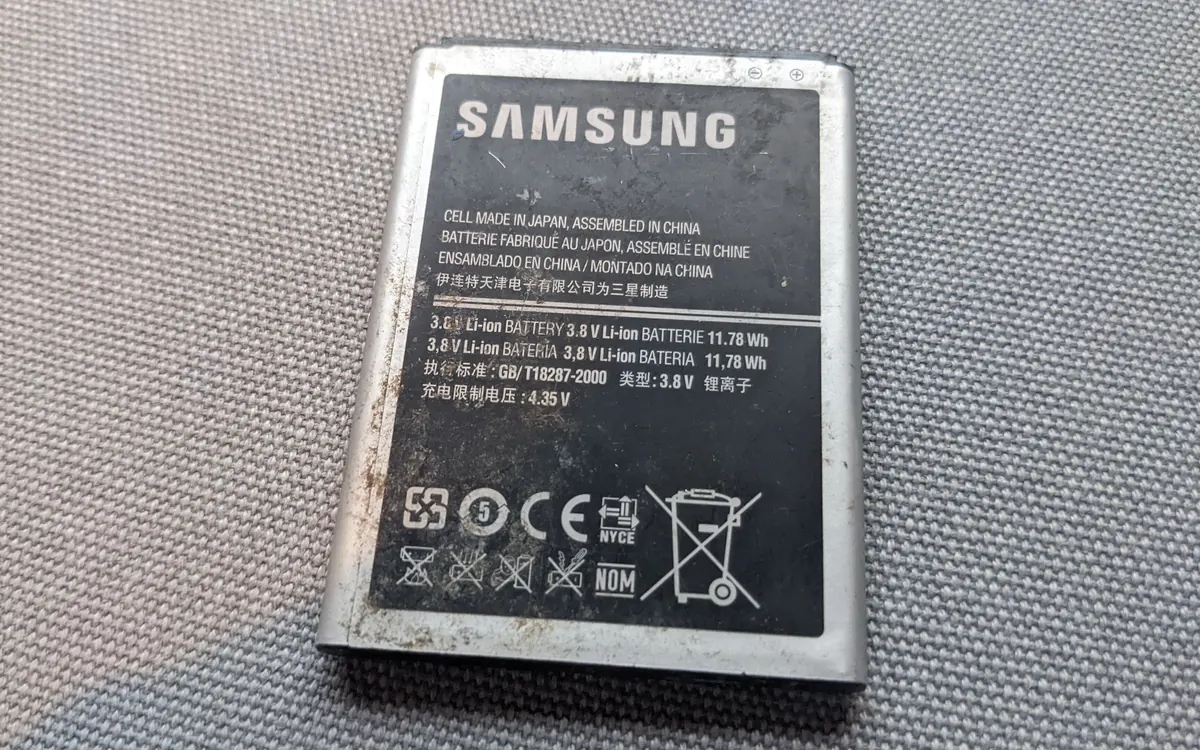
Phones with 7,000, 8,000 and even 10,000 mAh batteries used to be rugged bricks. Now they're ordinary-looking handsets, like the vivo Y600. The main reason is a change inside the battery called a silicon-carbon anode. Here is what it is, what it does well, and what to watch out for.
What is a silicon-carbon battery?
A silicon-carbon (often written Si/C or Si-C) battery is a type of lithium-ion battery. It works the same way as the battery in any other phone: during charging, lithium ions move from the cathode (positive side) into the anode (negative side), and during use they move back.
The difference is the anode material. In a conventional phone battery the anode is mostly graphite. In a silicon-carbon battery, part of that graphite is replaced by silicon, held in a carbon structure. The cathode, the electrolyte and the way you charge the phone stay the same, which is why it can be built in existing factories and used with normal chargers.
Why silicon? More lithium in the same space
The anode is where lithium is stored when the battery is full. Graphite stores lithium between its carbon layers, and there's a fixed limit to how much fits. Silicon bonds with lithium in a different way and, by weight, can hold roughly ten times more lithium than graphite in theory.
Real cells only use a modest share of silicon, so you don't get anywhere near ten times the capacity. But even a partial swap lets engineers make the anode thinner for the same capacity, or keep it the same size and add capacity. That's how brands squeeze a much larger mAh rating into a phone of normal thickness.
The catch: silicon swells
Silicon's big weakness is expansion. When it absorbs lithium, silicon can grow to roughly three to four times its original volume, while graphite expands only by around 10%. Repeated swelling and shrinking can crack the silicon particles, break electrical contact and keep consuming lithium and electrolyte in side reactions. In early research cells, that meant capacity dropped quickly.
That's where the carbon comes in. Manufacturers use tiny silicon particles embedded in porous or layered carbon, which leaves room for the silicon to expand, keeps the particles connected and protects their surface. They also limit how much silicon goes into the anode. The exact recipes are trade secrets, so two "silicon-carbon" batteries can behave quite differently.
| Graphite anode | Silicon-carbon anode | |
|---|---|---|
| Lithium stored per gram | Lower | Higher |
| Swelling during charging | Small | Larger, managed by carbon structure |
| Capacity in the same space | Baseline | Higher |
| Track record | Decades in phones | Newer, common in phones in recent years |
Does a silicon-carbon battery last as long?
There's no single answer. Lifespan depends on how much silicon is used, the carbon structure, the cathode, how hot the phone runs and how the phone manages charging. Brands publish their own cycle claims, but they test in different ways, so the figures aren't directly comparable.
What you can do is look at the warranty and any stated battery-health promise, and read independent long-term reviews when they appear. After a year of use, check the real state of your battery with our guide on how to check phone battery health.
Are they safe?
Silicon-carbon cells are lithium-ion cells and have the same basic risks: damage, heat and poor-quality charging. Phones ship with protection circuits that control charging current and temperature. The usual advice applies: avoid heat, use a decent charger and stop using a phone with a visibly swollen battery. If your phone runs hot when charging, see why phones overheat.
Why some markets get smaller batteries
You may notice the same phone has a smaller battery in Europe or the US than in China. Brands rarely give one official reason. One factor often cited is transport rules: air shipping regulations treat single lithium-ion cells above 20 Wh more strictly, so very large batteries are sometimes split into two cells or reduced for some regions. Regional certification and design choices also play a part. Always check the spec sheet for your country, not the launch market's.
How to tell if your phone has one
Look for "silicon-carbon", "Si/C" or "silicon anode" on the official spec page or in the launch materials. Many brands highlight it, because it's a selling point. If a phone is unusually thin for its mAh rating, a silicon-carbon anode is likely, but only the maker can confirm it.
Does mAh tell you everything?
No. A higher mAh number means more charge stored at the cell's voltage, but battery life also depends on the chip's efficiency, the screen, the modem and software. A well-tuned phone with a smaller battery can outlast a power-hungry one with a bigger cell. Compare independent battery tests, charging speed and how the battery is warrantied, not just the headline number. For a similar trade-off in cars, see LFP vs NMC EV batteries.
Tips for a long battery life
- Avoid leaving the phone in hot places, such as a car dashboard or under a pillow while charging.
- Use your phone's battery protection setting (often an 80% or "adaptive" charging limit) if you keep it plugged in overnight.
- Use a good charger that supports your phone's charging standard; our USB-C charger guide explains the basics.
- Don't worry about occasional full charges or using fast charging when you need it; heat is the bigger enemy.
Frequently asked questions
What is a silicon-carbon battery?
It is a lithium-ion battery whose anode mixes silicon into a carbon structure instead of using mostly graphite. Silicon stores more lithium, so the battery holds more charge in the same space.
Are silicon-carbon batteries better than lithium-ion?
They are a kind of lithium-ion battery. Their main advantage is higher capacity for the size. Their main challenge is that silicon swells during charging, which manufacturers manage with the carbon structure and limited silicon content.
Do silicon-carbon batteries degrade faster?
It depends on the design. Early research cells lost capacity quickly, but commercial cells use small amounts of silicon in protective carbon. Brands test differently, so check warranties and independent long-term reviews.
Can I use a normal charger with a silicon-carbon battery?
Yes. The phone controls charging, so any good charger that supports its standard works. The fastest speeds may need the brand's own charger or protocol.
Why is the battery smaller in the European version of my phone?
Brands rarely explain it officially. Stricter air transport rules for single cells over 20 Wh and regional certification are commonly cited reasons, so some models use smaller or split cells outside China.
More from Smartphones
View all →Read next

NASA's PACE satellite tracks fall foliage colour worldwide
NASA's PACE satellite maps fall leaf colour across the planet every day or two. How its hyperspectral OCI sensor sees reds and yellows, and how you can help.
Lidar vs cameras for self-driving cars: which is better?
Lidar vs cameras vs radar: how each self-driving sensor works, why Tesla uses cameras only while Waymo, Mercedes and the Rivian R2 add lidar, and what it means.

Dispatch hits iPhone and Android Dec 9, four episodes free
AdHoc Studio's superhero comedy Dispatch launches on iOS, Android and Google Play Games on PC on December 9: first four episodes free, full game $19.99.