Lidar vs cameras for self-driving cars: which is better?
Lidar vs cameras vs radar: how each self-driving sensor works, why Tesla uses cameras only while Waymo, Mercedes and the Rivian R2 add lidar, and what it means.
LandGadget Newsroom · · 6 min read
On this page
Search for "Rivian R2 lidar" or "why doesn't Tesla use lidar" and you land in one of the longest arguments in the car industry: can a car drive itself with cameras alone, or does it need lidar? Here's a plain-English guide to how the sensors work, what each is good and bad at, and which carmakers use what.
The three main sensors
Most driver assistance and self-driving systems are built from some mix of three sensor types.
Cameras capture images much like your eyes. They are cheap, high resolution and the only sensor that reads colour, so they handle traffic lights, road signs, brake lights and lane markings. Their weakness is that a single image has no direct distance information: depth has to be estimated by software, from multiple cameras, motion over time or AI models trained on huge amounts of driving video. Cameras also suffer from glare, darkness, dirt and heavy rain.
Lidar (light detection and ranging) fires short laser pulses and times how long they take to bounce back. Repeated millions of times per second, that builds a precise 3D point cloud of everything around the car. Lidar measures distance directly, works the same at night as in daytime and is very good at the exact shape and position of objects. It cannot read colour, so it can't tell a red light from a green one, and dense fog, heavy snow or spray can scatter the beam. It has also been the most expensive sensor.
Radar sends out radio waves. It measures distance and, thanks to the Doppler effect, the speed of objects directly, and it keeps working in fog, rain and darkness. Traditional automotive radar has low resolution, which makes it poor at telling what an object is. Newer "4D imaging" radars improve this.
Many cars also use short-range ultrasonic sensors for parking, but these play little part in driving at speed.
| Cameras | Lidar | Radar | |
|---|---|---|---|
| How it works | Captures images | Times laser pulses | Times radio waves |
| Distance | Estimated by software | Measured directly, precise | Measured directly |
| Reads colour, signs, lights | Yes | No | No |
| Night | Needs light or headlights | Unaffected | Unaffected |
| Fog, heavy rain, snow | Weak | Degraded | Strong |
| Cost | Lowest | Highest, but falling | Low to moderate |
The camera-only approach: Tesla
Tesla is the best-known camera-only company. It stopped fitting radar to Model 3 and Model Y in North America in 2021, calling the new setup Tesla Vision, and began removing ultrasonic parking sensors in late 2022. Its argument is that roads are designed for human eyes, so cameras plus powerful neural networks should be enough, and that one sensor type avoids conflicts between sensors and keeps costs down across millions of cars.
The open question is the last few per cent of rare, tricky situations: low sun, unusual obstacles, poor visibility. Tesla's FSD (Supervised) is still a Level 2 system that requires an attentive driver, as we explain in our guide to self-driving levels, so the driver is the backup. Crashes such as the FSD case where a driver fell asleep show why that supervision matters.
The multi-sensor approach: Waymo, Mercedes, Rivian and China
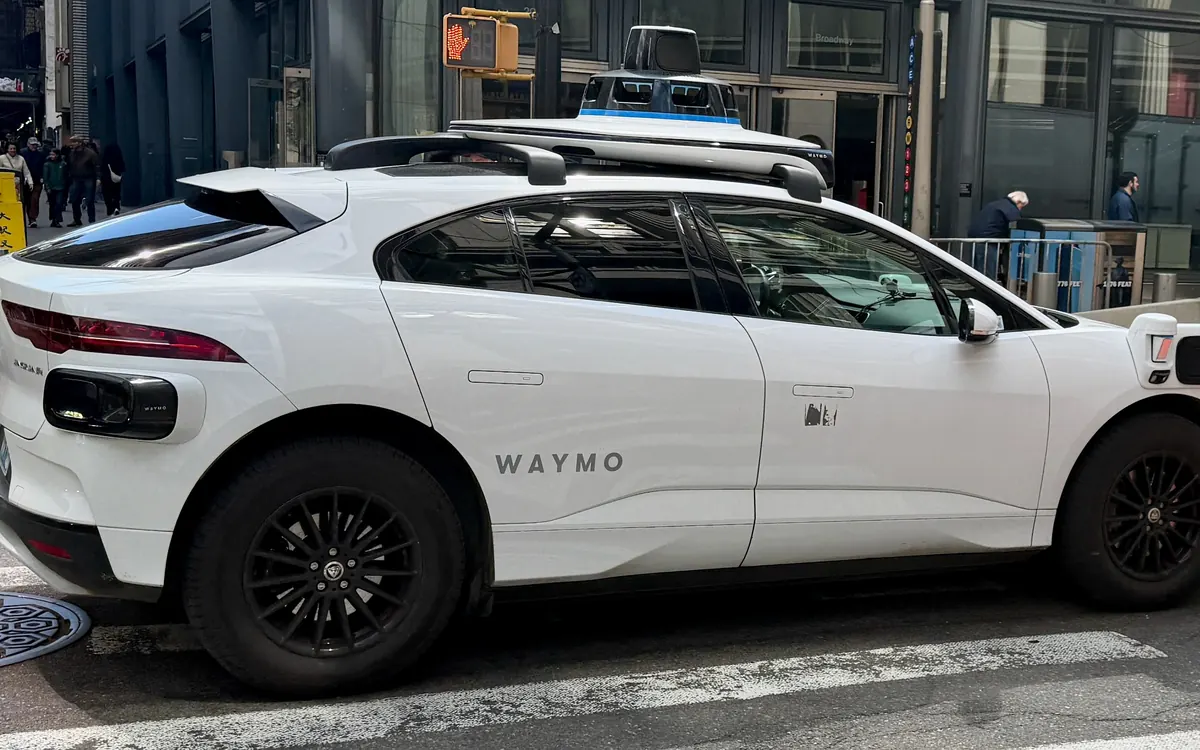
Waymo, which runs driverless robotaxis, combines lidar, cameras and radar; its sixth-generation system uses 13 cameras, 4 lidars and 6 radars. With no human backup, it wants redundancy: if one sensor is blinded, another sees the obstacle in a different way.
Mercedes-Benz uses lidar in Drive Pilot, the Level 3 system that lets drivers look away in approved conditions, where the carmaker takes responsibility while the system is active. Volvo launched the EX90 with a roof-mounted lidar.
Rivian has said its next-generation autonomy platform for the R2 pairs a new in-house computer with a front-mounted long-range lidar, plus radar and cameras. Rivian says lidar-equipped R2s go to employees first in late 2026, with customers in 2027, and that eyes-off driving will need the lidar hardware. Rivian's current owners can already try Point to Point driving in early access on existing hardware.
In China, lidar has become common even on affordable EVs, such as the Leapmotor A10S.
Why lidar got cheaper
Early spinning lidars cost tens of thousands of dollars, which is why only research cars and robotaxis carried them. Solid-state and semi-solid-state designs, mass production and Chinese suppliers have pushed prices down sharply. Rivian told investors in 2026 that lidar now costs it "a few hundred dollars", compared with thousands or even tens of thousands a few years ago. Cost is no longer a strong argument against lidar; design, integration and software still are.
Does more sensors mean safer?
Not automatically. More sensors give more data and an independent cross-check, but software has to fuse them correctly, and every sensor needs cleaning and calibration. A badly tuned multi-sensor car can still make mistakes, and a strong camera system can do well in good conditions. What matters for you is:
- What level the system is. Level 2 means you supervise, whatever sensors it has.
- Where it's approved. Highways only, mapped cities, certain speeds or weather.
- Who is responsible. With Level 2 it's you; with approved Level 3 or 4 it can be the manufacturer or operator.
Frequently asked questions
Is lidar better than cameras for self-driving?
Neither replaces the other. Cameras read signs, lights and colour; lidar measures distance precisely in any light. Most companies building driverless or eyes-off systems use both, plus radar.
Why doesn't Tesla use lidar?
Tesla believes cameras and neural networks are enough because roads are built for human vision, and a single sensor type is cheaper and simpler to scale. Its FSD (Supervised) remains a Level 2 system that requires an attentive driver.
Does the Rivian R2 have lidar?
Not at launch. Rivian says R2s with its third-generation autonomy computer and front lidar go to employees in late 2026 and customers in 2027, and that eyes-off driving will require that hardware.
Does lidar work in rain and fog?
It works in light rain, but dense fog, heavy snow and spray can scatter the laser and reduce range. That is why many systems also use radar, which handles bad weather well.
How much does lidar cost?
Prices have fallen from tens of thousands of dollars to, by Rivian's account, a few hundred dollars per vehicle for its supplier cost. Retail pricing for buyers depends on the car and package.
Our verdict
Cameras for seeing, lidar and radar for certainty
Every serious system uses cameras. The real difference is whether a carmaker adds lidar and radar as an independent check. For a supervised Level 2 system, camera-only can work because you are the backup. The more responsibility a car takes, the stronger the case for multiple sensors, which is why robotaxis and eyes-off systems almost all use lidar.
More from Cars & EVs
View all →Read next
NASA's PACE satellite tracks fall foliage colour worldwide
NASA's PACE satellite maps fall leaf colour across the planet every day or two. How its hyperspectral OCI sensor sees reds and yellows, and how you can help.

Dispatch hits iPhone and Android Dec 9, four episodes free
AdHoc Studio's superhero comedy Dispatch launches on iOS, Android and Google Play Games on PC on December 9: first four episodes free, full game $19.99.
How to turn off smart TV tracking (ACR) on any brand
Step-by-step menu paths to switch off ACR and ad tracking on Samsung, LG, Vizio, Roku, Sony and Fire TV, plus why taking the TV offline is the surest fix.