NHTSA wants cyan lights to mark cars that drive themselves
NHTSA proposes optional cyan ADS marker lamps that light up only when a self-driving system is in control, plus lighting-rule changes for cars with no steering wheel.
LandGadget Newsroom · · 3 min read
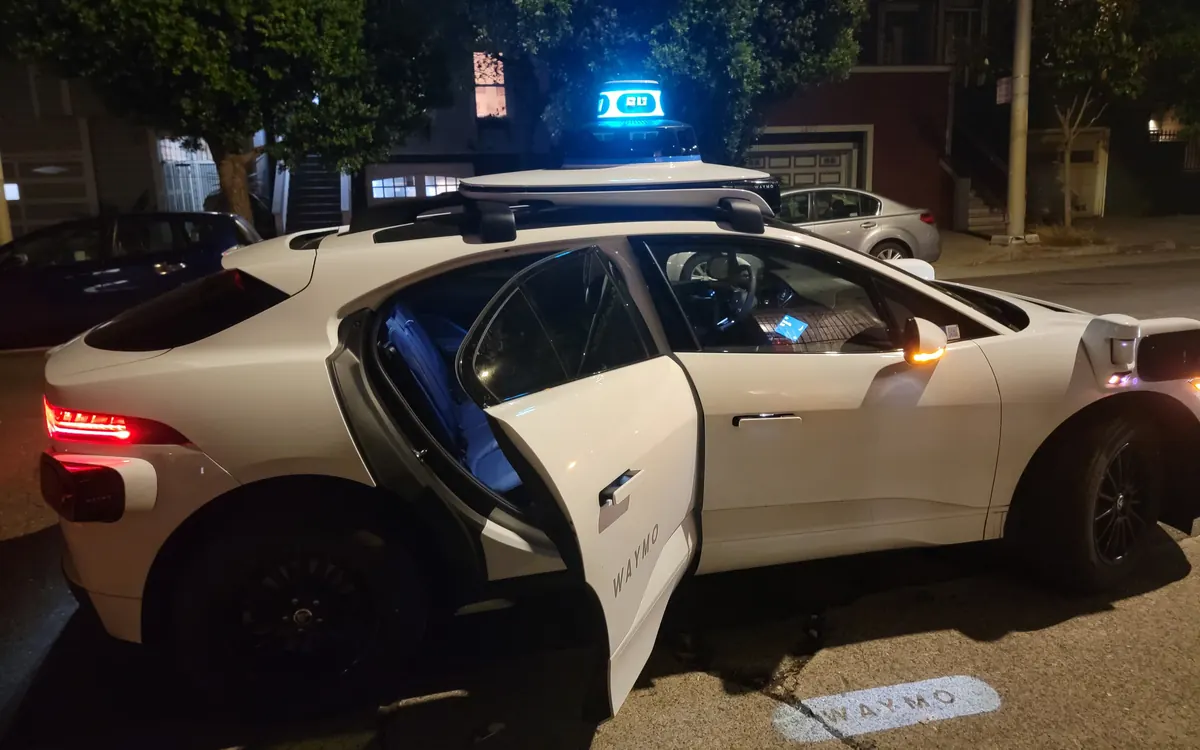
How should a car tell everyone around it that nobody is driving? The US National Highway Traffic Safety Administration (NHTSA) has proposed an answer: a cyan, or blue-green, light. The idea is part of a proposed update to Federal Motor Vehicle Safety Standard (FMVSS) No. 108, the rule that covers lamps and reflectors on US vehicles. The notice is listed in the Federal Register, and The Verge first reported it.
What the cyan lamps would do
NHTSA calls them ADS marker lamps, where ADS stands for automated driving system. They would switch on only when the vehicle is driving itself with no expectation that someone inside is watching the road. That is the robotaxi case, and the case of Level 3 systems while they are engaged.
The lamps would be optional. NHTSA says it does not have enough evidence to require them on every self-driving vehicle. Instead, the rule would set a standard "if equipped":
- Four to eight lamps: one or two each on the front, the rear and each side.
- Mounted at least 15 inches (38 cm) above the ground.
- Steady burning when on. NHTSA is asking for comments on whether flashing should also be allowed.
- Only on ADS-equipped vehicles. Cars without automated driving could not fit them.
The specifications are largely based on the industry standard SAE J3134. NHTSA says cyan was chosen partly because it is easy to tell apart from the blue lights used by police. There is a precedent: Mercedes-Benz won state approval for turquoise lights on its Level 3 Drive Pilot system.
Rules for cars with no steering wheel
The other half of the proposal cuts requirements that make little sense in a vehicle with no driver controls. For those vehicles only, NHTSA would no longer require manually operated turn-signal, hazard and high-beam switches. Some dashboard warning-light ("telltale") requirements would also be narrowed. The hazard telltale would stay, because passengers may want to know when the car has switched its hazards on.
Two changes apply more widely. NHTSA wants to update the test voltage for integral-beam headlamps and remove the rules for vertical headlamp arrangements, giving designers more freedom with LED lighting.
What happens next
This is a notice of proposed rulemaking, not a final rule. Comments are open until 25 November 2026, and NHTSA will then decide whether to adopt, change or drop the ideas. Robotaxi fleets are expanding fast, including Waymo's planned move into Madrid. A single, recognisable signal would give police, pedestrians and other drivers one simple cue. Without one, every company could invent its own.
If you're more interested in the driver-assist features you can buy today, our dash cam buying guide explains how to record what happens on the road around you.
Frequently asked questions
Will all self-driving cars have to use cyan lights?
No. Under the proposal the lamps are optional. Only vehicles that choose to fit them would have to meet NHTSA's rules on number, position, colour and activation.
When would the cyan lights be on?
Only while the automated driving system is fully in control and no occupant is expected to monitor the road. They could not be fitted to cars without an automated driving system.
Is this rule final?
No. It is a proposal, and public comments are open until 25 November 2026.
More from Cars & EVs
View all →Read next
NASA's new Artemis plan: Earth-orbit test, landing in 2028
Artemis III becomes a 2027 Earth-orbit test with both commercial landers, and the first crewed landing moves to 2028 with whichever lander is ready first.
RTX Remix 1.6 adds DLSS 5, Minecraft beta and Windows on Arm
NVIDIA's RTX Remix 1.6 brings DLSS 5 neural rendering, up to 6x Multi Frame Generation, a Minecraft Java beta mod and Arm support for Portal RTX and more.

Steam Personal Calendar leaves Labs: release dates for you
Steam's Personal Calendar is now a full feature: an 8-week list of upcoming releases picked from your playtime, with wishlist, DLC and Early Access filters.