Taurid meteor shower peaks tonight, Nov. 4–5: when to look for fireballs
The Southern Taurids peak overnight Nov. 4–5 with up to 5 meteors per hour and a chance of bright fireballs. Northern Taurids follow Nov. 11–12. Viewing tips.
LandGadget Newsroom · · 2 min read
On this page
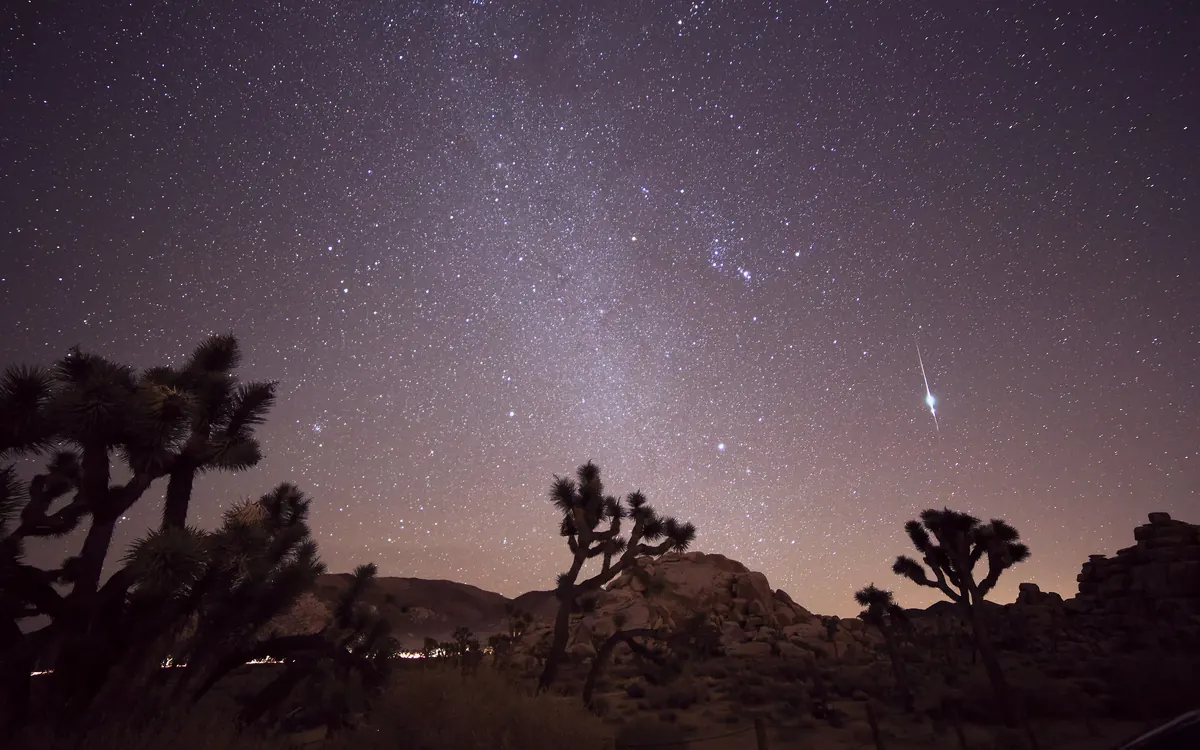
The Taurid meteor shower reaches its second Southern Taurid peak overnight on November 4–5, and while the rate is low, it is the shower most famous for fireballs — meteors that can flare brighter than Venus. Space.com has the details.
What to expect
Every autumn Earth passes through debris streams left by Comet Encke, a roughly 4.8 km (3‑mile) comet that orbits the Sun every 3.3 years. That creates two branches: the Southern Taurids (active Sept. 20 – Nov. 20) and the Northern Taurids (Oct. 20 – Dec. 10). The particles hit the atmosphere at around 104,600 km/h.
- Southern Taurids: second peak overnight Nov. 4–5 (the first was Oct. 14), up to about 5 meteors per hour, with increased fireball activity.
- Northern Taurids: peak overnight Nov. 11–12, similar rate, under a near-moonless sky.
How to watch
Find a dark spot away from city lights and look around midnight, when the radiant in the constellation Taurus is high in the south‑eastern sky. Don't stare straight at Taurus — meteors there have short trails; look a little to the side. Skip telescopes and binoculars (they narrow your view), dress warmly and give your eyes 20–30 minutes to adapt to the dark.
Want to photograph one? Our night sky phone photography guide covers settings for long exposures.
More from Science & Space
View all →Read next
Best Wi‑Fi Channel for 2.4 GHz and 5 GHz: How to Find and Change It (2026)
Which Wi‑Fi channel is best? Use 1, 6 or 11 on 2.4 GHz, pick the right width on 5 GHz, find the least crowded channel with a free app and change it on your router.
How accurate is smartwatch heart rate? What the research says
How optical heart-rate sensors in smartwatches work, how accurate they are at rest, in steady cardio and in intervals or weights, and how to get better readings.
IPS vs VA vs OLED (and TN): which monitor panel type should you buy?
IPS vs VA vs OLED vs TN monitors compared: contrast, colour, viewing angles, response time, burn-in and price, with the best panel for gaming, work and movies.