How accurate is smartwatch heart rate? What the research says
How optical heart-rate sensors in smartwatches work, how accurate they are at rest, in steady cardio and in intervals or weights, and how to get better readings.
LandGadget Newsroom · · 5 min read
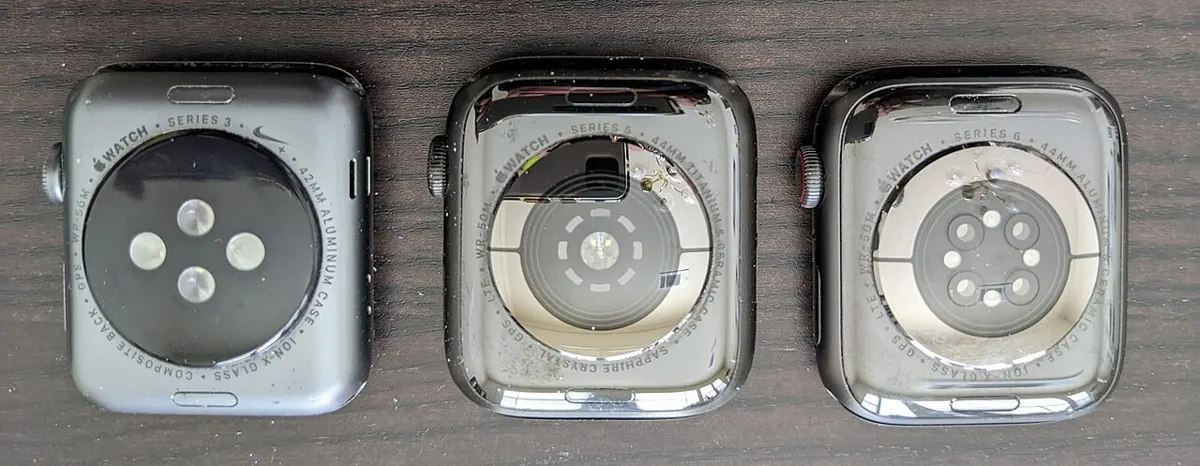
Heart rate is the measurement almost every smartwatch and fitness band is built around: it feeds calorie estimates, sleep stages, training load, VO2 max and stress scores. So it's worth knowing when the number on your wrist is trustworthy and when it isn't.
Short answer: at rest and during steady cardio, modern wrist sensors are usually close to a chest strap. During intervals, weightlifting and activities with lots of wrist movement, errors grow. Here's why, and what you can do about it.
How a watch measures your heart rate
The green LEDs on the back of your watch use a technique called photoplethysmography (PPG). Light shines into the skin; blood absorbs some of it. With each heartbeat, the volume of blood in the tiny vessels under the sensor changes slightly, so the amount of reflected light rises and falls. Photodiodes pick up that rhythm and an algorithm turns it into beats per minute.
The hard part is not seeing the pulse but separating it from noise: arm movement, the watch shifting on your wrist, cold skin with reduced blood flow, tattoos and ambient light leaking in. Watches use accelerometers to subtract motion and multiple LEDs and sensors to cross-check, which is why newer models tend to do better than older ones.
A chest strap works differently: it measures the heart's electrical signal (like a simple ECG) right next to the heart, so motion affects it far less. That's why researchers and coaches use chest straps as the reference.
What studies find
Independent validation studies of consumer wearables (our linked source, for example, reviews the published research on Garmin trackers) broadly agree on a few patterns:
- Resting and sleeping heart rate: typically within a few beats per minute of a reference device. Good enough for resting-HR trends.
- Steady cardio (walking, easy running, cycling): generally accurate, with mean errors often in the low single-digit percentages for leading brands.
- Rapid changes (intervals, sprints): wrist sensors often lag several seconds behind when heart rate jumps or drops, and can briefly "lock on" to your cadence instead of your pulse.
- Strength training, rowing, boxing, HIIT: the worst case, because gripping and flexing the wrist changes blood flow under the sensor.
- Accuracy varies by device and person: the same watch can be excellent for one person and mediocre for another, depending on fit, skin and wrist anatomy.
Studies are a snapshot of specific models and firmware, so treat any single "accuracy ranking" with caution: algorithms change with updates.
What wrist heart rate is good — and not good — for
Good for: resting heart rate trends, daily activity, sleep, easy and steady workouts, rough calorie estimates, spotting long-term fitness changes.
Less good for: precise interval zones, lifting, sports with a lot of wrist flexion, and any medical decision. Irregular-rhythm notifications and ECG apps are separate features that some watches have clearance for in some countries; standard heart-rate readings are not a diagnosis.
How to get better readings
- Wear it snug and higher up. Move the watch a finger's width above the wrist bone and tighten it for workouts; loosen it afterwards.
- Warm up. Cold skin reduces blood flow; readings stabilise after a few minutes.
- Keep the sensor clean. Sweat, sunscreen and lotion on the back glass can interfere.
- Update the firmware. Heart-rate algorithms improve with updates.
- Use a chest strap for hard training. Most sports watches and many smartwatches can pair a Bluetooth or ANT+ strap and will use it instead of the wrist sensor.
- Look at trends, not single numbers. A strange spike once is usually noise.
| Situation | Wrist sensor | Chest strap |
|---|---|---|
| Resting / sleep | Usually good | Excellent (but uncomfortable to sleep in) |
| Steady running, cycling | Usually good | Excellent |
| Intervals, sprints | Lags, can misread | Excellent |
| Weights, HIIT, rowing | Often unreliable | Excellent |
| All-day wear | Comfortable | Not practical |
Related reading
Heart-rate data feeds other metrics, so accuracy issues ripple through: see how sleep tracking works and what VO2 max on a smartwatch really means. Shopping for a new watch? Start with our smartwatch buying guide.
Frequently asked questions
Is smartwatch heart rate accurate enough for training zones?
For steady workouts, usually yes. For intervals and strength training, wrist readings often lag or jump; pair a chest strap if precise zones matter.
Why does my watch show a heart rate that matches my running cadence?
This is called cadence lock: the sensor mistakes the rhythm of your arm swing for your pulse. Tightening the strap, moving the watch higher up the arm or using a chest strap usually fixes it.
Do tattoos affect smartwatch heart rate?
They can. Dark, dense ink absorbs the sensor's light and can cause dropouts or errors. Wearing the watch on the other wrist or using a chest strap helps.
Can a smartwatch detect heart problems?
Some watches have ECG apps and irregular-rhythm notifications cleared in certain countries, which can flag possible atrial fibrillation. They are screening aids, not diagnoses; talk to a doctor about any symptoms or alerts.
More from Smartphones
View all →Read next
How long do robot vacuums last? Lifespan, parts and when to replace
How many years a robot vacuum really lasts, which parts wear out first (battery, brushes, filters), replacement intervals, signs it's time to replace, and how to extend its life.
IPS vs VA vs OLED (and TN): which monitor panel type should you buy?
IPS vs VA vs OLED vs TN monitors compared: contrast, colour, viewing angles, response time, burn-in and price, with the best panel for gaming, work and movies.
144Hz vs 240Hz: which refresh rate do you need?
60Hz vs 144Hz vs 240Hz explained: what refresh rate really changes, the frame rate your PC needs, which games benefit, and when 360Hz or 500Hz is worth it.