SpaceX CRS-35 carries the ISS's final new solar arrays and new microgravity science
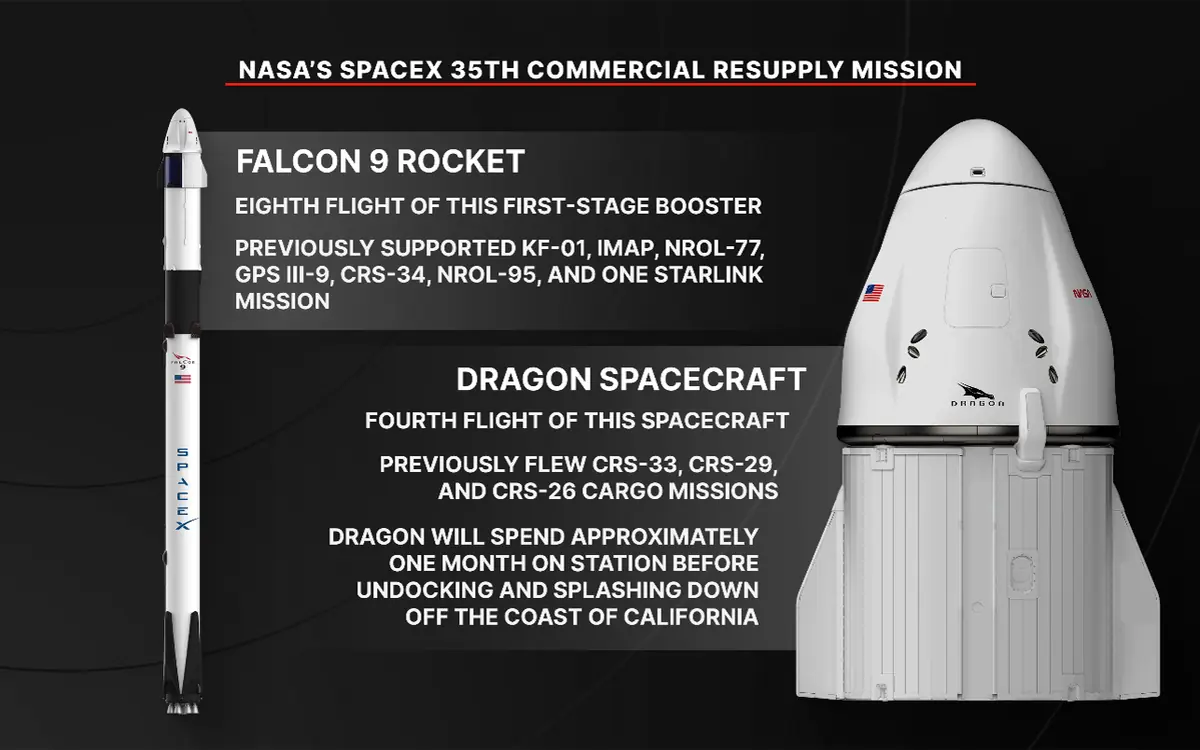
The 35th Dragon resupply mission for NASA is set to deliver about 2,860 kg of cargo, including the last pair of roll-out solar arrays that complete the station's power upgrade.
On this page
SpaceX and NASA are targeting Tuesday, October 13, at 6:33 a.m. EDT (10:33 UTC) to launch CRS-35, the 35th cargo mission SpaceX flies to the International Space Station under NASA's Commercial Resupply Services contract. A Falcon 9 rocket will lift a robotic Dragon capsule from Cape Canaveral Space Force Station in Florida.
What's on board
Dragon is carrying about 6,300 pounds (2,860 kg) of supplies, equipment and science. The headline item is the final pair of ISS Roll-Out Solar Arrays (iROSAs). These flexible arrays roll open in space and are installed in front of the station's original panels. Six are already in place; this pair completes the upgrade of the station's power system. Astronauts will install them during future spacewalks.
According to NASA, the extra power supports the station's critical operations, including its eventual safe, controlled deorbit at the end of its life.
The science
NASA highlighted several experiments flying on CRS-35:
- Artificial retinas built layer by layer in microgravity, aimed at helping restore vision for patients with retinal diseases.
- 3D heart tissue models, to see whether microgravity helps them form blood-vessel networks for disease research and drug testing.
- A study of how a new type of glass made from non-traditional elements forms without gravity.
- Brain organoids that could reveal treatment targets for neurodegenerative diseases such as Alzheimer's, Parkinson's and multiple sclerosis.
Timeline
If everything goes to plan, Dragon will dock autonomously on Thursday, October 15, at about 11 a.m. EDT (15:00 UTC), at the space-facing port of the station's Harmony module. It will stay for about a month before returning to Earth with experiments and hardware, splashing down under parachutes in the Pacific Ocean off California.
Why it matters
Completing the iROSA installation is a milestone for the ISS in its final years, and cargo flights like this one keep long-running research going. Launch times can slip because of weather or technical issues, so check NASA or SpaceX for the latest status.
Keep reading

Europe’s first geostationary sounder, Meteosat-13, enters service
EUMETSAT’s MTG Infrared Sounder is now operational. Every 30 minutes it profiles temperature, humidity and gases to support earlier severe-weather warnings.
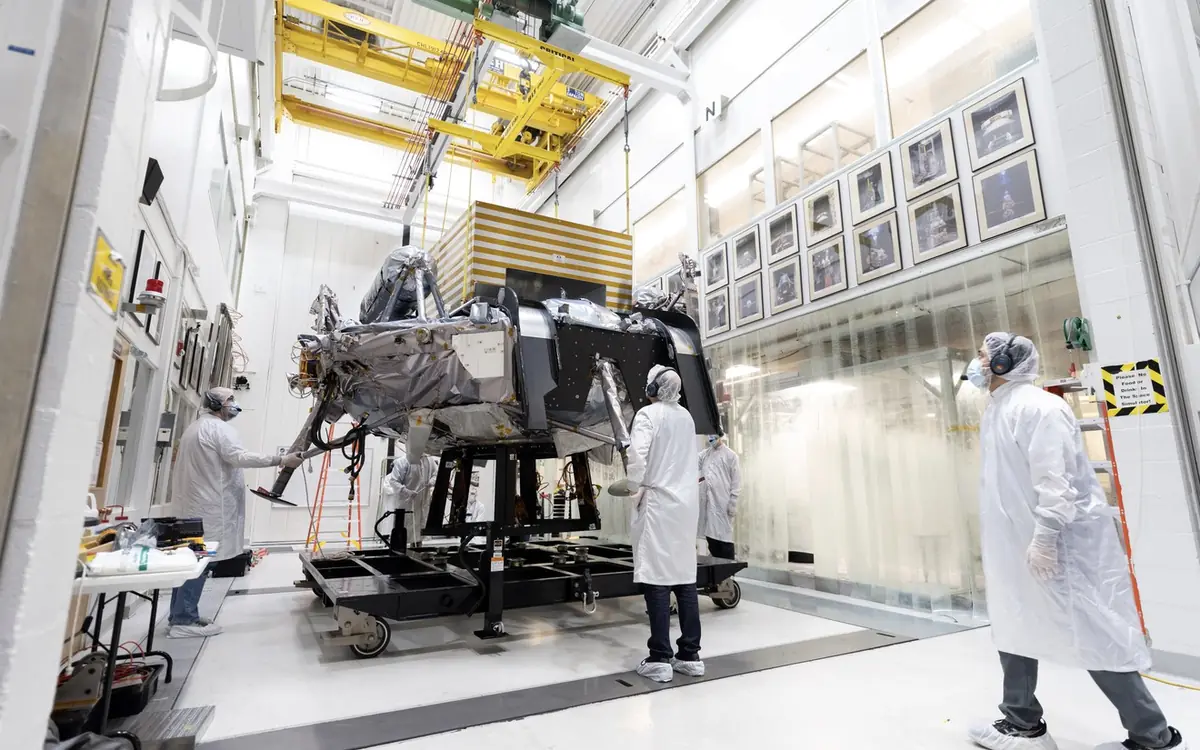
Griffin-1 Moon lander passes its JPL tests ahead of a Falcon Heavy launch
Voyager Technologies' lander was shaken, spun, baked and frozen at JPL. It will carry more than 455 kg of cargo, including Astrolab's FLIP rover, to Nobile Crater near the lunar south pole.
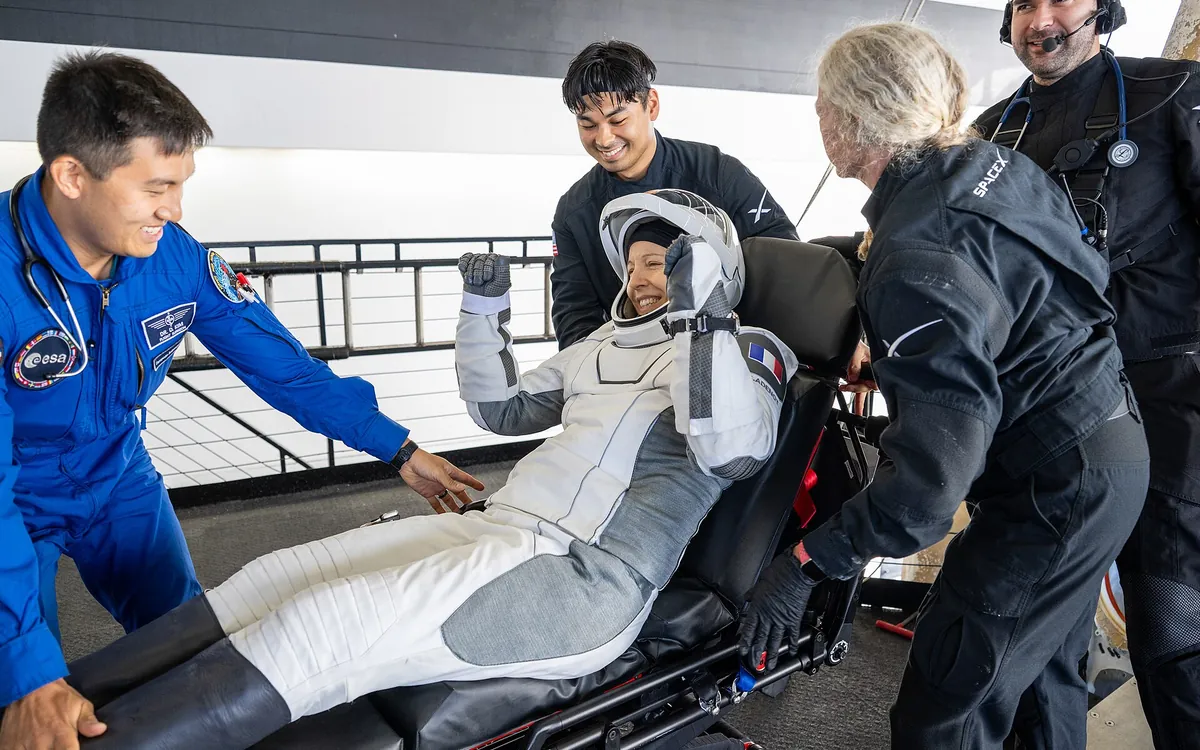
ESA astronaut Sophie Adenot is back in Europe after a record 237-day ISS mission
Adenot landed in Cologne on 10 October after Crew-12 splashdown; her εpsilon flight set a European single-mission duration record and included three spacewalks.