Griffin-1 Moon lander passes its JPL tests ahead of a Falcon Heavy launch
Voyager Technologies' lander was shaken, spun, baked and frozen at JPL. It will carry more than 455 kg of cargo, including Astrolab's FLIP rover, to Nobile Crater near the lunar south pole.
On this page
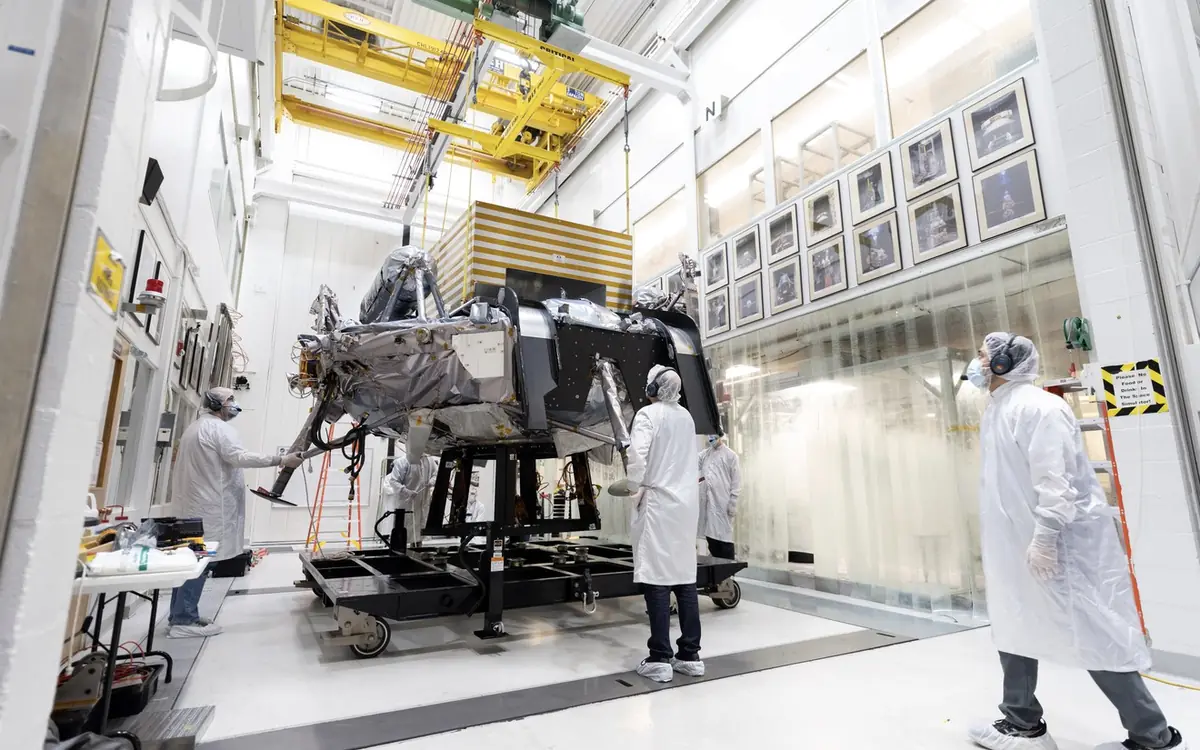
Griffin Mission One (Griffin-1), a commercial lunar lander built by Voyager Technologies, has passed a series of environmental tests at NASA's Jet Propulsion Laboratory in Southern California. NASA says the results show the spacecraft is ready for launch, the trip through deep space and landing at the lunar south pole.
The mission
Griffin-1 flies under NASA's CLPS (Commercial Lunar Payload Services) initiative, part of the agency's Moon Base Program. It is expected to launch later this year on a SpaceX Falcon Heavy.
- Destination: Nobile Crater, near the Moon's south pole.
- Cargo: more than 455 kg (1,100 lb), which makes it an infrastructure-class lander.
- Payloads: 10 science and technology demonstrations from six countries, including Astrolab's FLIP (FLEX Lunar Innovation Platform) rover. NASA calls FLIP the largest commercial payload ever delivered to the Moon.
Months of tests
Testing started in July, after the 1,265 kg (2,789 lb) spacecraft travelled by road from Voyager's facility in Pittsburgh to JPL.
- Mass properties: engineers spun the lander on a special table to check for unexpected wobbles, which matter for navigation and landing.
- EMI/EMC: in an anechoic chamber lined with foam spikes, they made sure the lander's electronics do not interfere with each other.
- Vibration: a shaker table moved it in three directions to simulate the ride to orbit, with hundreds of sensors attached.
- Acoustics: horns powered by nitrogen gas blasted it with up to 153 decibels.
- Thermal vacuum: for about two weeks in JPL's historic 25-Foot Space Simulator, the lander went between +75 °C and −100 °C.
The same chamber has tested spacecraft since the Ranger, Surveyor, Mariner and Voyager programmes, and later Perseverance and Europa Clipper.
What's next
Griffin-1 is back at Voyager's facility for final assembly, followed by launch-readiness work and shipment to Cape Canaveral. "Seeing the spacecraft complete this demanding environmental testing is a major milestone," said Voyager executive vice president John Thornton.
Keep reading

Europe’s first geostationary sounder, Meteosat-13, enters service
EUMETSAT’s MTG Infrared Sounder is now operational. Every 30 minutes it profiles temperature, humidity and gases to support earlier severe-weather warnings.

ESA astronaut Sophie Adenot is back in Europe after a record 237-day ISS mission
Adenot landed in Cologne on 10 October after Crew-12 splashdown; her εpsilon flight set a European single-mission duration record and included three spacewalks.
Landsat 9 photographs Australia's Spider Crater, an ancient impact with 'legs'
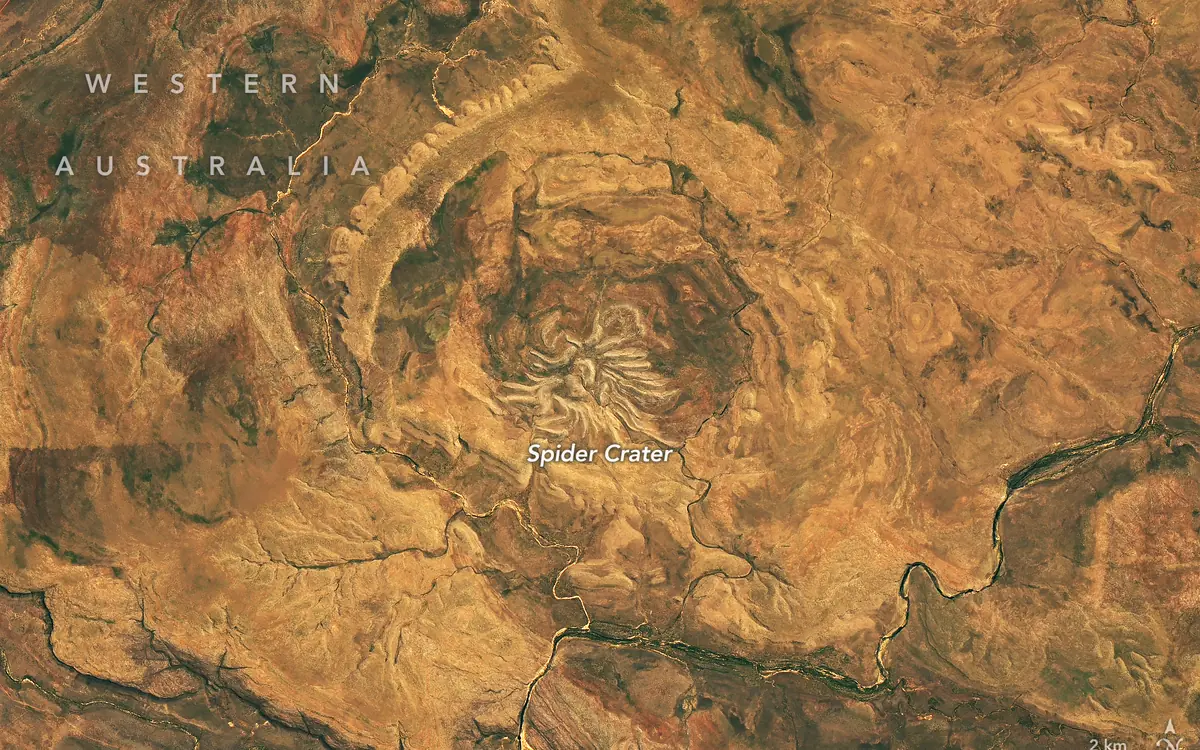
NASA's Earth Observatory shows Western Australia's Spider Crater, a 13 km impact structure whose spidery sandstone ridges are 600–900 million years old.