ESA astronaut Sophie Adenot is back in Europe after a record 237-day ISS mission
Adenot landed in Cologne on 10 October after Crew-12 splashdown; her εpsilon flight set a European single-mission duration record and included three spacewalks.
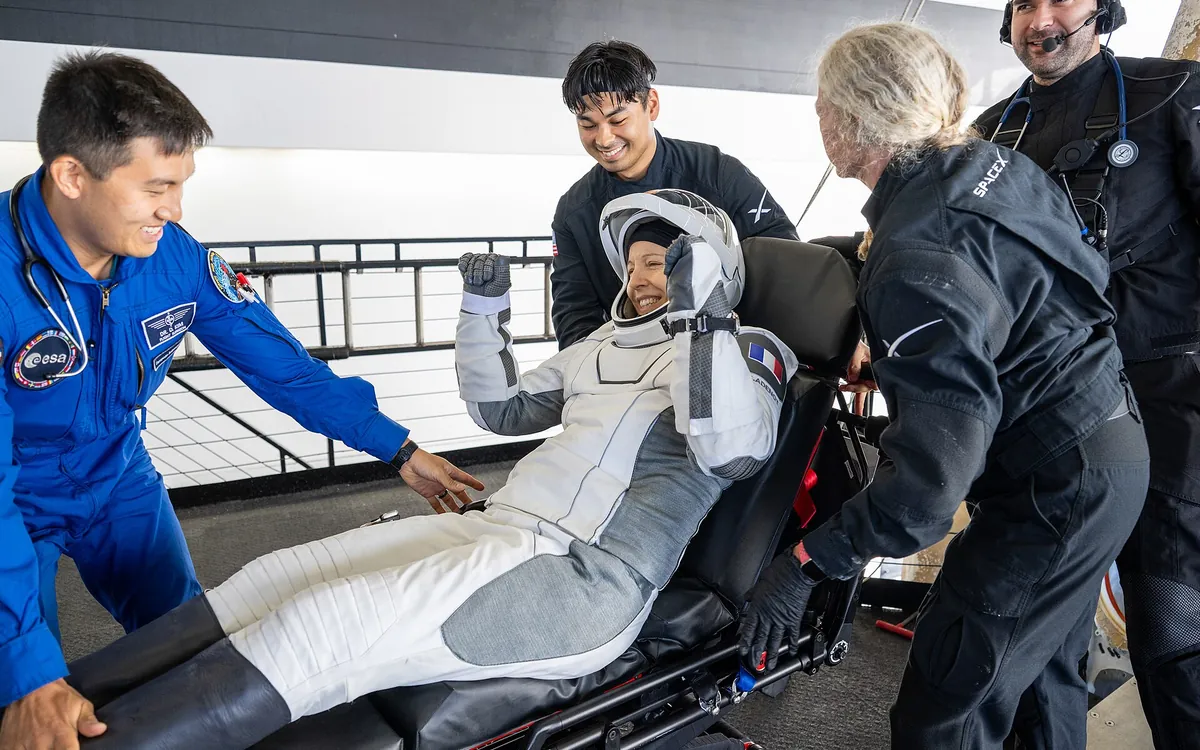
ESA astronaut Sophie Adenot is back in Europe. After splashdown with NASA’s SpaceX Crew-12 on 8 October 2026, she arrived at ESA’s European Astronaut Centre in Cologne early on 10 October. ESA held a post-mission press conference in Cologne on 13 October.
Mission length
Adenot spent 237 days, 5 hours and 18 minutes in space on the εpsilon mission after launching on 13 February 2026. ESA says that is a new European record for the longest single spaceflight, beating Luca Parmitano’s Beyond mission by more than 35 days. Crew-12 is also the longest SpaceX Dragon mission to date, ahead of Crew-8’s 235 days.
Crew-12 undocked on 7 October at 12:05 GMT and splashed down in the Pacific on 8 October at 15:34 GMT after a 27-hour 29-minute return. Adenot flew with NASA astronauts Jessica Meir and Jack Hathaway and Roscosmos cosmonaut Andrei Fedyaev.
Spacewalks and science
Adenot became the second European woman (after Samantha Cristoforetti) and the first French woman to perform an EVA. She completed three spacewalks in 14 days, totalling 19 hours 42 minutes outside the Station.
ESA reports roughly 218 hours on 35 European payloads, about 25 hours on Columbus systems work, and completion of all εpsilon-specific CNES experiments assigned to her. Work included health research, materials, biology, fluid and radiation physics, plus technology demos such as the European E4D exercise device and in-orbit metal 3D printing.
Outreach
During free time she reached more than 1.1 million social followers (over 403 million views of mission content) and more than 290,000 students via CNES Chloriss, AstroPi, ARISS and school live events.
Next steps
Adenot will spend two to three weeks readapting at DLR’s
Keep reading

Europe’s first geostationary sounder, Meteosat-13, enters service
EUMETSAT’s MTG Infrared Sounder is now operational. Every 30 minutes it profiles temperature, humidity and gases to support earlier severe-weather warnings.
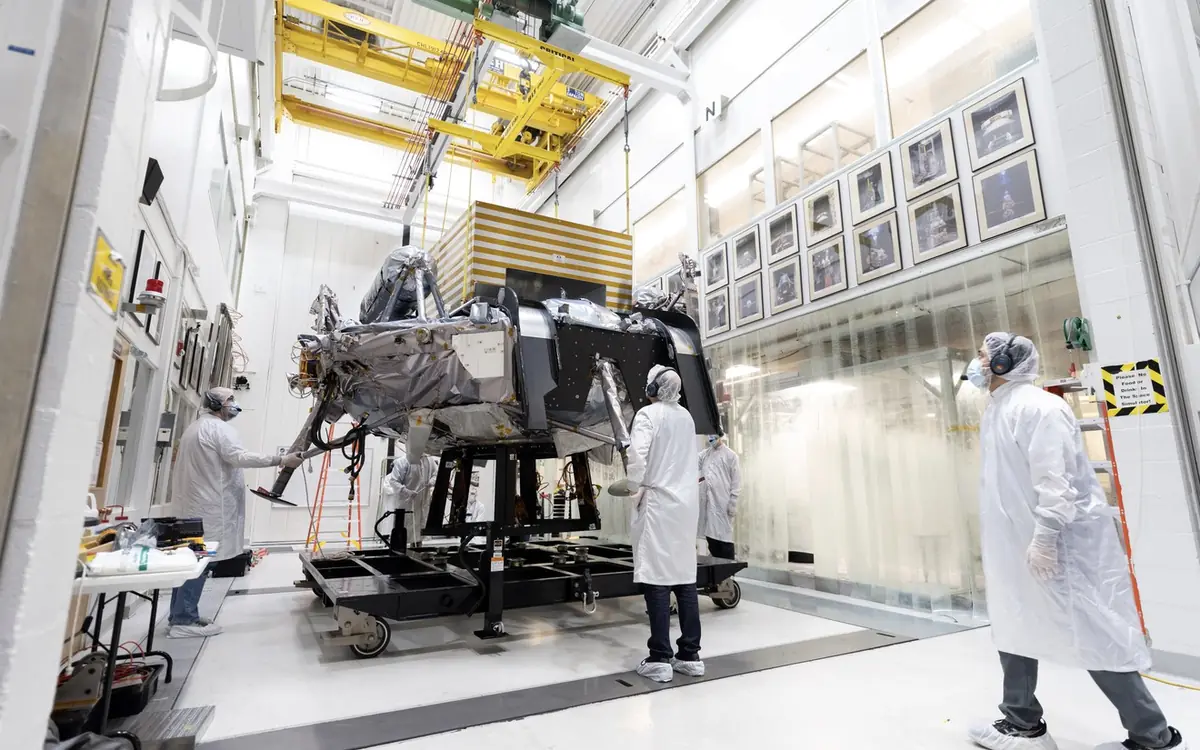
Griffin-1 Moon lander passes its JPL tests ahead of a Falcon Heavy launch
Voyager Technologies' lander was shaken, spun, baked and frozen at JPL. It will carry more than 455 kg of cargo, including Astrolab's FLIP rover, to Nobile Crater near the lunar south pole.
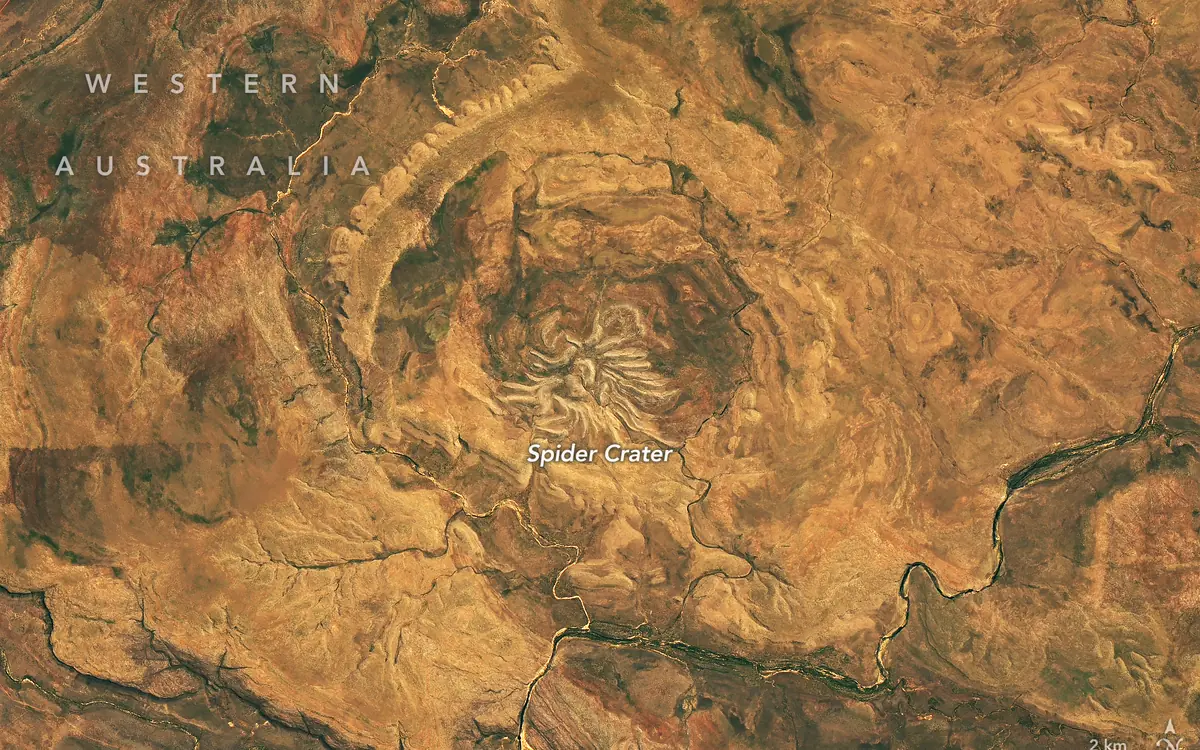
Landsat 9 photographs Australia's Spider Crater, an ancient impact with 'legs'
NASA's Earth Observatory shows Western Australia's Spider Crater, a 13 km impact structure whose spidery sandstone ridges are 600–900 million years old.