Buying a laptop for local AI: how much memory, GPU and NPU you really need
Want to run AI models on your own laptop? This guide explains how model size maps to memory, when an NPU helps, and which specs to prioritise.

Running AI models on your own laptop keeps your data private, works offline and costs nothing per prompt. The specs that matter for this are not the usual ones.
Memory is the main limit
A model has to fit in memory. A rough rule for 4-bit quantised models, the usual format for local use, is about 0.6 GB per billion parameters, plus room for context:
| Model size | Memory needed (approx.) | Good for |
|---|---|---|
| 3–4B | 4–6 GB | quick chat, summaries |
| 7–8B | 6–8 GB | everyday assistant, coding help |
| 13–14B | 10–12 GB | better reasoning |
| 30–32B | 20–24 GB | strong all-rounder |
| 70B | 40–48 GB | near cloud quality |
Two ways to get that memory
- Discrete GPU (NVIDIA RTX): very fast, but limited by VRAM. For example, 8 GB on an RTX 5060 laptop and 16–24 GB on top models.
- Unified memory (Apple M-series, AMD Ryzen AI Max): the CPU and GPU share one large pool. Speed per token is lower than a top GPU, but you can load much larger models. A 64–128 GB unified machine runs 70B models that no laptop GPU can.
Where the NPU fits
NPUs, such as those in Copilot+ PCs rated at 40+ TOPS, are efficient for small always-on tasks: background blur, live captions and small on-device models. For big local language models, most tools today still use the GPU.
What to buy
- Curious beginner: 16 GB RAM is enough for 7–8B models.
- Serious hobbyist or developer: 32 GB unified memory, or an RTX GPU with 12 GB or more of VRAM.
- Big models: 64–128 GB of unified memory.
Also check that you have fast SSD storage of at least 1 TB, because each model file is several gigabytes, and good cooling, because long generations push laptops hard. Free tools such as LM Studio or Ollama will get you running in minutes.
Keep reading

Google opens Gemini 4 Argon to everyone with a 1M-token limit
Google’s frontier Gemini 4 Argon model is available today via API, Antigravity, the Gemini app and AI Mode in Search for Pro and Ultra subscribers.
Anthropic: small AI models may soon self-replicate on IoT devices
A 12 October research post shows a 26B model running across 15 cheap Android TV boxes and projects small weight-based replicators by late 2026.
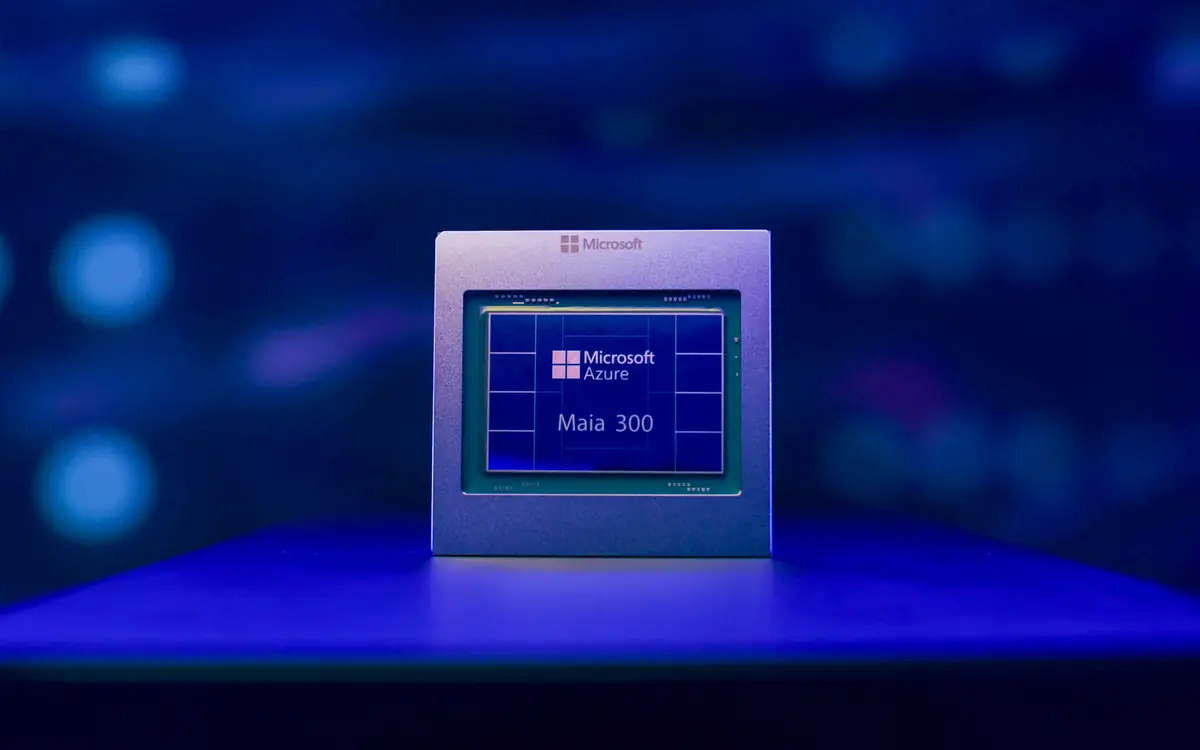
Microsoft unveils Maia 300 AI chip, its main inference system from 2027
Microsoft's third-generation Azure Maia chip promises 40% more tokens per megawatt than leading GPU systems and up to 7x Maia 200's rack throughput.