Landsat 9 photographs Australia's Spider Crater, an ancient impact with 'legs'
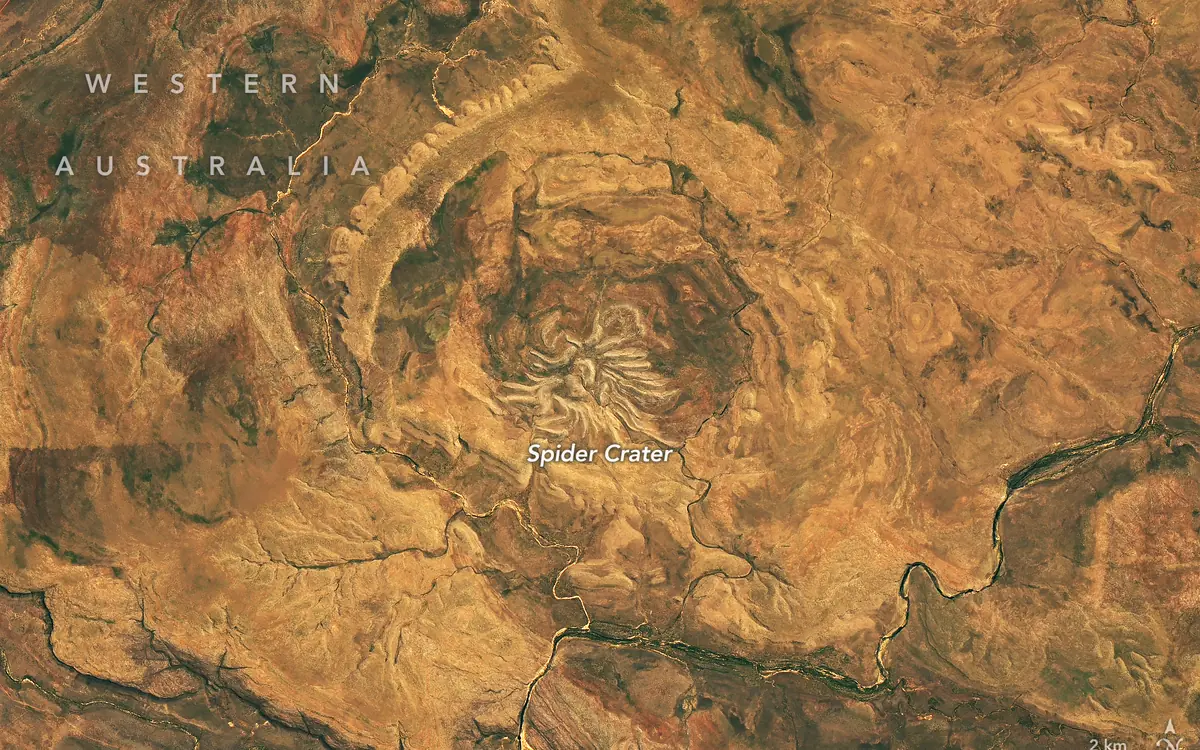
NASA's Earth Observatory shows Western Australia's Spider Crater, a 13 km impact structure whose spidery sandstone ridges are 600–900 million years old.
On this page
NASA's Earth Observatory picked a fittingly spooky Image of the Day for October: Spider Crater, an ancient meteorite impact structure in the Kimberley region of Western Australia.
What the satellite saw
The picture was taken on 20 September 2026 by the OLI (Operational Land Imager) on the joint NASA–USGS Landsat 9 satellite. The whole impact structure is oval, about 13 by 11 kilometres (8 by 7 miles). Its spider-like centre is about 4 kilometres across.
Where the "legs" come from
Geologists think the spider pattern is what is left of a central uplift: the part of a crater floor that springs up as the ground rebounds right after an impact. The pale "legs" are sandstone ridges that resisted erosion while the rock around them wore away over hundreds of millions of years.
How scientists proved it was an impact
For decades after its discovery, the feature's origin was debated, and some researchers suggested a volcanic past. The answer came from fieldwork. Geologists found shatter cones, fan-shaped fractures that only form when intense shock waves pass through rock, and they are common in the crater's central dome.
Later lab work on shocked quartz and zircon crystals from the sandstone helped reconstruct the angle at which the meteorite hit.
How old is it?
The exact date of the impact is unknown. Based on rocks in the area, NASA says it happened between roughly 900 million and 600 million years ago, in the late Precambrian, long before complex animal life spread across the planet.
Why it is worth a look
Old impact craters on Earth are hard to spot because weather, water and plate tectonics wipe them away. Landsat's long-running archive lets scientists, and anyone else, study such structures in detail from orbit. The full-resolution image is free to download from NASA's Earth Observatory.
Keep reading
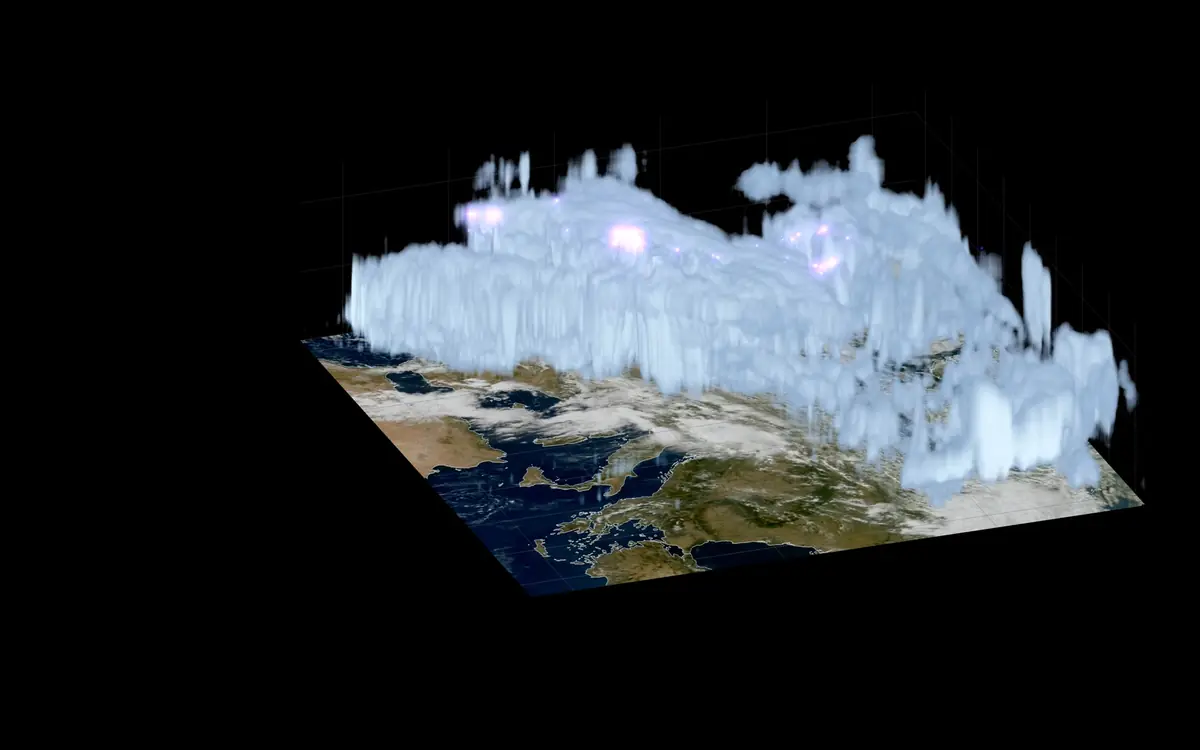
Europe’s first geostationary sounder, Meteosat-13, enters service
EUMETSAT’s MTG Infrared Sounder is now operational. Every 30 minutes it profiles temperature, humidity and gases to support earlier severe-weather warnings.
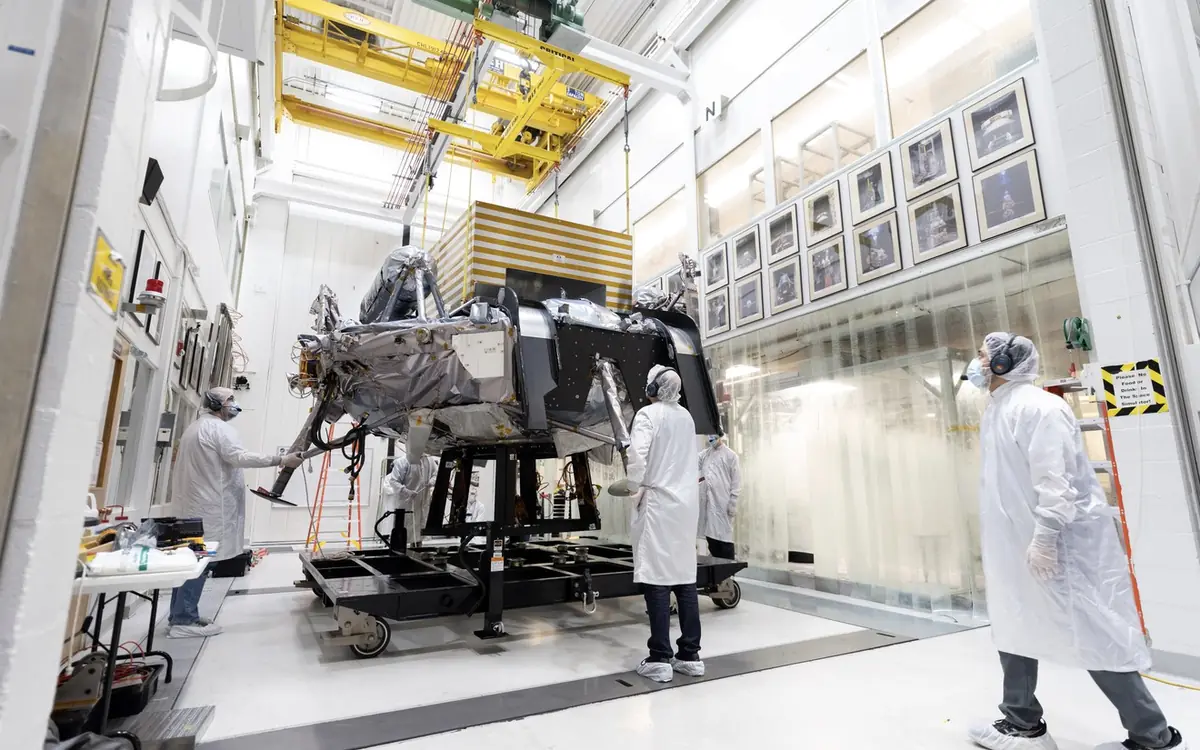
Griffin-1 Moon lander passes its JPL tests ahead of a Falcon Heavy launch
Voyager Technologies' lander was shaken, spun, baked and frozen at JPL. It will carry more than 455 kg of cargo, including Astrolab's FLIP rover, to Nobile Crater near the lunar south pole.

ESA astronaut Sophie Adenot is back in Europe after a record 237-day ISS mission
Adenot landed in Cologne on 10 October after Crew-12 splashdown; her εpsilon flight set a European single-mission duration record and included three spacewalks.