Microsoft’s Probabilistic Bias Correction aims to fix 2–6 week weather forecasts
Researchers say the open ML framework doubles ECMWF AI subseasonal skill and improves precipitation targets in 98% of cases — on CPUs, not only GPUs.
On this page
Two-week weather forecasts have improved for years, but skill still falls off hard at subseasonal ranges — roughly two to six weeks ahead. Microsoft researchers are promoting Probabilistic Bias Correction (PBC), a machine-learning framework that learns to correct systematic errors in existing forecasts, The Verge reports. The approach is also described in a Microsoft Research publication.
What PBC does
Instead of replacing physics or AI weather models, PBC sits on top: it looks for persistent biases (for example, forecasts that run too cold as the climate warms) and applies probabilistic corrections. Lester Mackey of Microsoft Research New England told The Verge the method can run on CPUs, which matters for agencies that lack large GPU clusters.
In the researchers’ evaluation on leading ECMWF dynamical and AI systems, they report that PBC doubled the subseasonal skill of ECMWF’s AI Forecasting System and improved skill for 91% of pressure, 92% of temperature and 98% of precipitation targets on the operationally debiased dynamical model — numbers that come from the paper abstract and Verge’s summary. Those are study results, not a guarantee for every local forecast office.
Competition and open tools
Microsoft says PBC’s global forecasts placed first across variables and lead times in ECMWF’s 2025 real-time AI Weather Quest competition, beating dynamical centres, an international multi-model ensemble, ECMWF’s own AI system and dozens of other teams. ECMWF’s Matthew Chantry told The Verge the paper is a useful community contribution, while noting that turning research into operational pipelines remains hard.
The Verge reports the software is now open source. Co-author Genevieve Flaspohler (now at nonprofit Rhiza Research) highlighted how lightweight training could help scientists tune models for specific regions, including work with Kenya’s meteorological service ahead of a stronger El Niño rainy season.
For farmers, grid operators and disaster planners, better subseasonal guidance is the prize — if national services can adopt and validate the corrections locally.
More from Computers & AI
View all →Read next

GTA VI launch trailer is live — five weeks to November 19
Rockstar dropped the Grand Theft Auto VI Launch Trailer on 15 October, with new PS5-captured footage and a debut score track, ahead of the 19 November release.

How to choose wireless earbuds in 2026
Fit, ANC, codecs, battery, multipoint and IP rating: a practical buying guide to true wireless earbuds without invented lab scores or brand rankings.
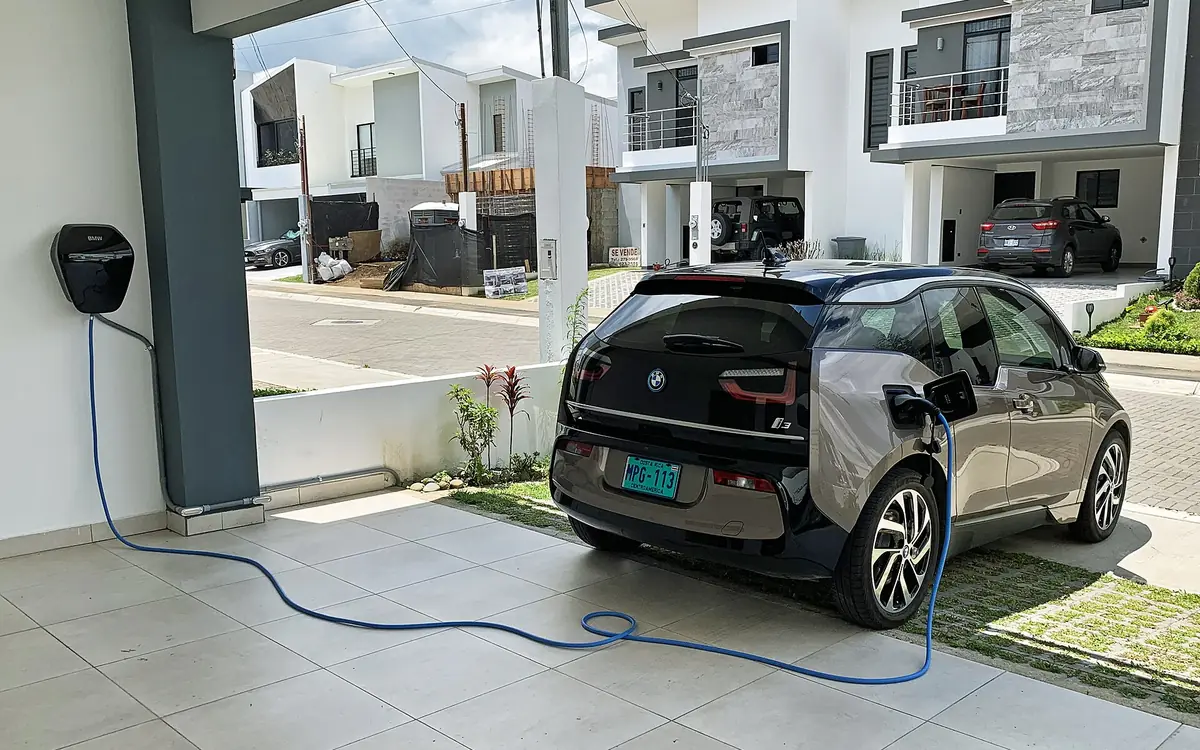
How to choose a home EV charger: power, phases, smart features and safety
Granny cable or wallbox, 7.4 or 11 kW, tethered or socket, smart tariffs and RCD protection: what to check before you buy and install a home EV charger.