Google Suncatcher satellite runs its first AI model in orbit
Google's Project Suncatcher prototype ran Gemma 4 on a data-centre TPU in orbit and sent back a haiku. What was tested, what's next and why AI compute in space matters.
LandGadget Newsroom · · 2 min read
On this page
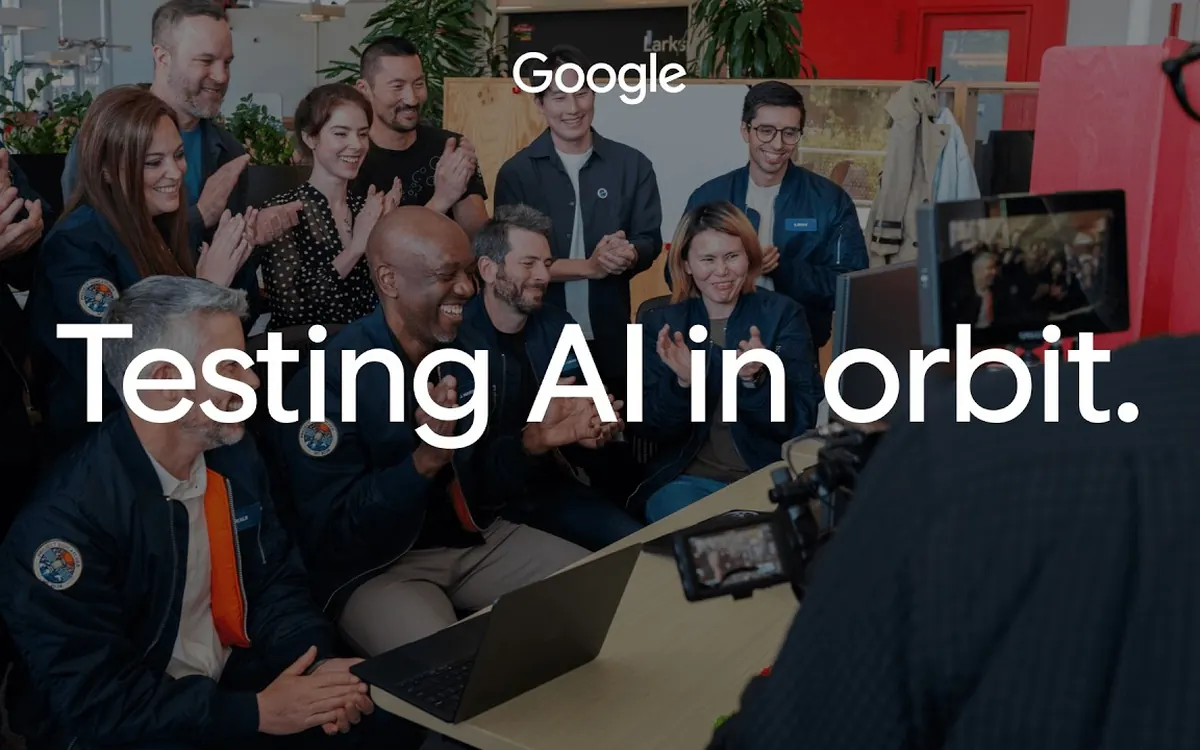
Google says its Project Suncatcher prototype satellite has produced the first AI response from a data-centre-class Tensor Processing Unit (TPU) in orbit. In a blog post on Friday, the company called it the mission's "Hello World" milestone.
What happened
During a ground-station pass, engineers uplinked a prompt to the satellite's onboard Gemma 4 open model, asking it for a haiku about being in space. The answer came down as the satellite passed over Svalbard, Norway:
Blue marble below / Data streams in silent grace / Starlight feeds my core.
Google says it then tried space-themed limericks and telemetry prompts, in which the model reported the technical status of the payload. Before that, the team spent several weeks on a commissioning checklist: powering up the host computer and TPU trays and running early machine-learning tests.
According to TechCrunch, the satellite carries four TPUs and generates up to about 1 kW of power, but it can only run one TPU at a time, for roughly 20 minutes. A Google spokesperson told the outlet the spacecraft is operating nominally.
Background
The prototype launched on 1 October aboard SpaceX's Transporter-18 rideshare mission and was built in partnership with satellite operator Planet. Suncatcher is a long-term research "moonshot" exploring whether solar-powered satellites could one day host machine-learning infrastructure, avoiding some of the power and land constraints of data centres on Earth.
What comes next
Google says the next tests will look at how the TPUs cope with thermal stress and radiation in orbit. Radiation can flip bits in memory and silently corrupt data, which is a key risk for running computing workloads in space. If the chips prove reliable, Google's next milestone is two interconnected satellites in 2027.
A haiku is a modest workload, and a single prototype is a long way from an orbital data centre. But it is the first public proof that Google's own data-centre AI chips can run a model in space. If you're curious about the model family involved, our explainer on open-weight AI models covers what "open model" means, and what an NPU is explains how dedicated AI chips differ from CPUs and GPUs.
More from Computers & AI
View all →Read next
Best Monitor Size for Gaming: 24 vs 27 vs 32 Inch
What monitor size is best for gaming? Compare 24, 27, 32-inch and ultrawide screens by resolution, pixel density, desk distance, GPU power and the games you play.

Bluetooth Codecs Explained: SBC vs AAC vs aptX vs LDAC vs LC3
What Bluetooth audio codecs actually change: SBC, AAC, aptX, LDAC and LE Audio's LC3 compared — sound, latency, battery and which phones support which codec.

Electric motorcycle buying guide: range, charging, licence
How to choose an electric motorcycle: real-world range, battery size, home and fast charging, licence classes, running costs and what to check before you buy.