ExoMars rover twin rehearses its first drive onto Mars 20+ times
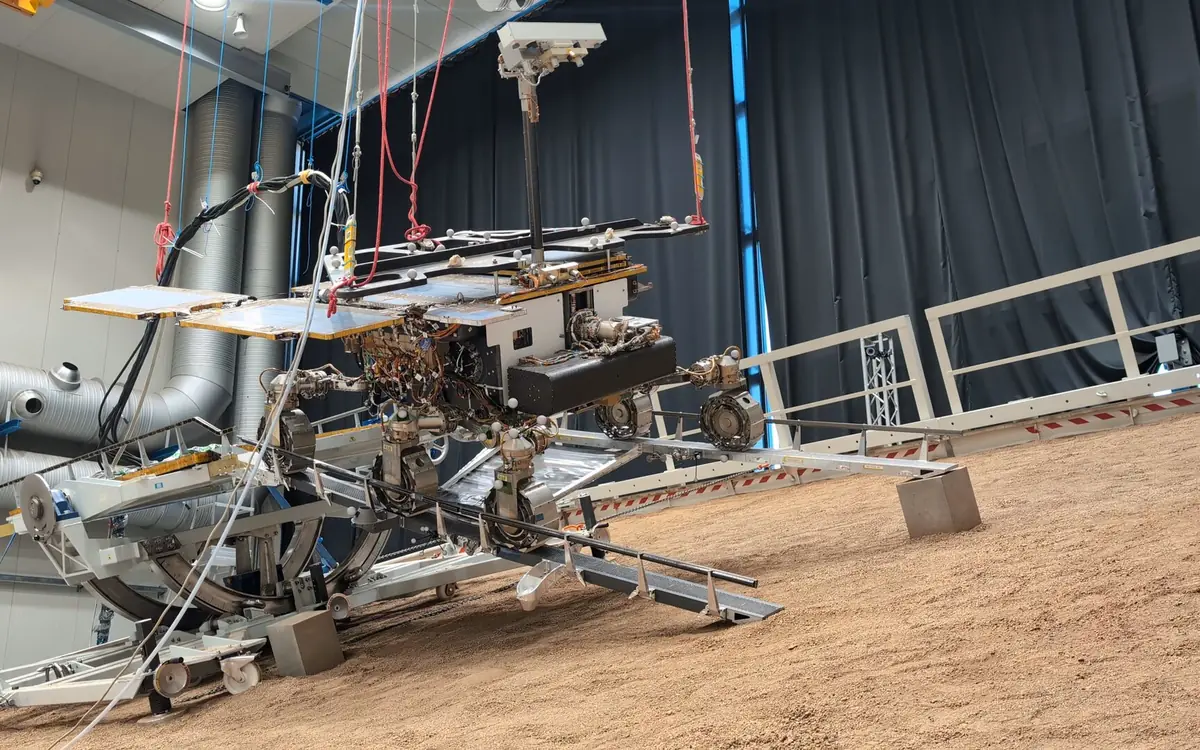
Amalia, a full-size twin of ESA's Rosalind Franklin rover, practised driving off its landing platform in simulated Mars gravity, on a 20° tilt and over obstacles, ahead of the 2030 mission.
On this page
Before the Rosalind Franklin rover can search for signs of life on Mars, it has to get off its lander. ESA engineers have now rehearsed that step more than 20 times.
The test
Amalia is a full-size twin of the rover. Over a two-month campaign at ALTEC in Turin, it drove off a mock landing platform onto simulated Martian ground. The team made each run harder:
- Mars gravity: a ceiling rig carried two-thirds of the rover's 300 kg weight, mimicking gravity at about one-third of Earth's.
- Tilt: a hydraulic platform tilted the lander by 20°.
- Obstacles: rocks and slopes were placed under the ramps.
Two ways off, one chance
The lander has ramps at the front and at the back. Controllers will choose one using only orbital images. "On Mars, we will only have one chance," says ESA's rover team leader Eric Zekri. The three-metre aluminium ramps with a honeycomb surface were built by Poland's Astronika. Thales Alenia Space is the industrial prime contractor.
Next stop: 2030
Rosalind Franklin's real journey across Mars begins in 2030. The tests give the team experience with what ESA calls one of the most critical moments of the mission.
Keep reading
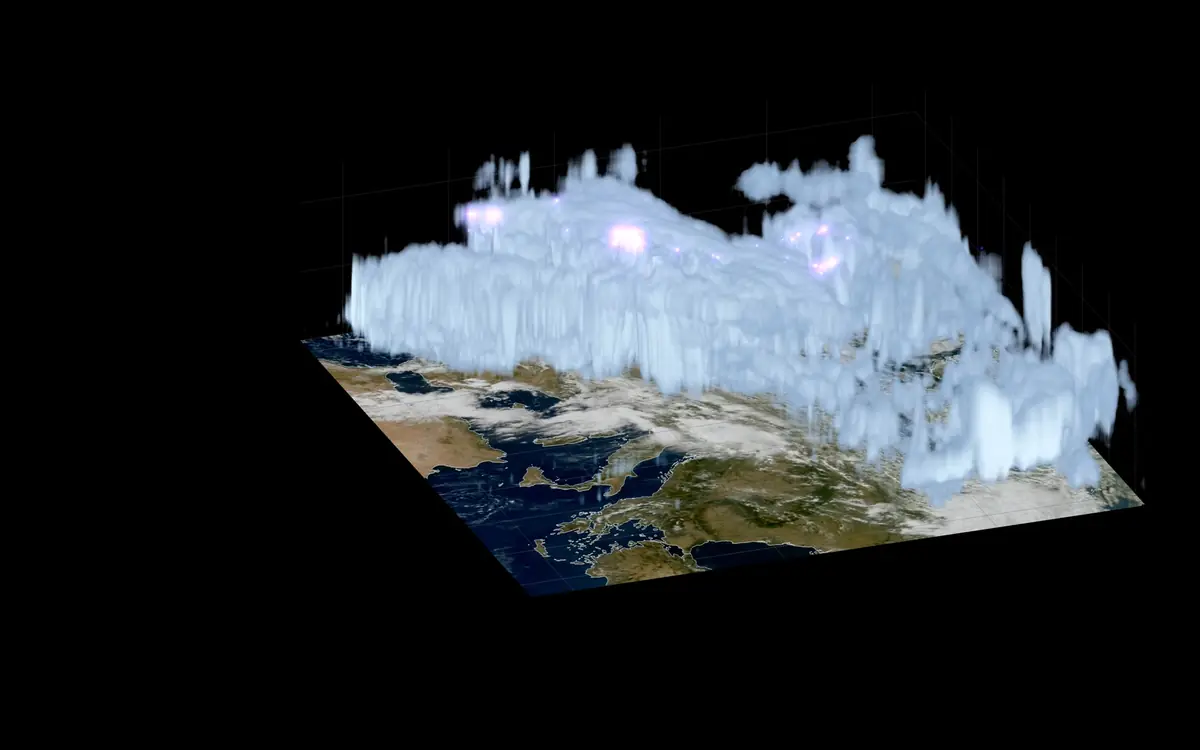
Europe’s first geostationary sounder, Meteosat-13, enters service
EUMETSAT’s MTG Infrared Sounder is now operational. Every 30 minutes it profiles temperature, humidity and gases to support earlier severe-weather warnings.
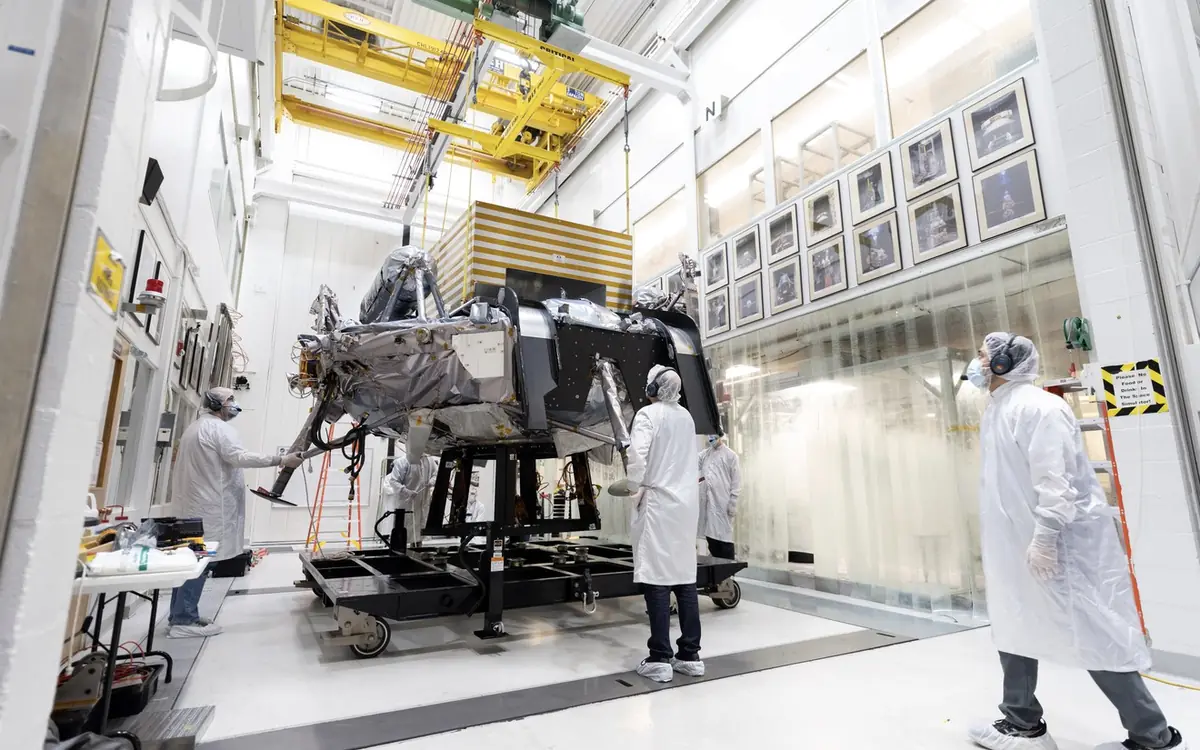
Griffin-1 Moon lander passes its JPL tests ahead of a Falcon Heavy launch
Voyager Technologies' lander was shaken, spun, baked and frozen at JPL. It will carry more than 455 kg of cargo, including Astrolab's FLIP rover, to Nobile Crater near the lunar south pole.
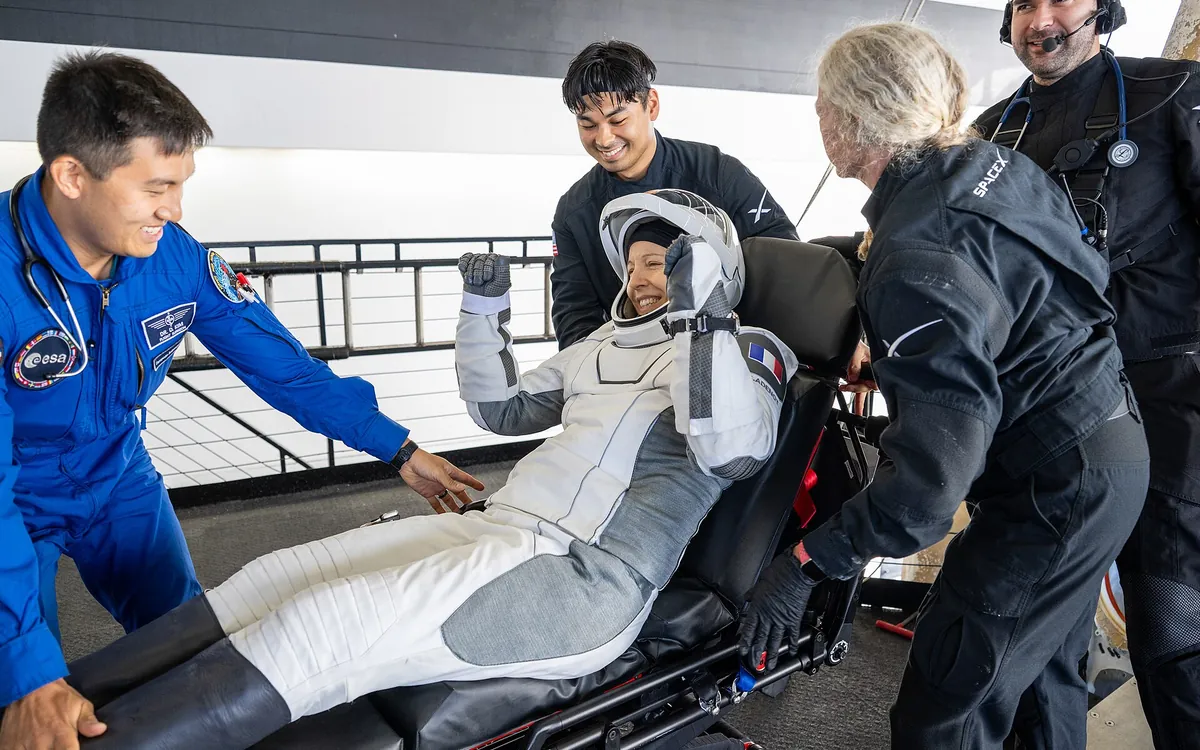
ESA astronaut Sophie Adenot is back in Europe after a record 237-day ISS mission
Adenot landed in Cologne on 10 October after Crew-12 splashdown; her εpsilon flight set a European single-mission duration record and included three spacewalks.