Intel names its Crescent Island AI chip: GPU D-Series, with up to 480 GB of memory
Intel's inference accelerator, codenamed Crescent Island, is now the GPU D-Series. The first model, the D270, uses Xe3P and is rated at 1.3 PFLOPS of FP8 within an air-cooled 350 W card.

On this page
Intel used the OCP Global Summit to give its data-centre inference GPU, codenamed Crescent Island, a product name: Intel GPU D-Series. The first model is the GPU D270.
Specs at a glance
- Architecture: Xe3P, with 32 Xe3P cores and 256 XMX matrix engines.
- Memory: LPDDR5X, up to 480 GB on partner cards. Intel's own card has 160 GB.
- Bandwidth: 1.5 TB/s.
- Compute: 1.3 PFLOPS FP8 peak.
- Power and form factor: 350 W, air-cooled, PCIe 5.0 x16.
Using LPDDR5X instead of expensive HBM is a deliberate choice. It gives up some bandwidth in exchange for large capacity at a lower cost, which suits serving big models to many users.
Racks too
Intel also showed new Xeon rack designs based on the OCP ORv3 standard, part of an "open infrastructure" push for agentic AI.
Availability
Customer sampling is under way. Intel has not given pricing or a general-availability date.
Keep reading

Google opens Gemini 4 Argon to everyone with a 1M-token limit
Google’s frontier Gemini 4 Argon model is available today via API, Antigravity, the Gemini app and AI Mode in Search for Pro and Ultra subscribers.

Anthropic: small AI models may soon self-replicate on IoT devices
A 12 October research post shows a 26B model running across 15 cheap Android TV boxes and projects small weight-based replicators by late 2026.
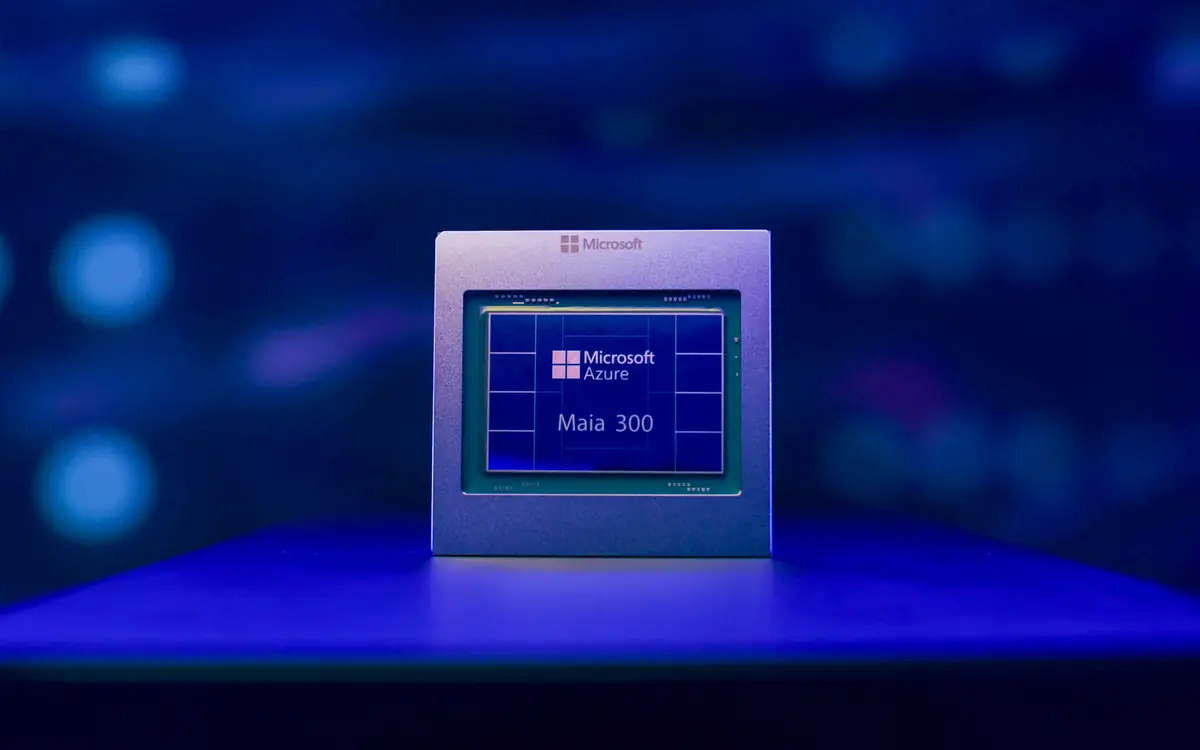
Microsoft unveils Maia 300 AI chip, its main inference system from 2027
Microsoft's third-generation Azure Maia chip promises 40% more tokens per megawatt than leading GPU systems and up to 7x Maia 200's rack throughput.